Protein Hummus Dip: High-Protein Mediterranean Classic
Many cooks fail to properly emulsify a protein hummus dip, which produces a grainy texture and a heavy, clumping consistency. This happens when fats and liquids are added too quickly, preventing the ingredients from binding into a uniform cream.
This Middle Eastern classic is a creamy, protein-rich blend of garbanzo beans, tahini, and lemon. When made correctly, it is silky and pour-able. The addition of cottage cheese increases the protein content to about 12g per 100g serving while adding a subtle tang to the savoury flavour profile.
The final consistency depends on how you integrate the ice water. Drizzle it in slowly and blend in small increments. This method controls the thickness of the dip and ensures the processor blades do not over-stretch, resulting in a smooth finish. For an even finer texture, peel the chickpeas to remove the skins before you process them.
Protein Hummus Dip: High-Protein Mediterranean Classic
Recipe cardIngredients
Instructions
-
Mince the garlic
Place the peeled garlic in the bowl of a food processor. Pulse until the garlic is finely minced. This ensures you avoid large, raw chunks of garlic in the final dip.
-
Combine the base
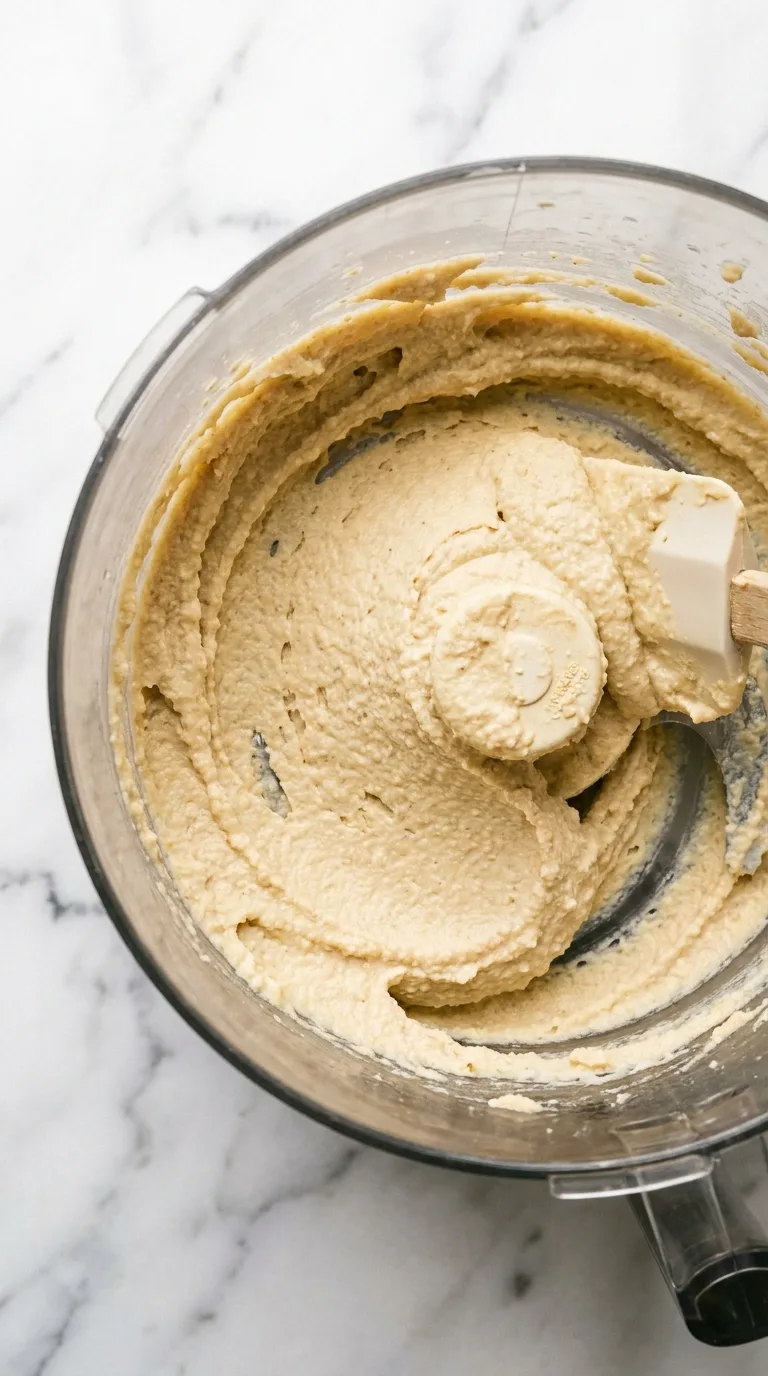
Add the drained garbanzo beans, room-temperature cottage cheese, tahini, lemon juice, cumin and salt to the processor. Ensure everything is evenly distributed before starting the motor.
-
Blend until smooth
Process the mixture on high speed. Scrape down the sides of the bowl as needed. Continue until the texture is completely smooth and uniform.
-
Emulsify with water
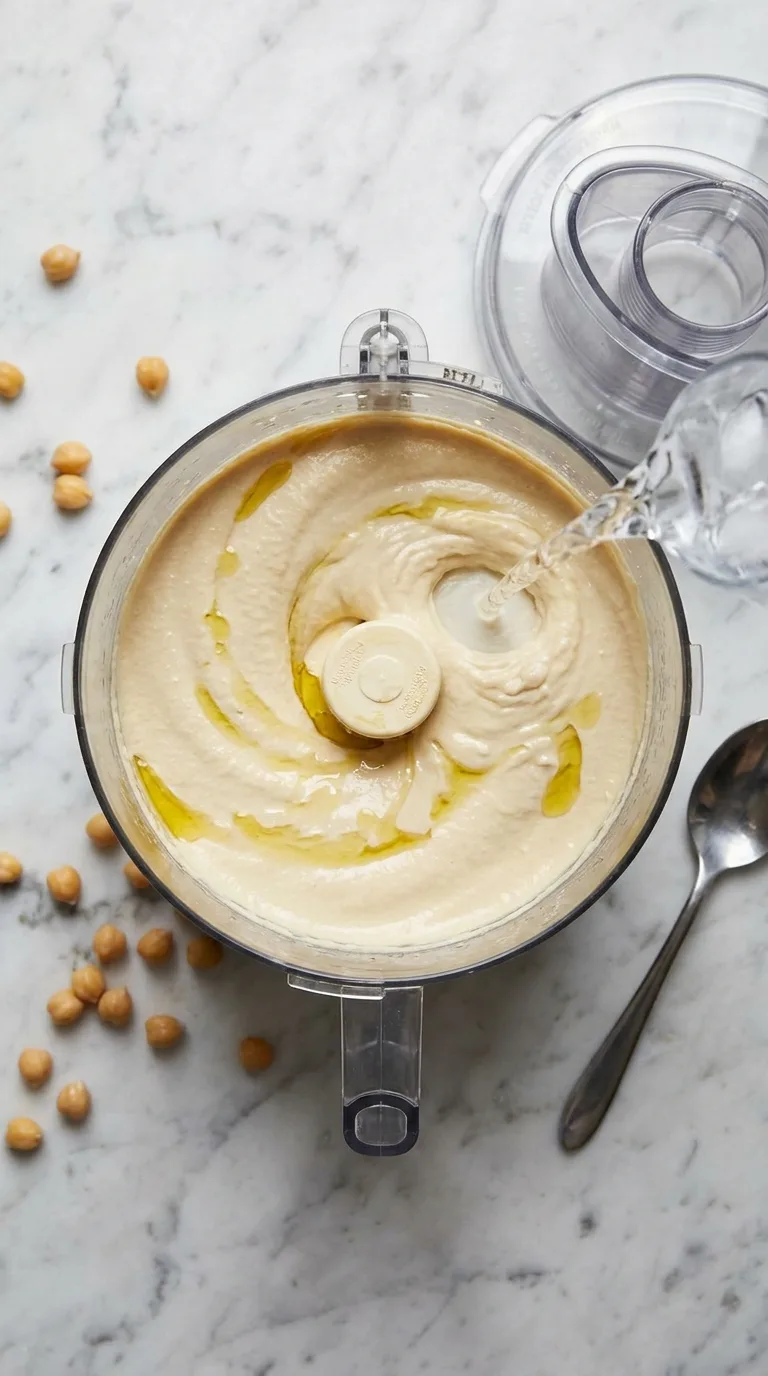
Slowly drizzle in the ice water while blending in small increments. Stop when the dip reaches a silky, pourable consistency. The cold water helps create a lighter, creamier emulsion.
-
Adjust the seasoning
Taste the hummus now. Add a pinch more salt or a splash of lemon juice if the flavours need more balance. Seasoning at the end allows you to account for the saltiness of the beans.
-
Garnish and serve
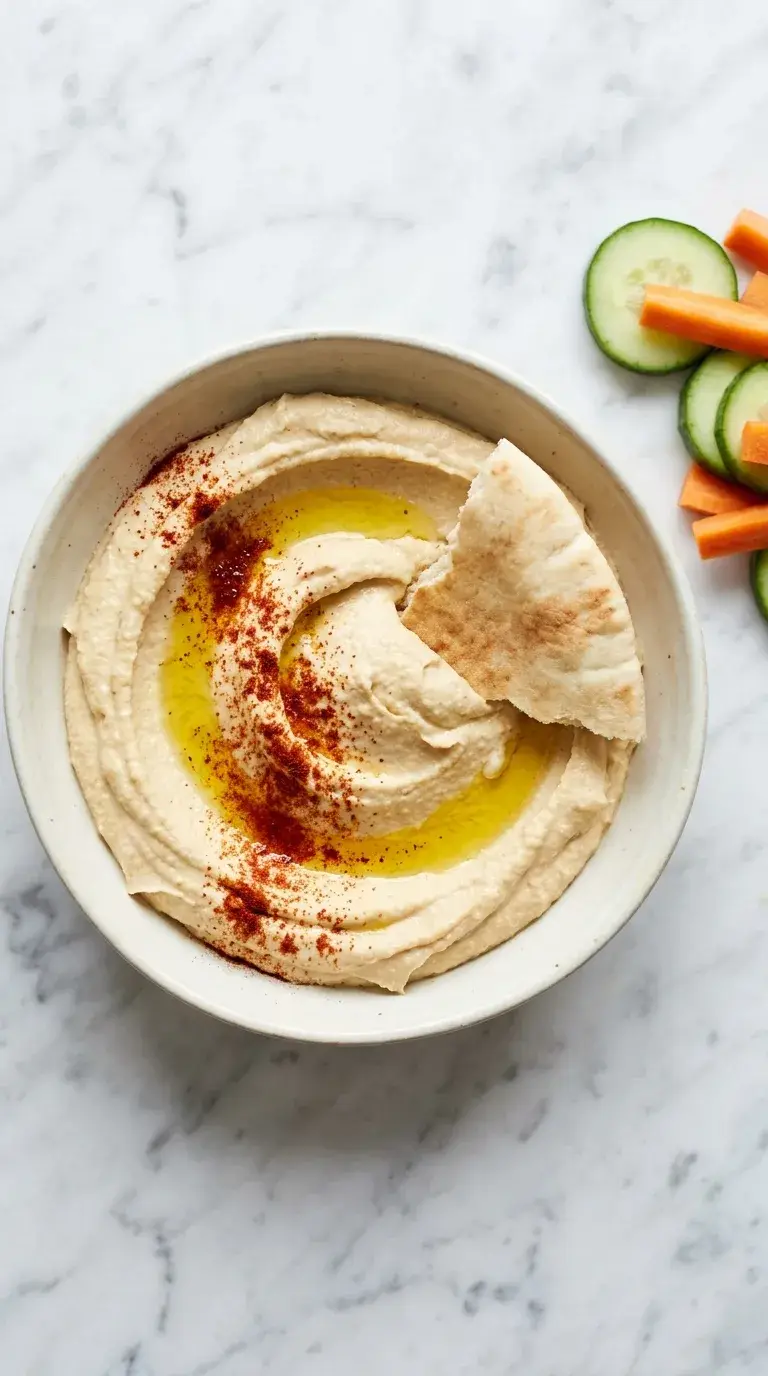
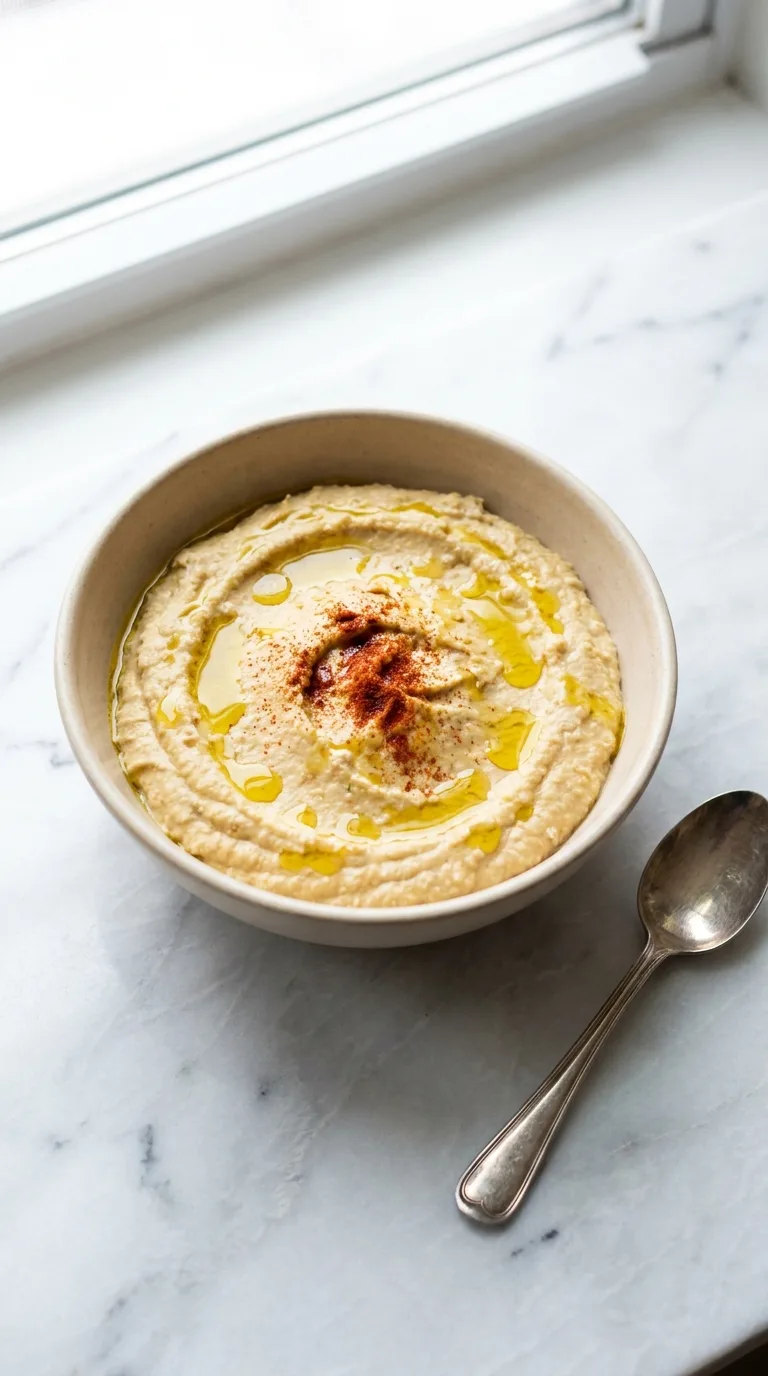
Transfer the dip to a serving bowl. Drizzle the olive oil over the surface and sprinkle with paprika. Serve immediately with warm pita wedges, sliced cucumber, carrot sticks and whole-grain crackers.
Watch the consistency as you add the ice water. If you pour it in too quickly, the dip may separate or become too thin to hold its shape. Add the water in small increments to maintain control over the thickness and ensure a silky texture.
What goes wrong and why
Grainy textures occur when chickpea skins remain in the blend. You will spot this by small, grey flecks in the dip. Peel the chickpeas before processing to remove these skins. This step ensures the mixture emulsifies fully into a smooth, creamy consistency instead of remaining coarse.
What to serve with it
Serve this dip with warm pita wedges, sliced cucumber, carrot sticks and whole-grain crackers. You can create a colourful topping bowl by adding chopped red onion, chopped cucumber, dial-topped olives and a dusting of paprika. Use it as a spread on grilled chicken or fish wraps for lunch.
Storing and reheating
Keep the dip in a covered bowl at room temperature for no longer than 2 hours. For longer storage, transfer it to an airtight container and freeze for up to 2 months. Thaw the container overnight in the fridge and stir the mixture well before serving to restore the texture.
Nutrition per serving
- Calories
- 215
- Protein
- 13.2 g
- Carbs
- 14.5 g
- Fat
- 11.8 g
- Fiber
- 5.1 g
- Sugar
- 4.2 g
Estimated, and offered as a guide rather than a medical figure.
Made it? Rate it.
Questions people ask
What can I add to hummus for more protein?
Add cottage cheese or silken tofu to the blend. These ingredients increase the protein density without altering the fundamental creaminess of the dip, providing a heartier alternative to traditional chickpea and tahini mixtures.
Is hummus dip high in protein?
Yes, this version is high in protein. It contains about 12g of protein per 100g serving because it combines legumes with dairy or tofu, making it more nutrient-dense than standard hummus.
Is hummus a good source of protein?
Yes, it is a reliable source of plant-based protein. The combination of garbanzo beans and tahini provides essential amino acids, which are further boosted in this recipe by the addition of cottage cheese.

About the author
Makeva
Makeva is a home‑cook who loves crafting approachable meals that balance flavor and nutrition. She specializes in quick weeknight dinners, hearty soups, and wholesome baked goods, sharing step‑by‑step guidance and practical tips. Readers can expect clear instructions, adaptable recipes, and a friendly tone that encourages confidence in the kitchen.