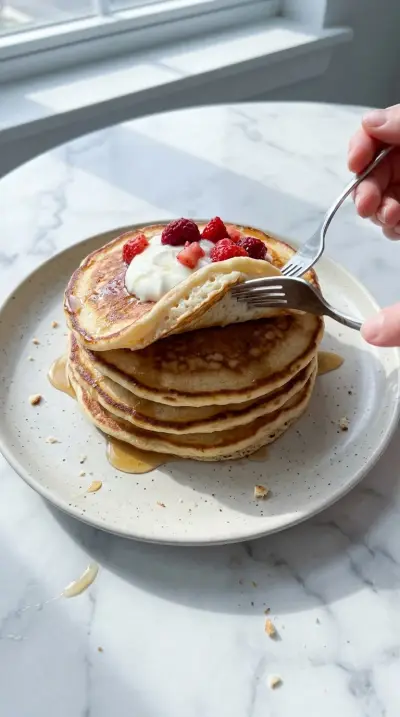
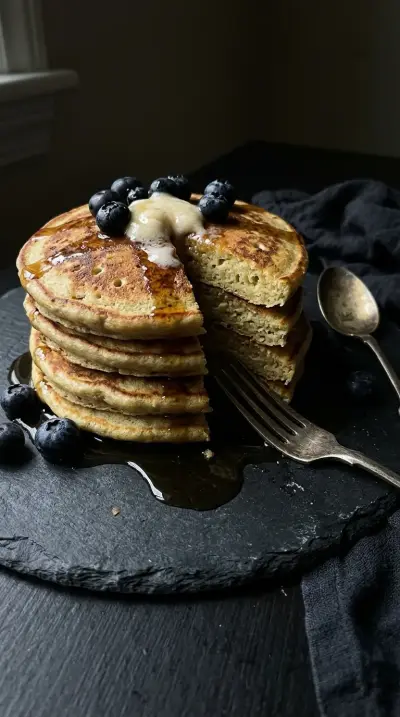
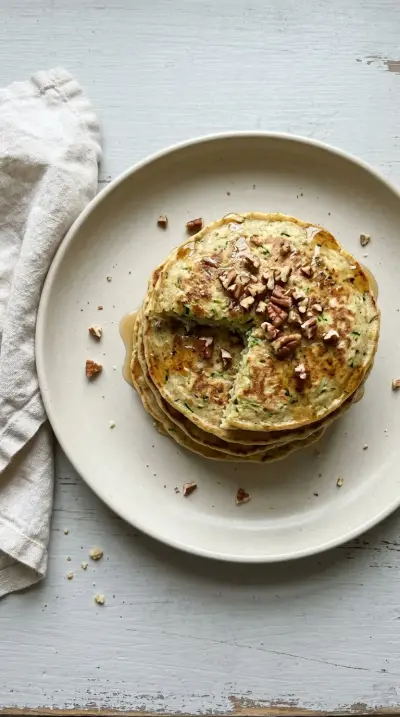
Coconut Flour Pancakes: AIP Friendly Grain-Free Breakfast
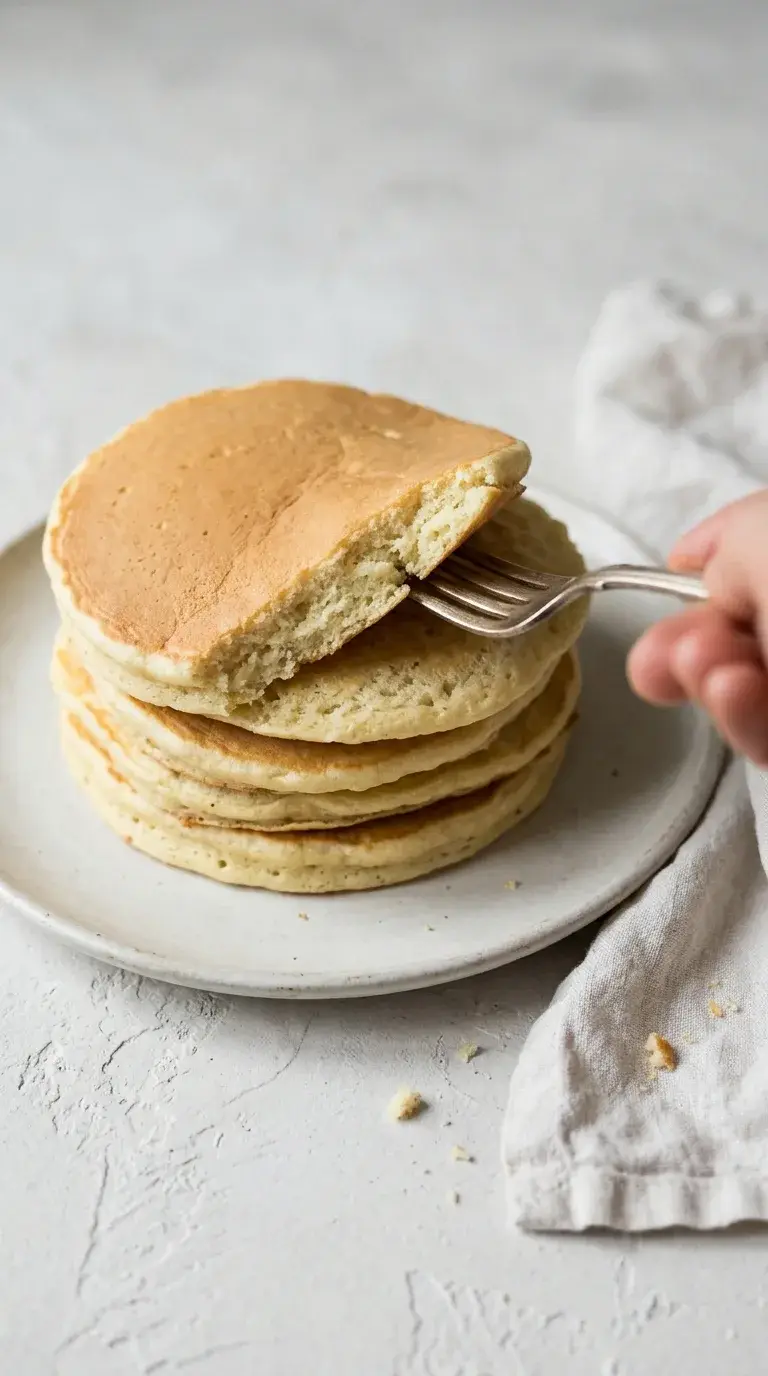
Most cooks rush the batter and skip the hydration phase when making coconut flour pancakes. This mistake produces a gritty texture and a pancake that splits easily in the pan. You end up with a crumbly disk instead of a cohesive cake.
These AIP coconut flour pancakes are light and airy. When prepared correctly, they are hearty and hold their shape without the use of grains. The addition of mashed banana provides a subtle sweetness and helps bind the structure for a consistent result.
The decision between a crumbly pancake and a fluffy one is the resting period. Cover the bowl and let the batter rest for 5 minutes. This allows the coconut flour to fully hydrate, which ensures the batter reaches the correct thickness before it hits the 150°C (302°F) skillet.
Coconut Flour Pancakes: AIP Friendly Grain-Free Breakfast
Recipe cardIngredients
Instructions
-
Mix dry ingredients
Whisk the coconut flour, tapioca starch and sea salt together in a large bowl. Stir until the mixture is smooth. This ensures the starch is evenly distributed to prevent clumps.
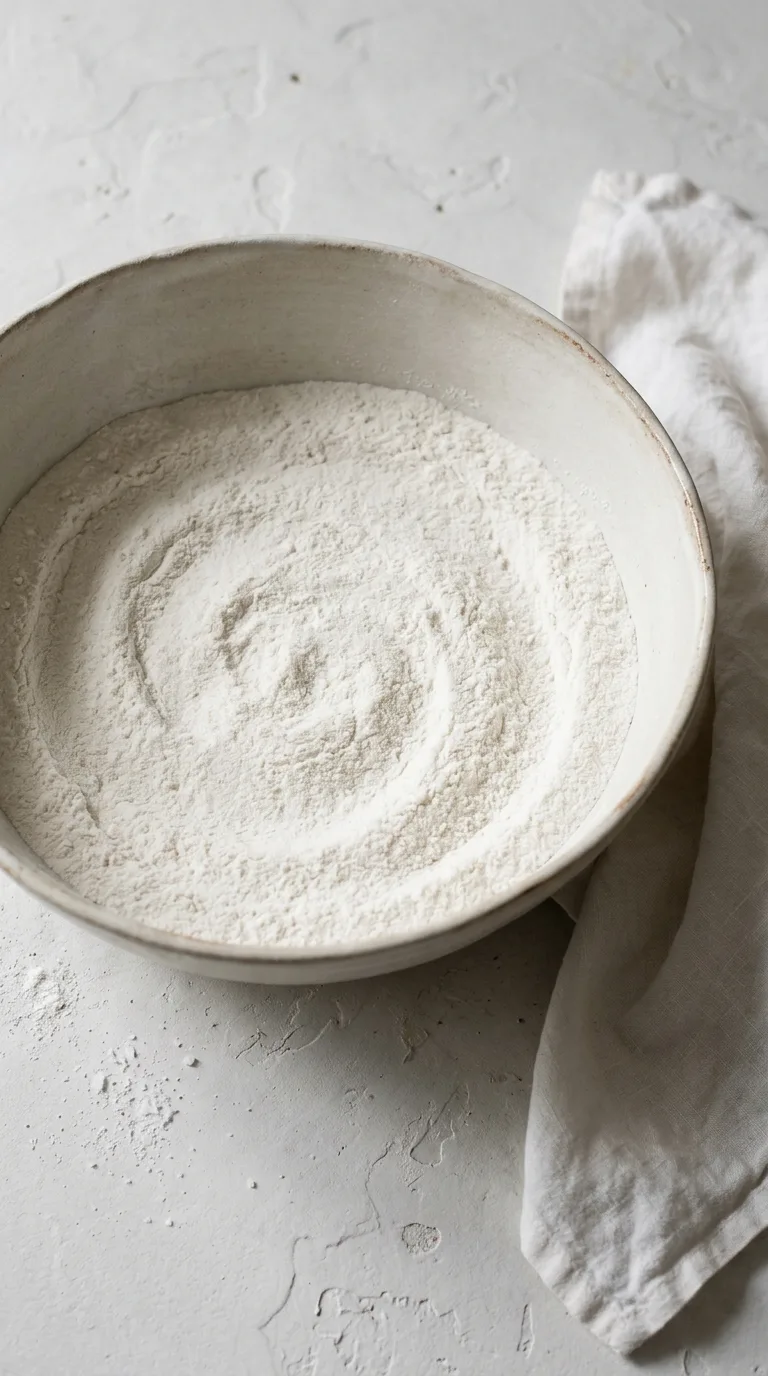
-
Combine wet ingredients
Beat the eggs in a separate bowl. Whisk in the coconut milk, apple juice, vanilla extract and mashed banana until fully mixed.
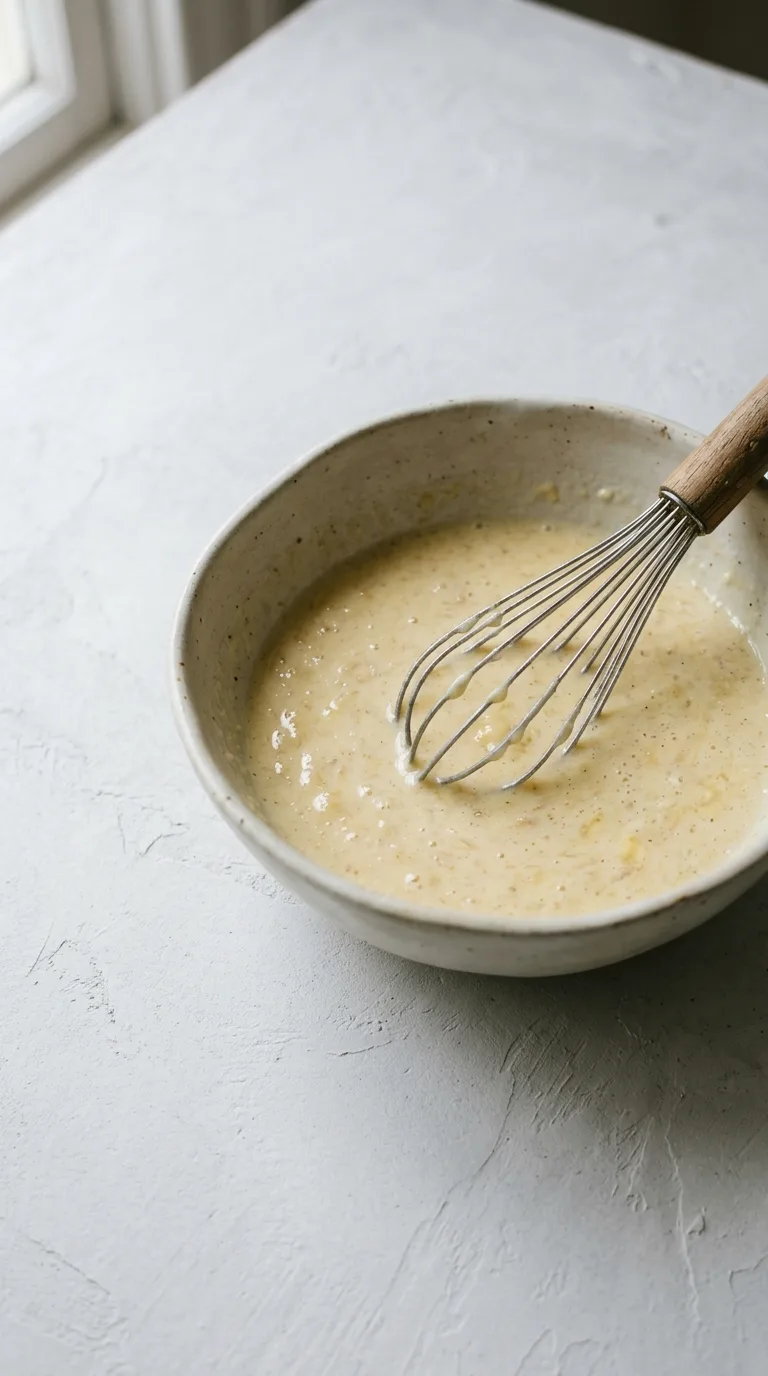
-
Form the batter
Pour the wet mixture into the dry ingredients. Stir until a lump-free batter forms. It must be thick but pourable; add a tablespoon of coconut milk if it feels too dry.
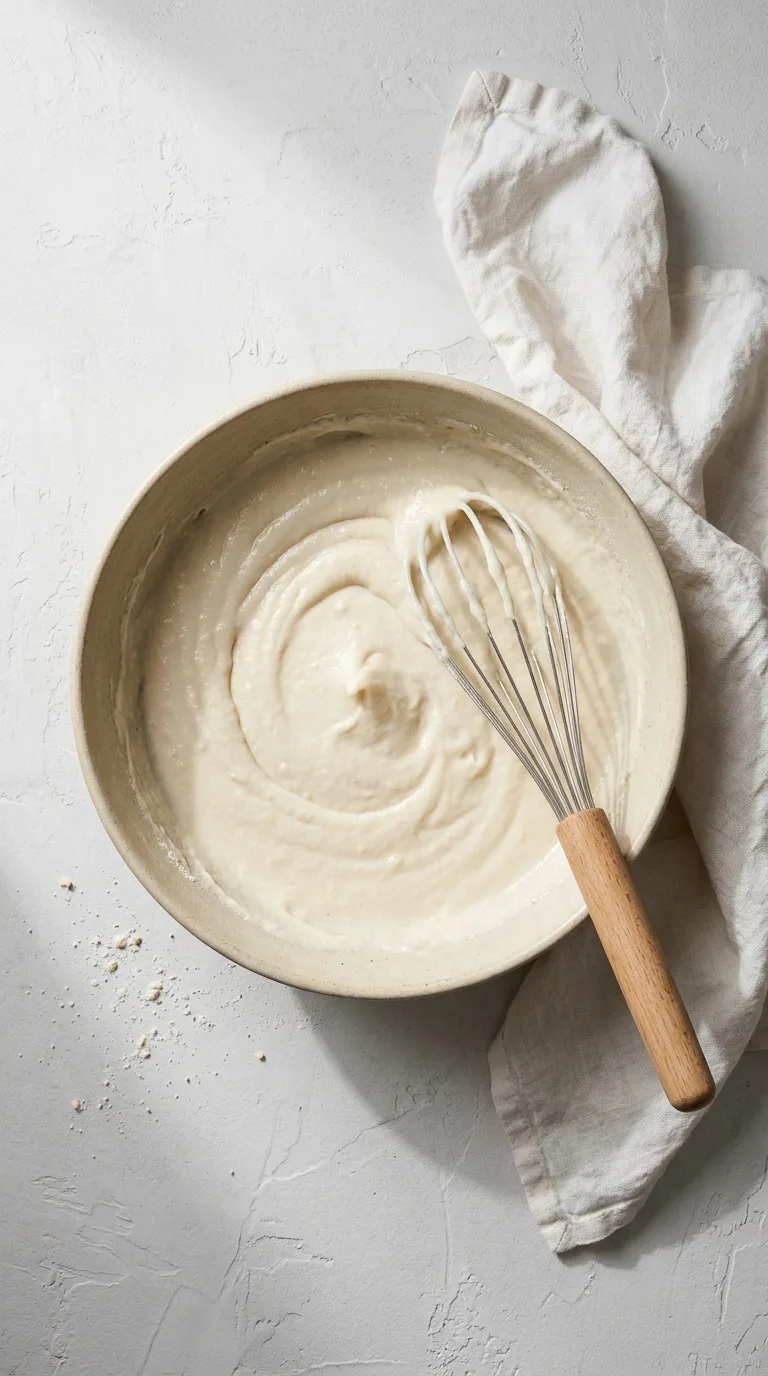
-
Rest the batter
Cover the bowl and let the batter stand. You must do this to allow the coconut flour to fully hydrate, which ensures a better texture.
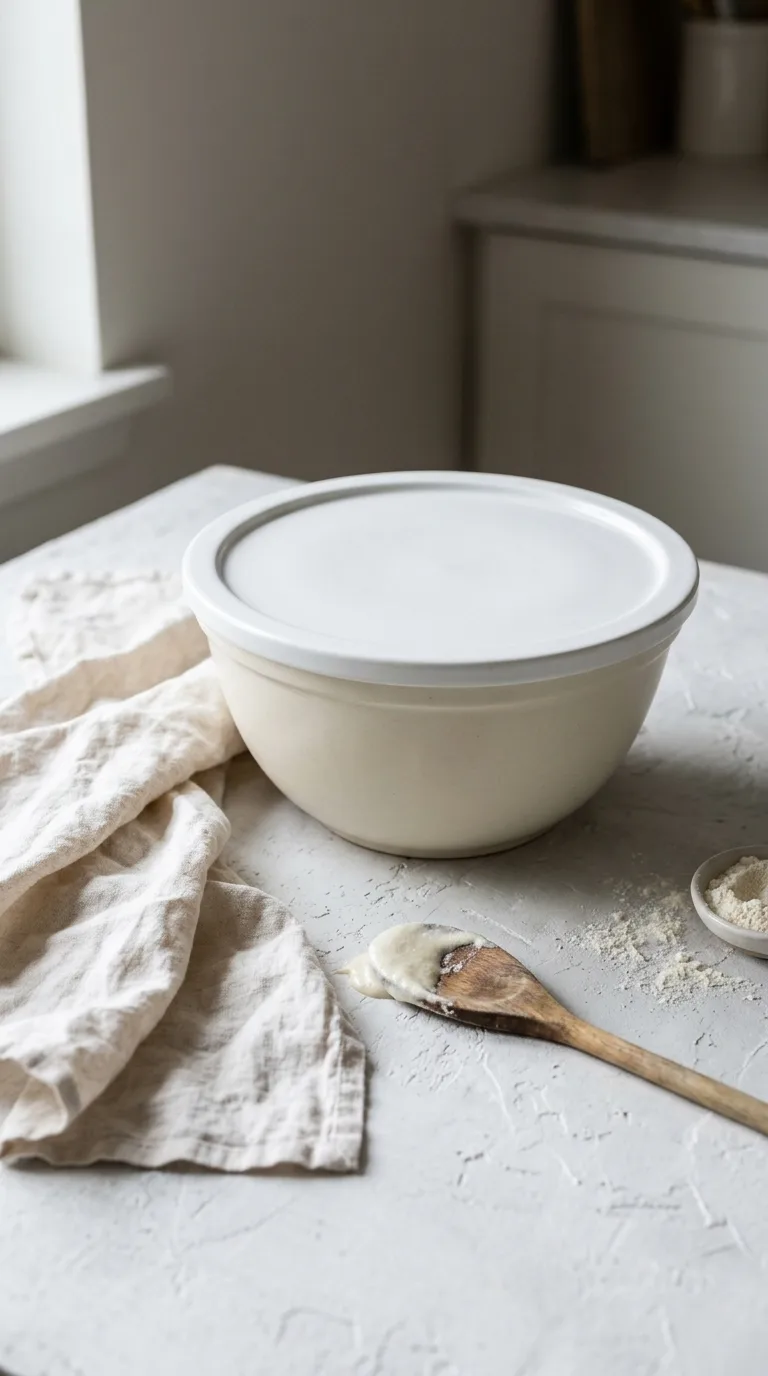
-
Heat the skillet
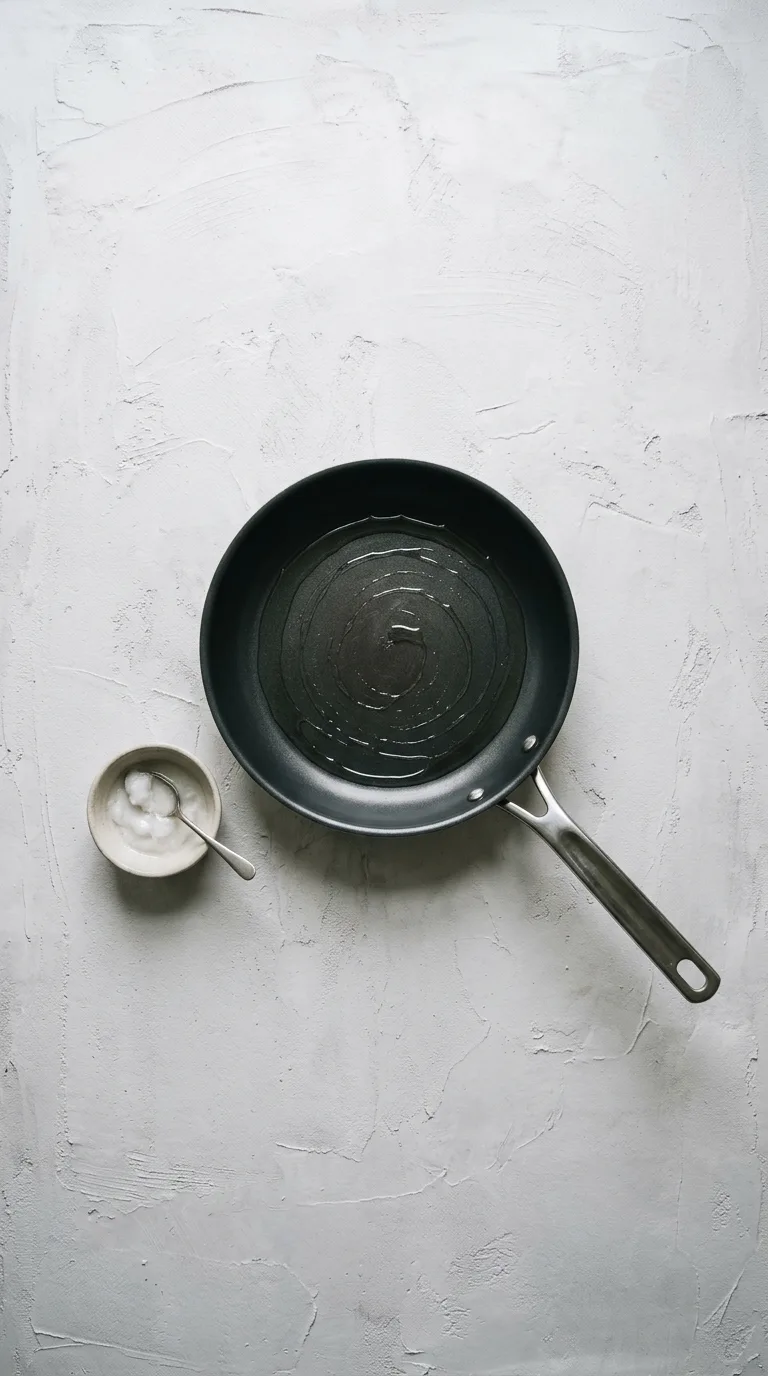
Heat a 26 cm (10-in) non-stick skillet over medium-low heat at 150°C (300°F). Brush coconut oil on the surface. This creates a barrier to prevent the batter from sticking.
-
Fry the pancakes
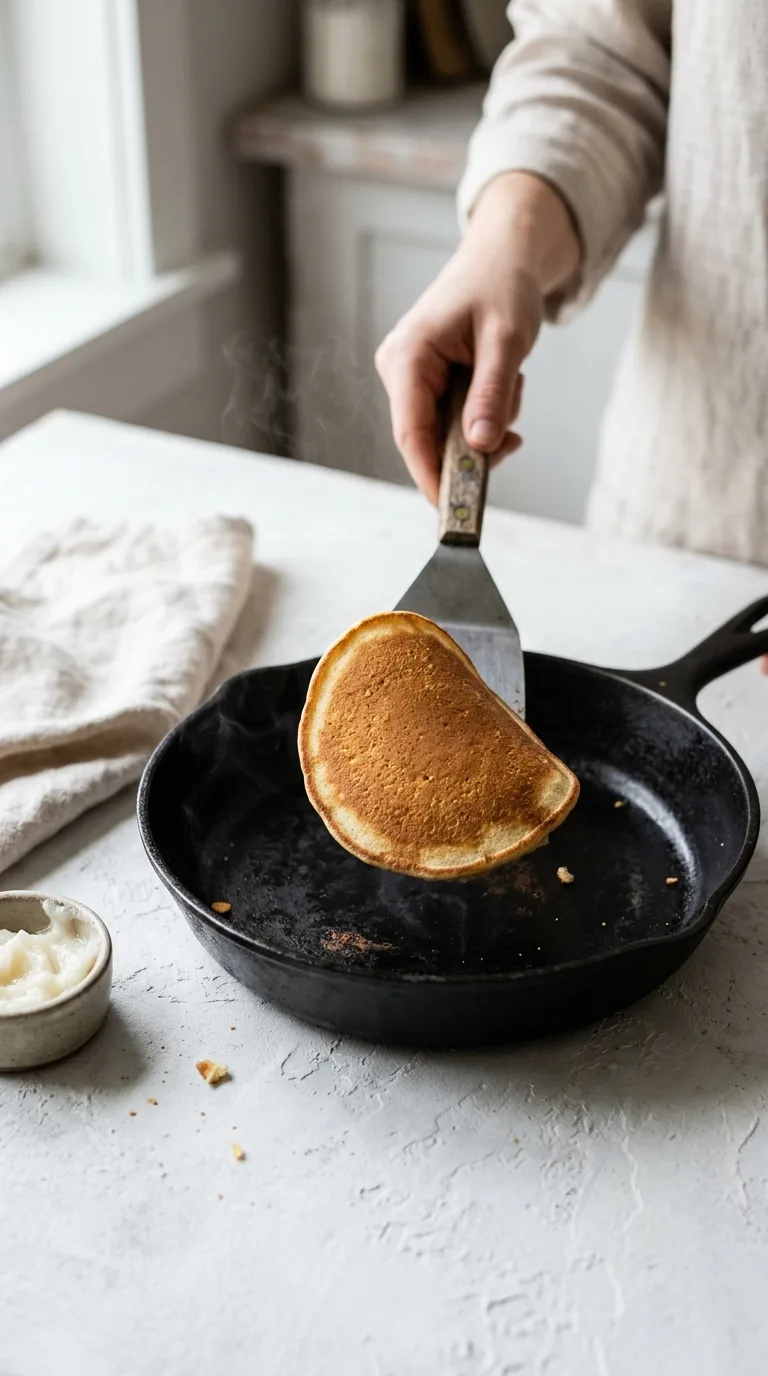
Drop a 50 ml scoop of batter onto the skillet and spread it into a round. Cook for 2 minutes until bubbles form and the edges lift. Flip carefully and cook for another 2 minutes until golden-brown.
-
Finish the batch
Transfer cooked pancakes to a plate. Repeat with the remaining batter, adding more oil if the pan dries out. Keep finished pancakes warm in an oven at 80°C (175°F) while you finish.
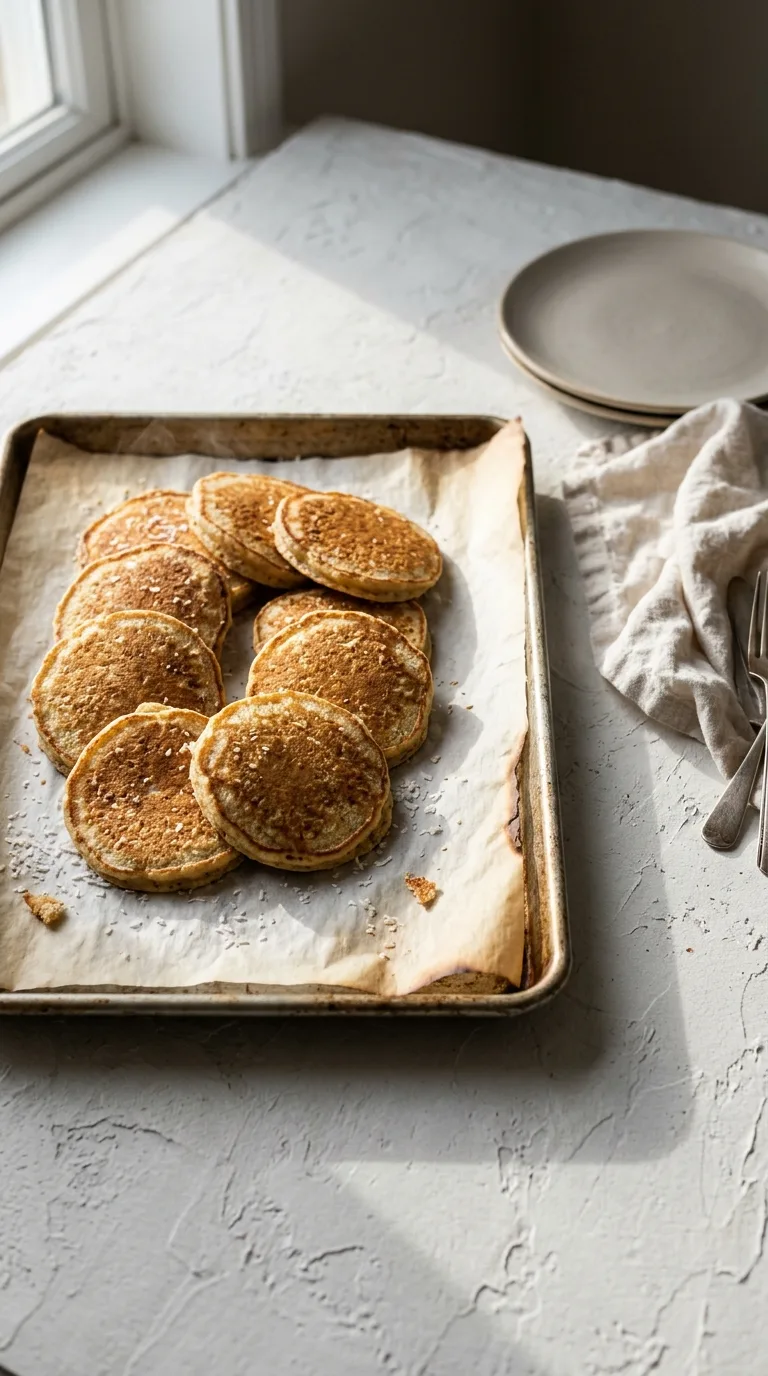
Maintain a medium-low heat throughout the process. If you notice the pancakes browning too quickly before the centre is set, your pan is too hot. High temperatures cause rapid browning and a burnt taste rather than a golden finish.
What goes wrong and why
High heat causes the pancakes to brown too quickly, leaving the centre raw and creating a burnt taste. Watch for edges that darken before bubbles form on the surface. Keep your skillet at 150°C (300°F) to ensure the heat penetrates the batter evenly for a golden-brown finish.
What to serve with it
Pair these pancakes with fresh berries and honey or maple syrup for a sweet meal. For a savoury option, add coconut-almond butter and sea salt. You can also serve them with sliced avocado, chilli flakes, and a squeeze of lime to create a hearty breakfast bowl.
Storing and reheating
Keep cooked pancakes in an airtight container in the fridge for up to 4 days. For longer storage, freeze them in a single layer before transferring to a bag for 2 weeks. Reheat for 5 minutes in a toaster or on low power in a microwave.
Nutrition per serving
- Calories
- 165
- Protein
- 5.2 g
- Carbs
- 11.4 g
- Fat
- 10.8 g
- Fiber
- 3.1 g
- Sugar
- 4.2 g
Estimated, and offered as a guide rather than a medical figure.
Made it? Rate it.
Questions people ask
Can I make these pancakes vegan?
Yes. Replace the 2 eggs with two gelatin eggs made from 5 g each of gelatin dissolved in 2 tablespoons of warm water. Chill the mixture until it sets before stirring it into the batter to maintain the structure.
How do I add more protein to the batter?
Whisk 15 g of collagen powder into the mixture. This powder dissolves cleanly without altering the flavour, which boosts the protein content while keeping the pancakes moist and fluffy.
Why must the batter rest for 5 minutes?
Coconut flour is highly absorbent. Resting the batter allows the flour to fully hydrate, which prevents the pancakes from feeling grainy and ensures a smoother, more consistent texture after cooking.

About the author
Makeva
Makeva is a home‑cook who loves crafting approachable meals that balance flavor and nutrition. She specializes in quick weeknight dinners, hearty soups, and wholesome baked goods, sharing step‑by‑step guidance and practical tips. Readers can expect clear instructions, adaptable recipes, and a friendly tone that encourages confidence in the kitchen.