Chicken Breast Jerky: Savoury Protein Snack
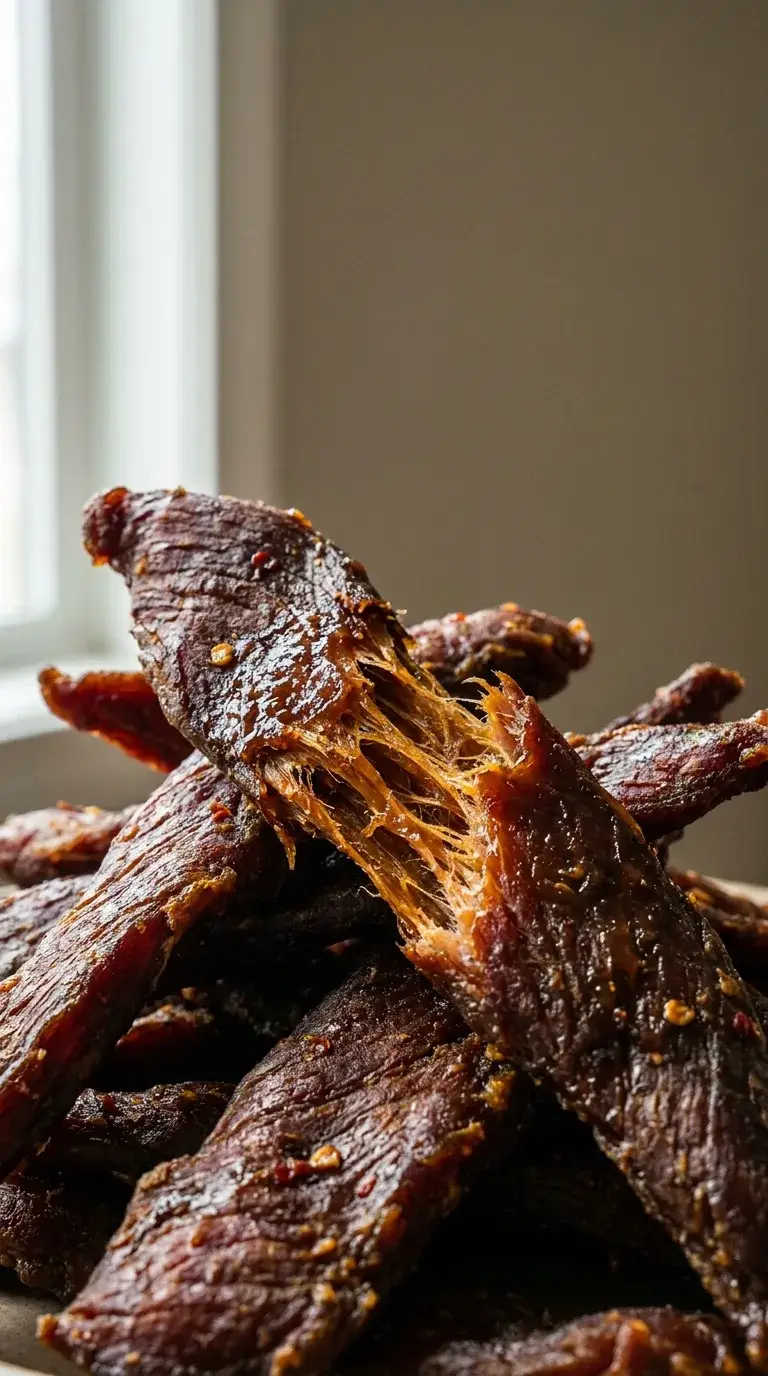
Choose boneless, skinless chicken breasts for your chicken breast jerky to ensure a lean result. Chill the meat in the freezer for 20 minutes before you begin. This firms the muscle fibres so you can slice the meat into uniform strips of 0.4 cm (1/4 in). Cut perpendicular to the grain to ensure the final snack is tender rather than tough.
This savoury snack uses a marinade of soy sauce, honey, rice vinegar, and sriracha. You pre-cook the meat at 120°C (250°F) to kill bacteria before reducing the heat to 70°C (160°F) for dehydration. The result is a leathery, protein-packed treat that snaps when bent. It balances salt and heat for a snack that remains firm yet pliable after cooling.
Chicken Breast Jerky: Savoury Protein Snack
Recipe cardIngredients
Instructions
-
Prepare the meat
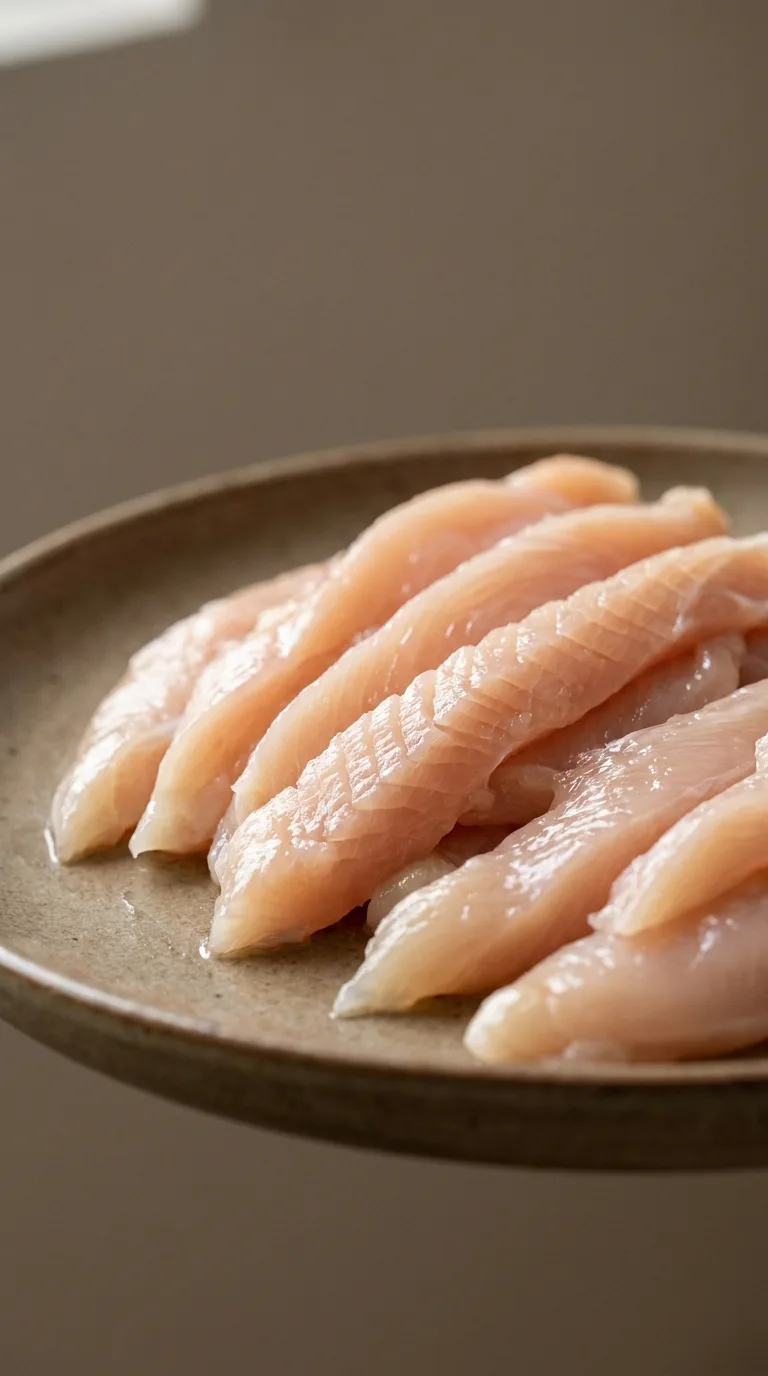
Chill the chicken breasts in the freezer for 20 minutes if they are firm. Slice them into 0.4 cm (1/4 in) strips perpendicular to the grain. This ensures the jerky is tender rather than chewy.
-
Mix the marinade
Whisk the soy sauce, honey, rice vinegar, sriracha, minced garlic, black pepper, pink curing salt and optional chili flakes in a large bowl. Stir until the mixture is smooth. This blend provides the essential savoury and sweet base.
-
Marinate the chicken
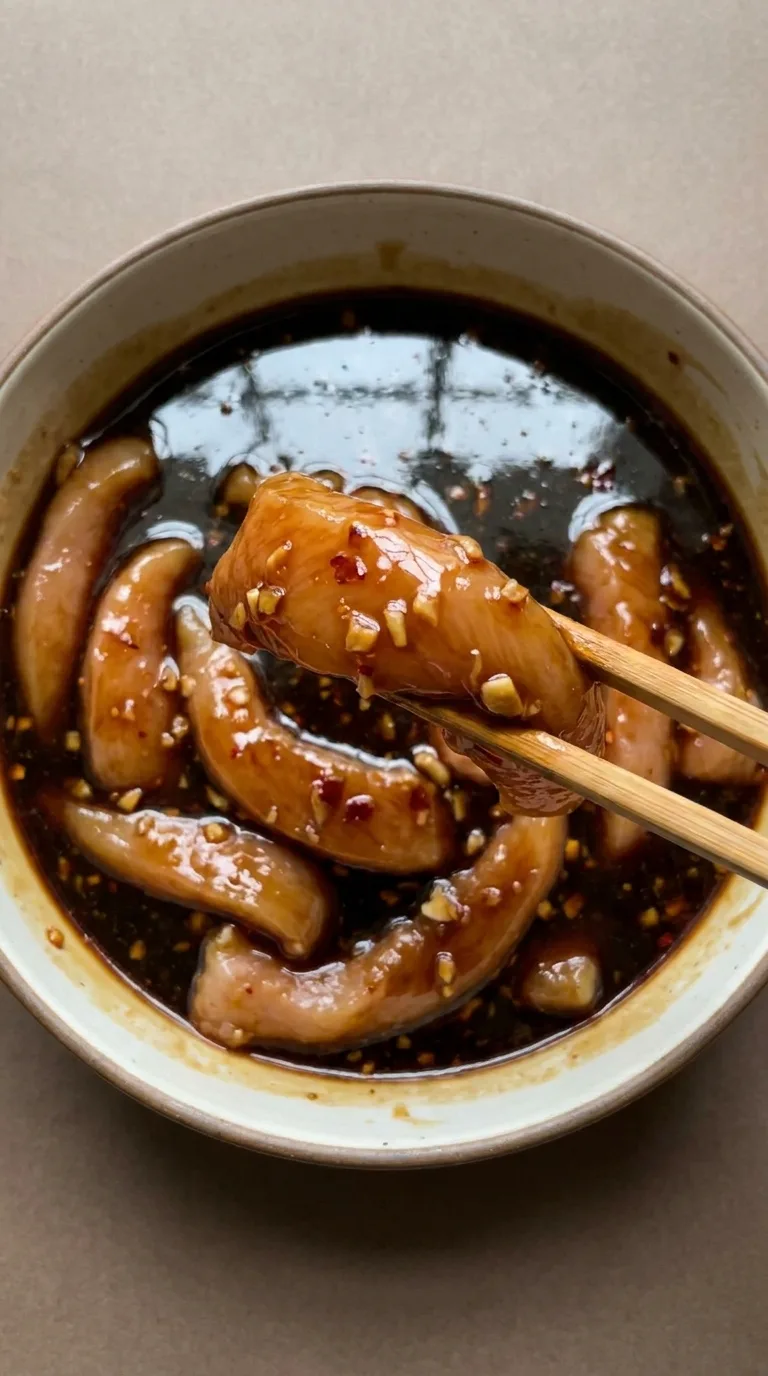
Submerge the chicken strips in the sauce and cover with cling film. Refrigerate for at least 8 hours, turning the slices every two hours. Constant rotation ensures the seasoning penetrates every piece evenly.
-
Pre-cook the strips
Preheat your oven to 120°C (250°F). Arrange strips on a wire rack over a lined baking sheet and bake for 15 minutes. Use a thermometer to ensure an internal temperature of 74°C (165°F) to kill bacteria.
-
Dehydrate the jerky
Reduce the oven temperature to 70°C (160°F) and dry the meat for 3 to 5 hours. Check every hour until the pieces snap when bent. Low heat removes moisture without making the meat brittle.
-
Cool and store
Let the jerky cool completely on the wire rack until it feels firm yet pliable. If it remains moist, dry it for another 30 to 60 minutes. Transfer the finished snack to an airtight container.
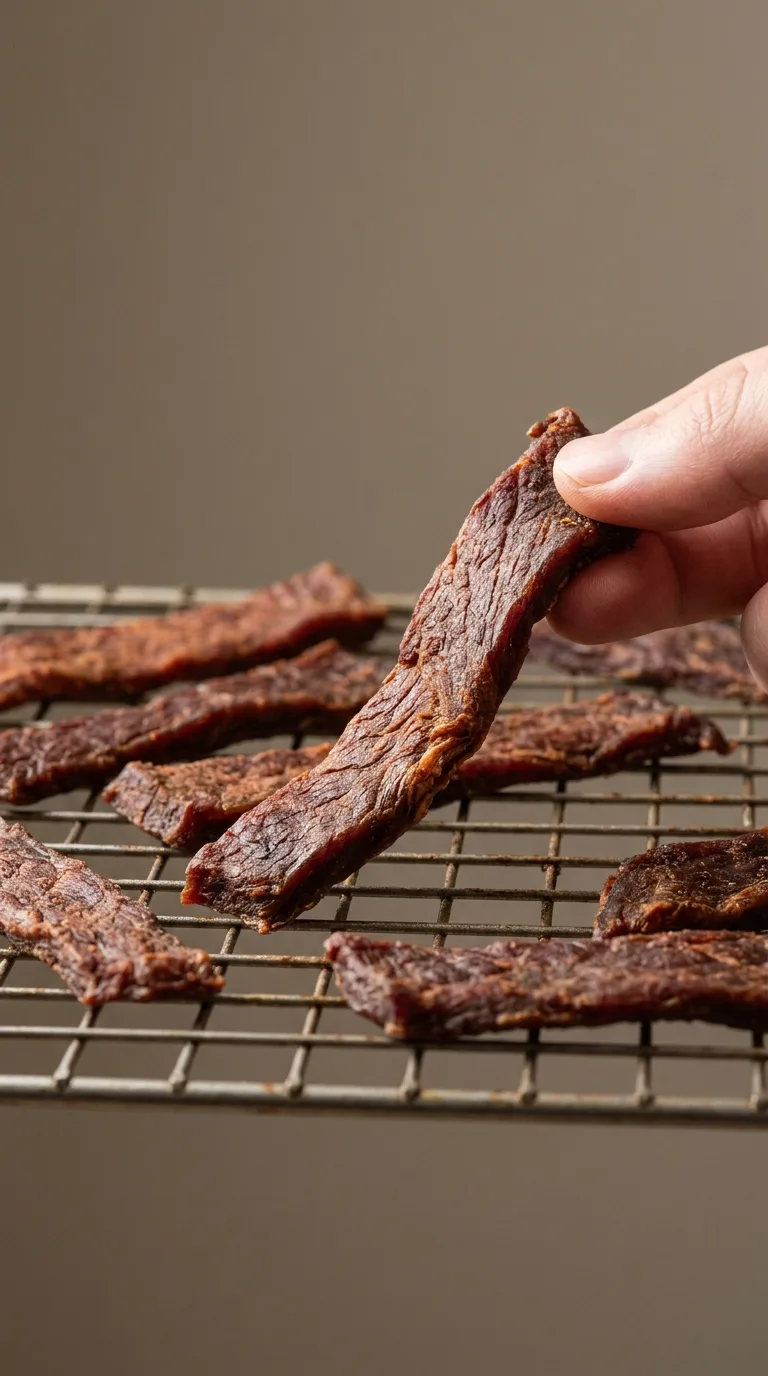
Check the jerky regularly during the final dehydration stage. If the pieces feel sticky or soft, they still contain too much moisture and will spoil quickly. Continue drying in 30-minute increments until the meat is leathery and snaps cleanly when bent.
What to serve with it
Pair these strips with sliced cucumber and feta or a handful of mixed nuts for a hearty trail snack. You can also add the jerky to a salad for a protein boost or mix it with grated carrot and toasted sunflower seeds in a wrap with lemon vinaigrette for a crunchy filling.
Storing and reheating
Keep the jerky in a cool, dry place in an airtight container for up to 4 weeks. For longer storage, use a vacuum-sealed bag and freeze the pieces. This method preserves the texture and prevents the meat from absorbing fridge odours, keeping the jerky fresh for up to 6 months.
Nutrition per serving
- Calories
- 165
- Protein
- 22.4 g
- Carbs
- 8.2 g
- Fat
- 3.1 g
- Fiber
- 0.4 g
- Sugar
- 4.1 g
Estimated, and offered as a guide rather than a medical figure.
Made it? Rate it.
Questions people ask
Is chicken breast good for jerky?
Yes. Chicken breast provides a lean, neutral base that absorbs marinades well. Cutting perpendicular to the grain ensures the final result is tender rather than tough, making it a suitable alternative to beef for those seeking a lighter protein snack.
Does chicken breast dehydrate well?
Yes. Because chicken breast is lean, it loses moisture efficiently at low temperatures. Using a wire rack allows air to circulate around all sides, which ensures the meat dries evenly and reaches a leathery, pliable consistency without becoming brittle.
Do you have to cook chicken before making jerky?
Yes. You must bake the strips at 120°C (250°F) until they reach an internal temperature of 74°C (165°F). This initial heat kills bacteria and ensures the meat is safe to eat before the slower dehydration process begins.
Why isn't chicken jerky common?
Chicken has less fat and connective tissue than beef. This means it can dry out too quickly or become tough if not handled correctly. Precise temperature control and a proper marinade are required to achieve the correct chewy texture.

About the author
Makeva
Makeva is a home‑cook who loves crafting approachable meals that balance flavor and nutrition. She specializes in quick weeknight dinners, hearty soups, and wholesome baked goods, sharing step‑by‑step guidance and practical tips. Readers can expect clear instructions, adaptable recipes, and a friendly tone that encourages confidence in the kitchen.