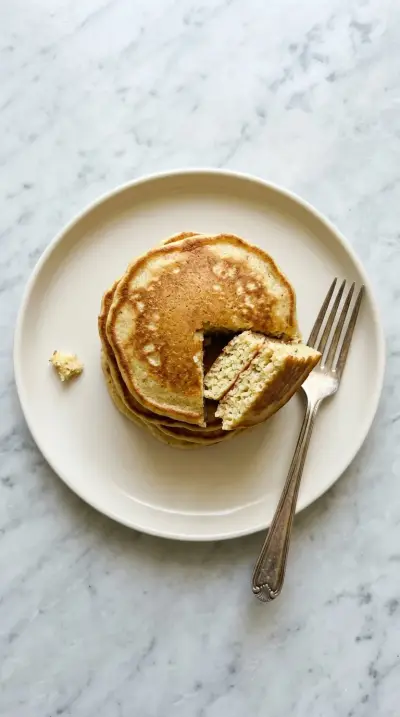
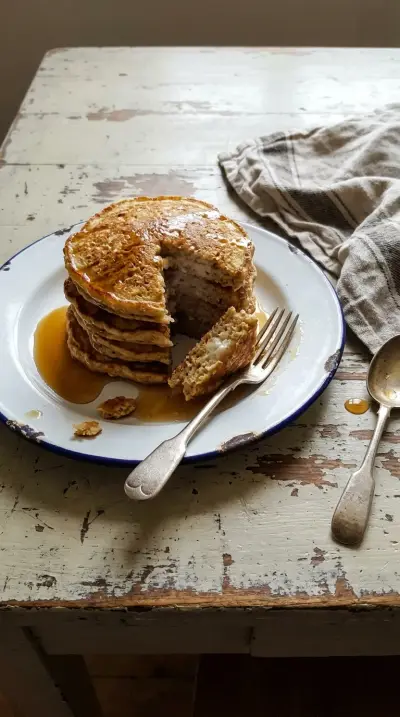
Overnight Buttermilk Oatmeal Pancakes: Tender Griddle Breakfast
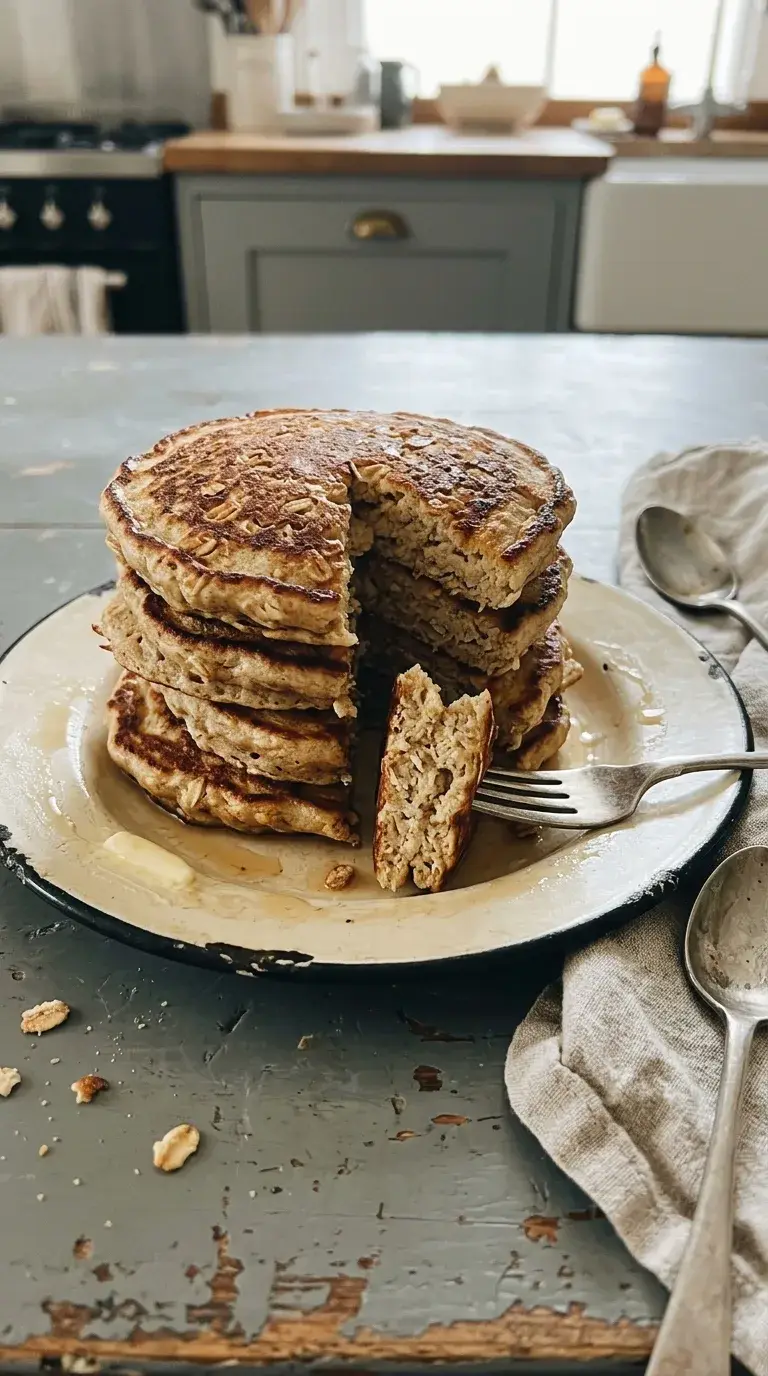
Traditional cultured buttermilk decides whether overnight buttermilk oatmeal pancakes rise light and tender or turn out flat and chewy. Buy full-fat cultured buttermilk with live active cultures and thick body, because its natural acidity reacts directly with bicarbonate of soda for lift while breaking down tough oat fibres overnight. Put thin buttermilk substitutes made from acid-curdled skimmed milk back on the shelf, as they lack the viscosity and lactic depth needed to soften 180 g rolled porridge oats properly over 8 hours in the refrigerator.
In the morning, stir 2 large eggs, 40 g melted unsalted butter, and 1 teaspoon pure vanilla extract into the swollen oats before folding in 65 g plain flour and raising agents. Cook 60 ml ladles over medium-low heat until golden brown edges frame a moist, tender crumb with mild tang.
Overnight Buttermilk Oatmeal Pancakes: Tender Griddle Breakfast
Recipe cardIngredients
Instructions
-
Soak the rolled oats
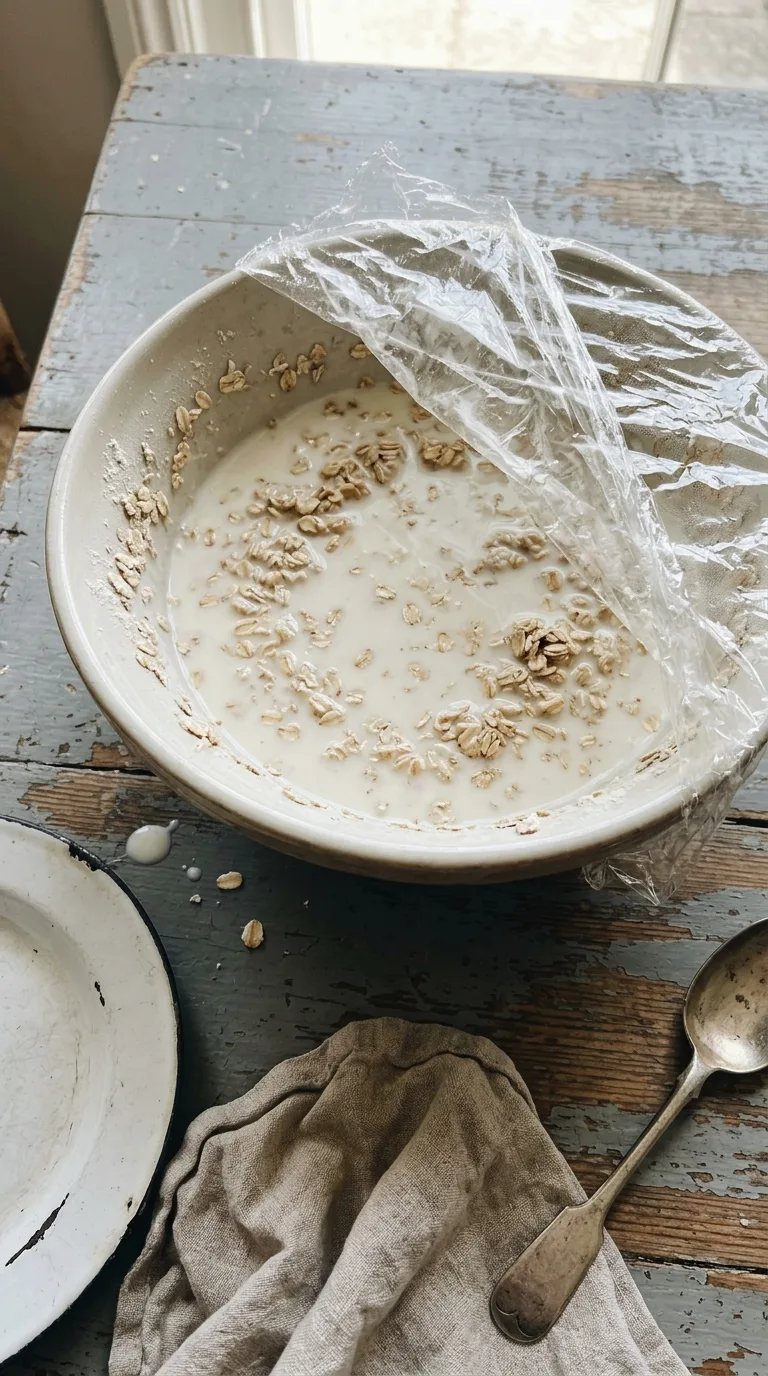
Combine the 180 g rolled porridge oats and 540 ml buttermilk in a large mixing bowl, stirring thoroughly so every oat flake is submerged. Cover the bowl tightly with cling film or an airtight lid and refrigerate for at least 8 hours or overnight. This long rest allows the acidic buttermilk to break down tough oat fibres so the grains soften completely.
-
Warm the oven and check batter
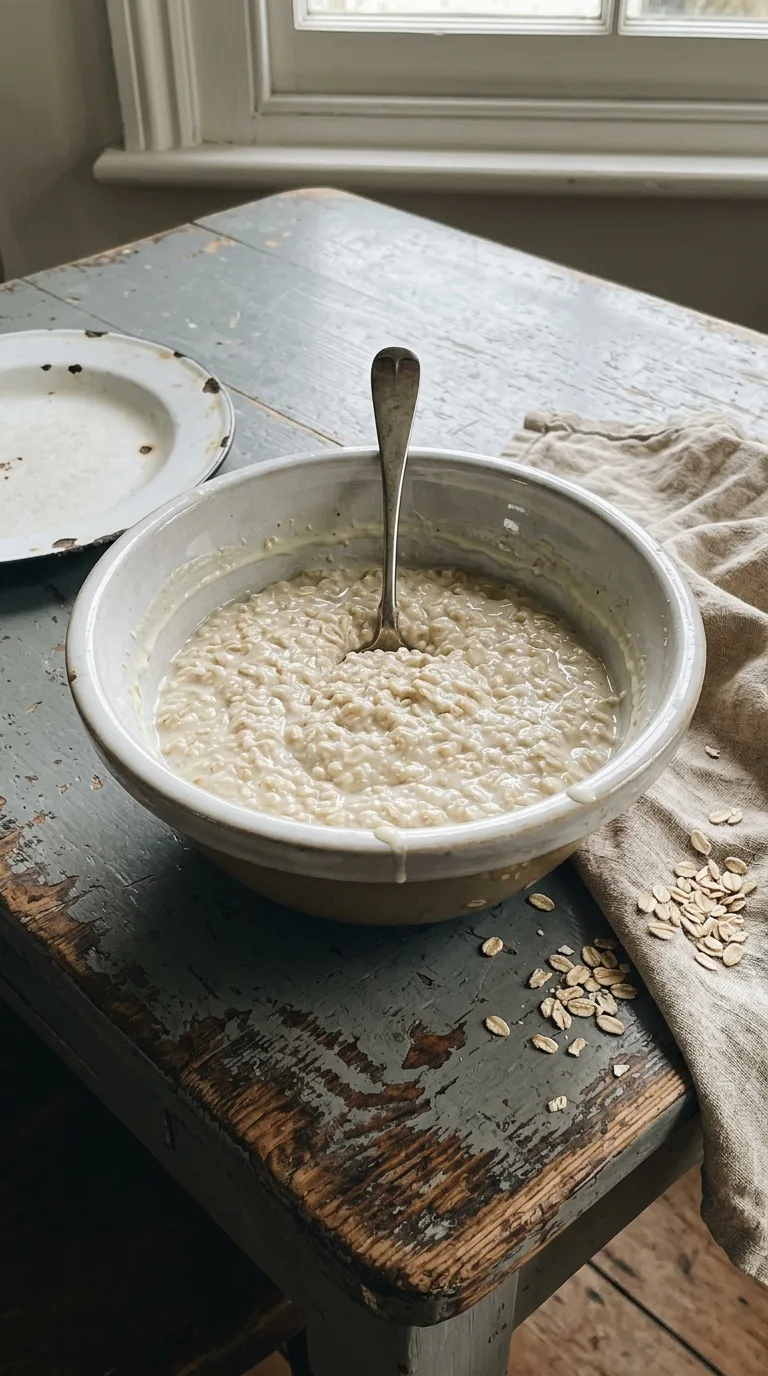
In the morning, preheat your oven to 120°C (250°F) with a clean baking tray inside to keep finished pancakes warm. Remove the soaked oats from the refrigerator and stir well to check their thickness. Because oats continue absorbing liquid overnight, stir in up to 30 ml extra buttermilk if the mixture looks stiff rather than pourable.
-
Whisk the dry ingredients
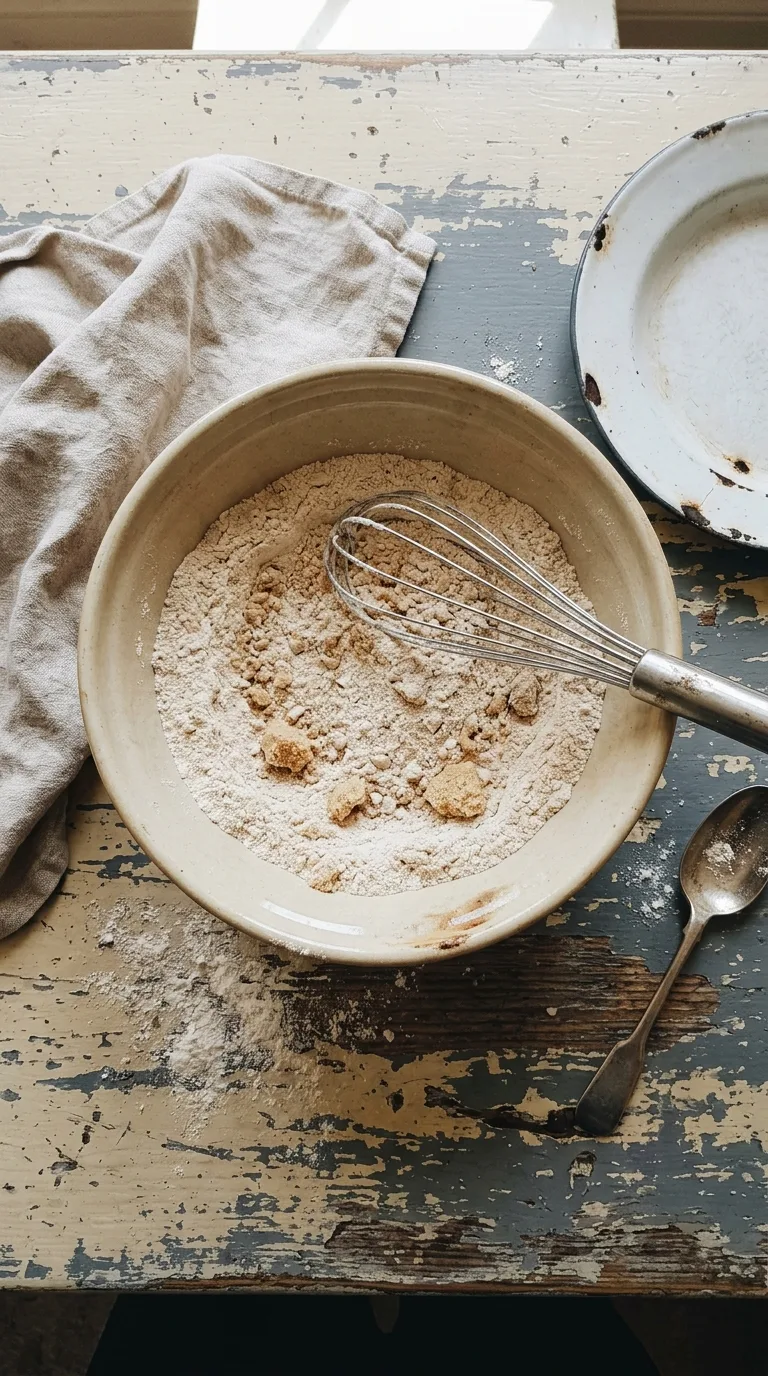
In a medium mixing bowl, whisk together the 65 g plain flour, 35 g light soft brown sugar, 1 teaspoon baking powder, 0.5 teaspoon bicarbonate of soda, and 0.5 teaspoon fine sea salt. Whisking distributes the raising agents and salt evenly so every pancake rises consistently without pockets of bitter soda.
-
Combine the wet oat base
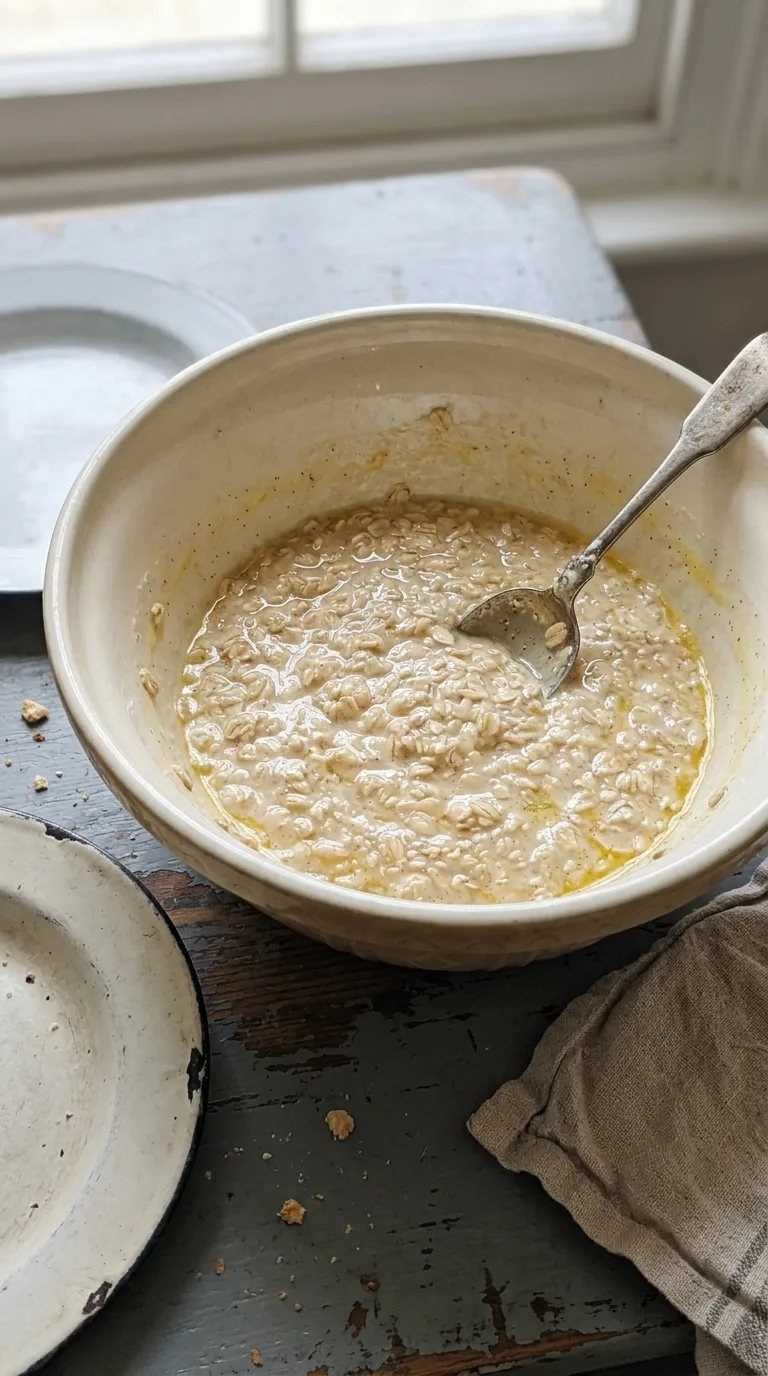
Add the 2 lightly beaten large eggs, 40 g melted unsalted butter, and 1 teaspoon pure vanilla extract to the soaked oats. Stir until smooth and cohesive so the fat and eggs emulsify evenly into the cold buttermilk mixture.
-
Fold the batter gently
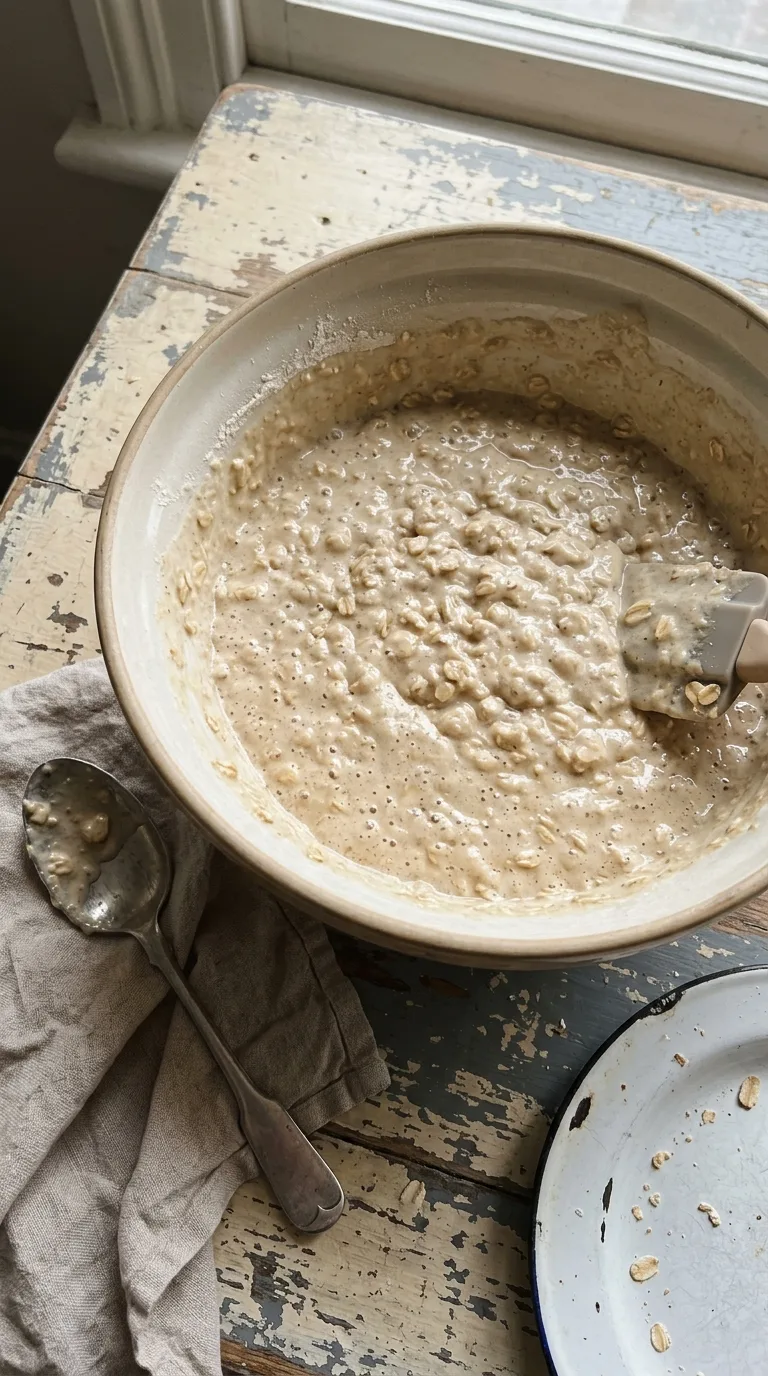
Tip the dry flour mixture into the wet oat base and fold gently with a spatula just until no dry streaks remain. Stop as soon as the flour disappears, because overmixing develops gluten and knocks out the air bubbles needed for a light crumb.
-
Heat and grease the pan
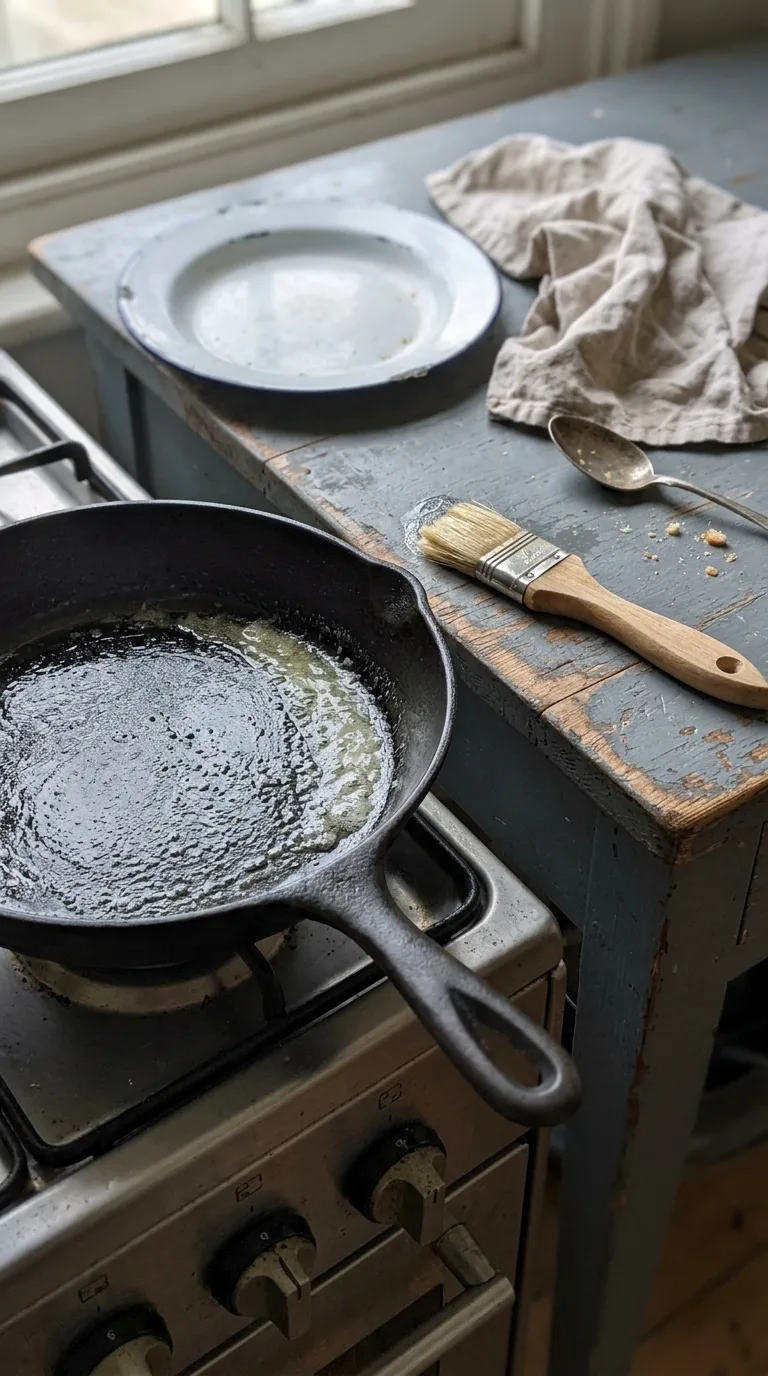
Set a 25 cm non-stick frying pan or cast-iron griddle over medium-low heat for 2 minutes until evenly warm. Brush the surface lightly with a little of the remaining 15 g unsalted butter until it sizzles gently without turning brown, which prevents scorching.
-
Cook the first side
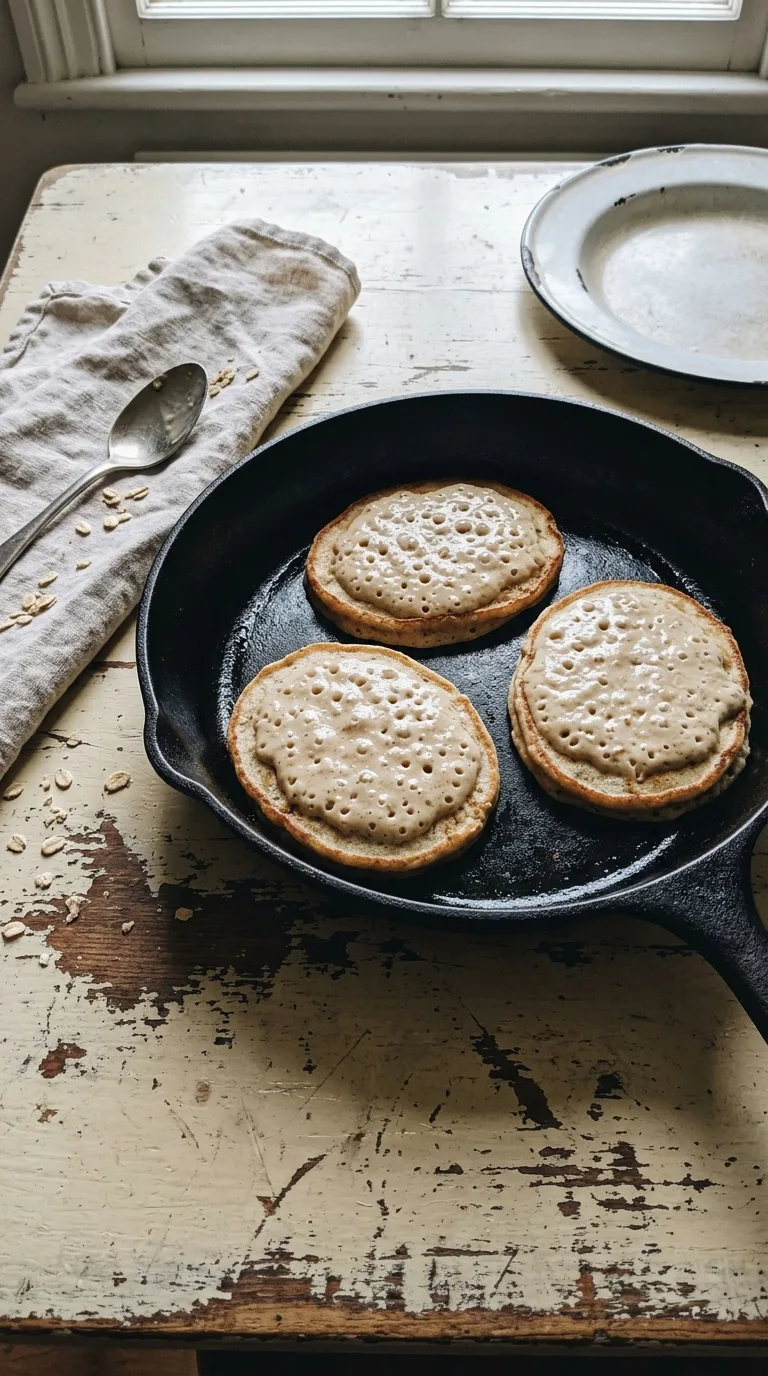
Ladle 60 ml of batter per pancake onto the pan, leaving at least 4 cm between each one so they have room to spread. Cook for 2 to 3 minutes until small bubbles rise and pop across the surface and the outer edges look set and golden brown.
-
Flip, finish, and keep warm
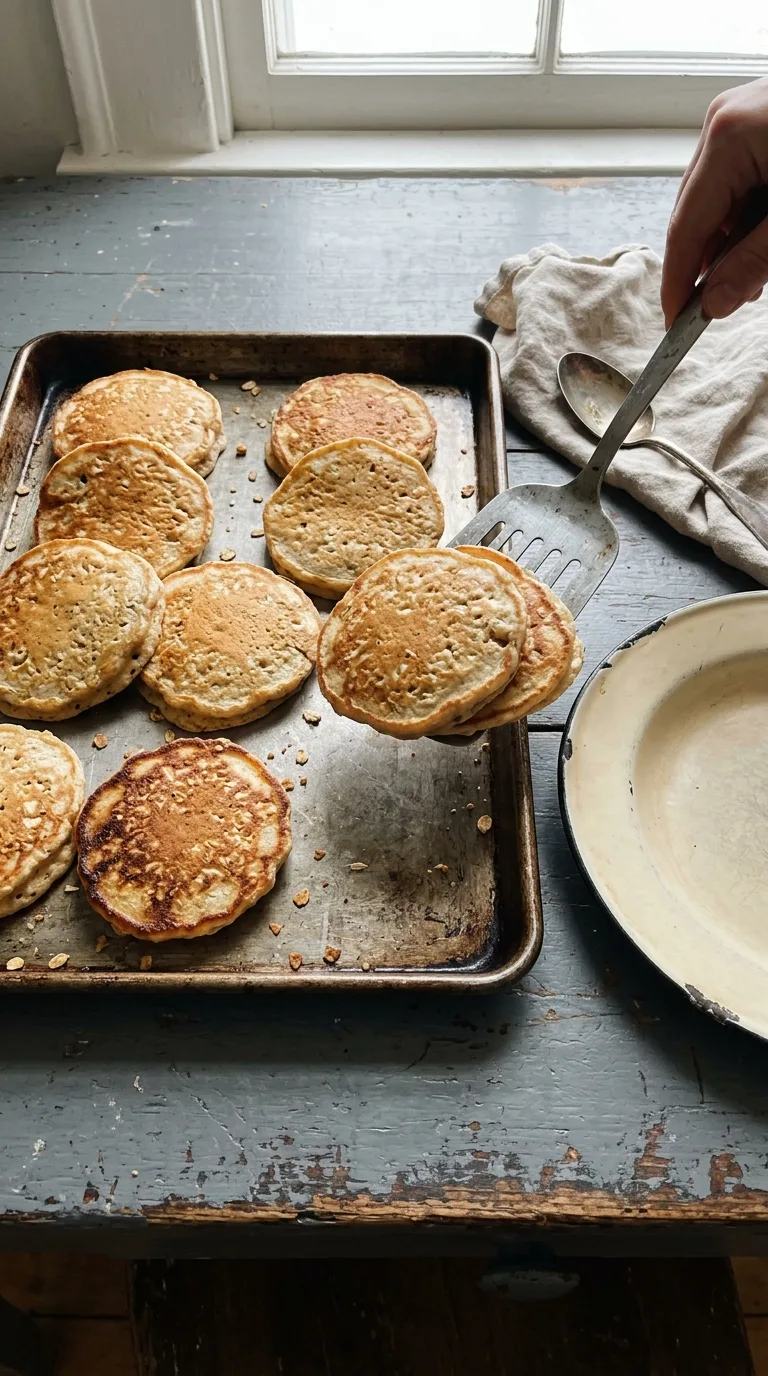
Slide a wide slotted spatula underneath each pancake, flip carefully, and cook for a further 2 minutes until the underside is deep golden brown and the centre springs back lightly when pressed. Transfer cooked pancakes to the warm baking tray in the oven while you grease the pan again and repeat with the remaining batter, then serve warm.
High burner heat is the most common mistake here: dense oat batter needs steady medium-low warmth so the centre cooks through before the brown sugar scorches. If the outside turns dark brown before bubbles pop across the top, lower the heat immediately.
Cultured buttermilk
Cultured buttermilk provides the acidity needed to activate bicarbonate of soda and soften oat fibres overnight. If you cannot find it, stir 2 tablespoons lemon juice or white vinegar into 540 ml whole milk and rest for 10 minutes; this mimics the acidity, though the batter will be thinner and less rich.
What to serve with it
Stack three warm pancakes on each plate and drizzle with pure maple syrup alongside fresh raspberries and blueberries. For a sweet-and-savoury plate, serve them with crispy halal beef or turkey bacon rashers and thick Greek yoghurt, or top with sliced bananas caramelised in unsalted butter and ground cinnamon.
Storing and reheating
Cool leftover pancakes completely on a wire rack, then pack them into an airtight container in the refrigerator for up to 3 days. To freeze for up to 2 months, layer them between sheets of baking parchment inside a freezer-safe bag, then reheat directly from frozen in a toaster or at 180°C (350°F) for 5 to 7 minutes.
Nutrition per serving
- Calories
- 145
- Protein
- 4.5 g
- Carbs
- 18.2 g
- Fat
- 5.8 g
- Fiber
- 1.7 g
- Sugar
- 5.1 g
Estimated, and offered as a guide rather than a medical figure.
Made it? Rate it.
Questions people ask
Can you make overnight oats with buttermilk?
Yes, rolled oats soaked in buttermilk are safe to eat cold, though plain buttermilk gives them a sharp, savoury-sour tang. Stirring in light soft brown sugar, pure vanilla extract, and warm spices or sweet toppings balances that natural acidity.
Can I make buttermilk pancakes the night before?
Soak only the 180 g rolled porridge oats and 540 ml buttermilk overnight, then fold in the raising agents just before cooking. Mixing bicarbonate of soda and baking powder the night before exhausts their lift early, producing flat pancakes.
What happens if I use buttermilk instead of milk in pancakes?
Buttermilk contains lactic acid that reacts immediately with bicarbonate of soda to create extra carbon dioxide bubbles for higher lift. Its acidity also breaks down tough oat fibres during the 8-hour soak, giving you a softer crumb and mild tang.

About the author
Makeva
Makeva is a home‑cook who loves crafting approachable meals that balance flavor and nutrition. She specializes in quick weeknight dinners, hearty soups, and wholesome baked goods, sharing step‑by‑step guidance and practical tips. Readers can expect clear instructions, adaptable recipes, and a friendly tone that encourages confidence in the kitchen.