Can You Cook Chicken Breast from Frozen Safely and Juicily?
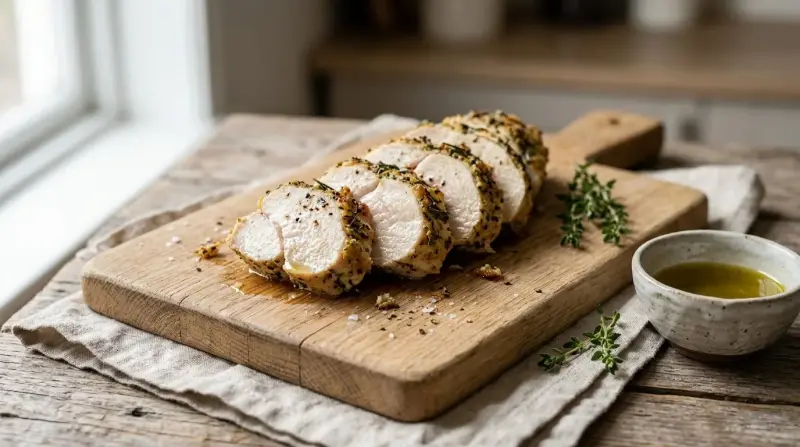
Yes, you can safely cook chicken breast straight from frozen without thawing it first. You simply need to increase the cooking time by about fifty percent compared to fresh poultry, add moisture to prevent drying, and verify with a digital food thermometer that the thickest part reaches 74°C (165°F) before serving.
Why Most Cooks Think Frozen Chicken Must Be Thawed
Many home cooks believe that placing rock-hard chicken straight into a hot pan or oven is a recipe for foodborne illness or rubbery, inedible meat. That belief is half true and half false. The safety fear is unfounded: cooking poultry from frozen is completely safe provided the centre reaches 74°C (165°F). The texture concern, however, has a real scientific basis. Because the exterior thaws and heats long before the frozen core warms up, high dry heat will overcook the outside while leaving the middle raw.
The solution is not mandatory thawing, which takes up to twenty-four hours in the refrigerator, nor is it using your microwave defrost setting, which often starts cooking the thin edges unevenly. Instead, you can bridge the temperature gap by lowering your cooking heat slightly, trapping steam, or using liquid. When you manage heat transfer properly, ice crystals melt gradually and the muscle fibres retain their natural juices rather than squeezing them out under extreme heat.
Keep one strict food safety rule in mind: never place frozen chicken in a slow cooker. Slow cookers warm food too gradually, keeping the poultry in the bacterial danger zone between 4°C (40°F) and 60°C (140°F) for hours before reaching a safe temperature. Stick to the oven, stovetop, or pressure cooker for reliable, fast results.
Best Methods for Cooking Frozen Chicken Breast
Different kitchen appliances handle frozen poultry differently. Before you start, check whether your chicken breasts are frozen individually or fused together in a solid block. You must separate fused pieces before cooking so heat can circulate around every surface. If two breasts are stuck together, run cold tap water over the seam for thirty seconds and gently twist them apart with a butter knife.
| Cooking Method | Temperature or Setting | Estimated Time for 170 g (6 oz) Breast | Best Moisture Technique |
|---|---|---|---|
| Oven Baking | 175°C (350°F) | 30 to 40 minutes | Cover tightly with foil or parchment |
| Stovetop Braising | Medium-low heat | 20 to 25 minutes | Simmer in 120 ml (0.5 cup) broth |
| Electric Pressure Cooker | High pressure | 10 to 12 minutes plus natural release | Add 240 ml (1 cup) broth to the pot |
Oven Baking in Foil or Parchment
Baking is the most hands-off approach when you are preparing several pieces at once. Preheat your oven to 175°C (350°F) rather than the standard 200°C (400°F) used for fresh poultry. Line a rimmed baking tray with parchment paper, brush both sides of each frozen breast with 15 millilitres (1 tablespoon) of olive oil, and season generously with salt, black pepper, garlic powder, and dried oregano.
Lay a sheet of aluminium foil loosely over the chicken, crimping the edges to the tray to trap steam during the first twenty minutes. Remove the foil for the final ten to fifteen minutes so the surface dries slightly and takes on light colour. Once a thermometer inserted into the thickest section reads 74°C (165°F), transfer the meat to a plate and let it rest for five minutes.
Stovetop Braising with Broth
A heavy skillet works remarkably well when you add liquid to conduct heat evenly into the frozen core. Heat 15 millilitres (1 tablespoon) of olive oil in a wide frying pan over medium-low heat. Place the seasoned frozen chicken breasts in the pan and pour in 120 millilitres (0.5 cup) of chicken or vegetable broth. Cover the pan with a tight-fitting lid immediately.
Let the chicken steam and simmer gently for ten minutes, then flip each breast over, add a splash more broth if the pan looks dry, and cover again for another ten to fifteen minutes. Once the internal temperature reaches 74°C (165°F), remove the lid and turn the heat up to medium-high for one minute to reduce the remaining pan juices into a light savoury glaze. If you prefer a seared crust alongside tender vegetables, consider thawing your poultry ahead of time for our Chicken Breast with Zucchini: Mediterranean One-Pan Dinner, where browning fresh meat first builds deep flavour.
Electric Pressure Cooker
An electric pressure cooker turns frozen poultry into tender shredded or sliced meat in under twenty-five minutes total. Pour 240 millilitres (1 cup) of broth or water into the inner pot and place the metal trivet on the bottom so the meat sits above the liquid. Arrange up to 900 grams (2 pounds) of separated frozen chicken breasts on the trivet in a single layer.
Lock the lid, set the valve to sealing, and cook on high pressure for ten minutes for medium 170-gram (6-ounce) breasts, or twelve minutes for thick 225-gram (8-ounce) breasts. When the timer ends, allow the pressure to release naturally for five minutes before switching the valve to quick release. Always check the internal temperature with a probe thermometer before slicing.
Common Mistakes That Dry Out Frozen Poultry
Even with the right appliance, small missteps can leave your dinner stringy or bland. Avoid these frequent errors when cooking straight from the freezer:
- Skipping the oil coating: Spices bounce right off frozen ice crystals. Rubbing a thin layer of olive oil or melted butter over the frozen surface gives salt and herbs something to cling to while protecting the exterior from dry heat.
- Using high heat to rush the process: Turning your oven up to 220°C (425°F) or blasting a skillet on high will scorch the outside while the centre stays icy. Moderate, steady heat is always faster in practice because you avoid having to rescue burnt edges.
- Guessing doneness by colour alone: Frozen chicken often looks pale grey on the outside even when cooked through, or appears white while still raw at the core. An instant-read thermometer is the only reliable tool to confirm 74°C (165°F).
- Slicing immediately off the heat: Cutting into hot poultry right away causes juices to flood onto the cutting board. Resting the meat under a loose tent of foil for five minutes allows moisture to redistribute evenly through every slice.
Cooking extra chicken breasts in advance is also a smart way to simplify weekday lunches. Having ready-to-eat protein on hand pairs well with other make-ahead staples; for instance, if you enjoy cold prep options, read Can You Eat Egg Muffins Cold? Safety, Taste and Serving Tips or explore Can You Eat Protein Oats Raw? Safety, Prep, and Benefits for quick breakfast ideas.
A printable recipe card for Chicken Breast with Zucchini: Mediterranean One-Pan Dinner is just below this article, ready for you to download or print for your next weeknight meal.
Frequently asked questions
Can I season frozen chicken breast before cooking?
Yes, you can season frozen chicken right before it goes into the oven or pan. Coat the frozen surface lightly with olive oil or melted butter first so that salt, pepper, and dried herbs adhere instead of sliding off the ice. You can also add a splash of lemon juice or broth during cooking to carry flavour into the meat.
Can I pan-sear frozen chicken breast to get a crispy golden crust?
You should not try to hard-sear a completely frozen breast from start to finish because the outside will burn before the inside thaws. Instead, cook the frozen chicken gently in a covered pan with broth until it reaches 68°C (155°F), then uncover the pan, drain excess liquid, add a teaspoon of oil, and sear over medium-high heat for one to two minutes per side until golden and 74°C (165°F) inside.
How long can I store cooked chicken that was originally frozen?
Once frozen chicken has been thoroughly cooked to 74°C (165°F), cool it within two hours and store it in an airtight container in the refrigerator for three to four days. You can also safely refreeze the cooked chicken for up to three months, provided it never sat at room temperature for more than two hours.
Why is my frozen chicken releasing so much water in the pan?
Many commercial chicken breasts are injected with a water and salt solution before freezing, and ice crystals also form on the surface during storage. As the meat heats, that trapped water melts and pools in the pan. Pouring off excess liquid halfway through cooking or finishing the chicken uncovered helps prevent steaming and concentrates flavour.
Printable recipe card: Chicken Breast with Zucchini: Mediterranean One-Pan Dinner
Save it, print it, or keep it on your phone while you cook.
Loading the recipe card…

About the author
Makeva
Makeva is a home‑cook who loves crafting approachable meals that balance flavor and nutrition. She specializes in quick weeknight dinners, hearty soups, and wholesome baked goods, sharing step‑by‑step guidance and practical tips. Readers can expect clear instructions, adaptable recipes, and a friendly tone that encourages confidence in the kitchen.