Tuna Salad Bowl: Fresh and Zesty Protein Meal
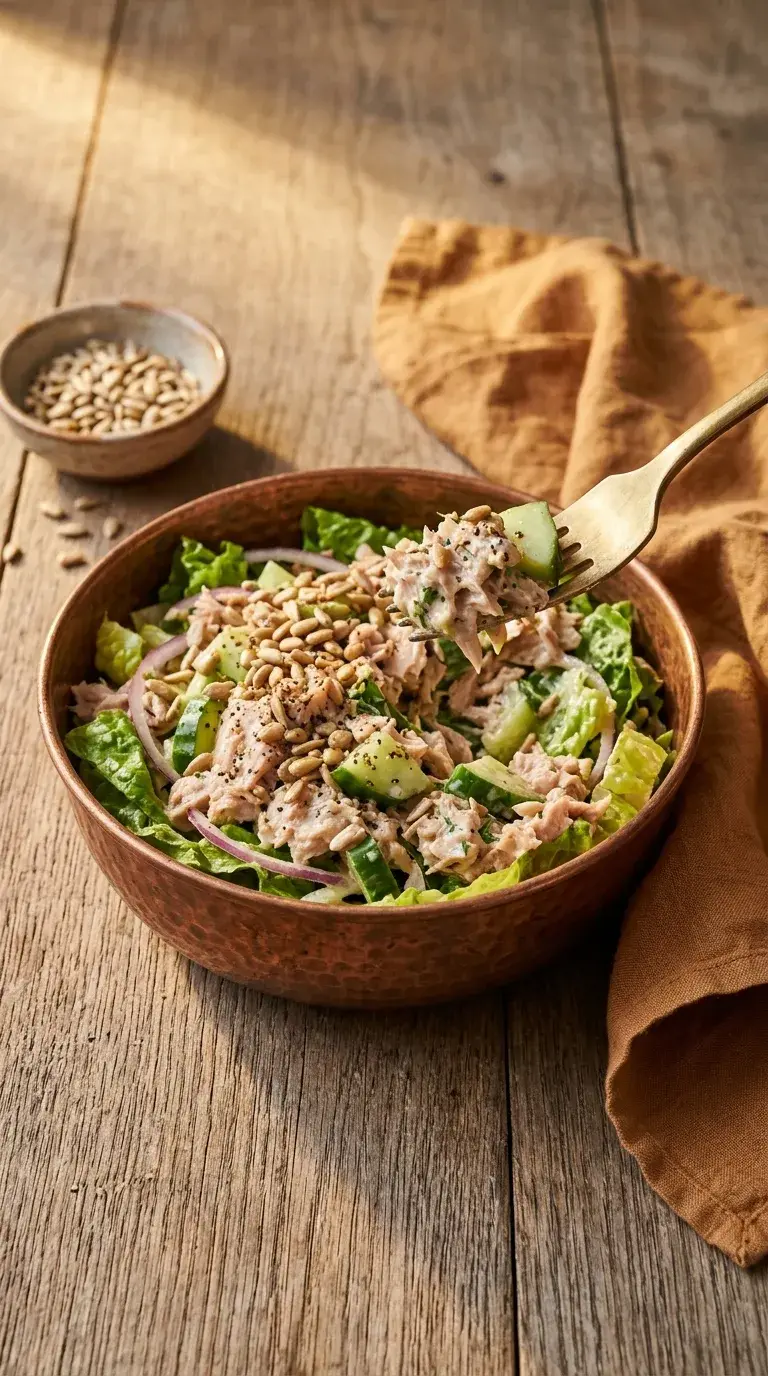
Many American tuna salads rely heavily on mayonnaise for thickness and flavour. This tuna salad bowl departs from that tradition by balancing 60 ml mayonnaise with olive oil and fresh lemon juice. You use this citrusy dressing to cut through the richness of the canned tuna. This change makes the dish lighter and more refreshing, turning a heavy deli staple into a bright, portable meal suitable for a low-carb diet.
You get a contrast of textures between the soft tuna flakes and the crunch of romaine lettuce and sunflower seeds. To achieve this, add the dressing just before serving. This step prevents the lettuce from becoming soggy and ensures the vegetables remain crisp. Your final result is a savoury combination of protein and fibre that stays fresh until the moment it reaches the bowl.
Tuna Salad Bowl: Fresh and Zesty Protein Meal
Recipe cardIngredients
Instructions
-
Prepare the tuna
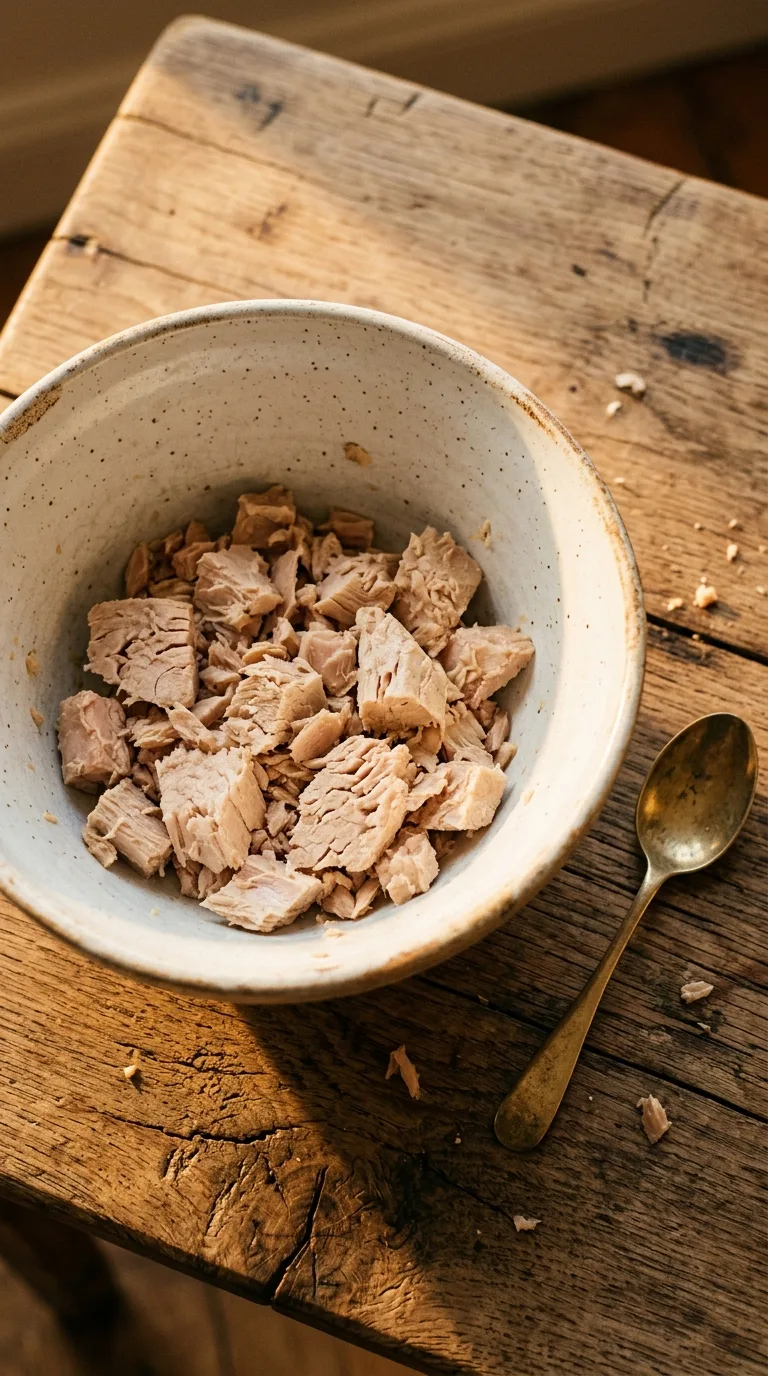
Drain the canned tuna thoroughly. Break it into large flakes in a large mixing bowl using a spoon. Leave some chunks intact to ensure the salad has a hearty texture.
-
Mix the dressing
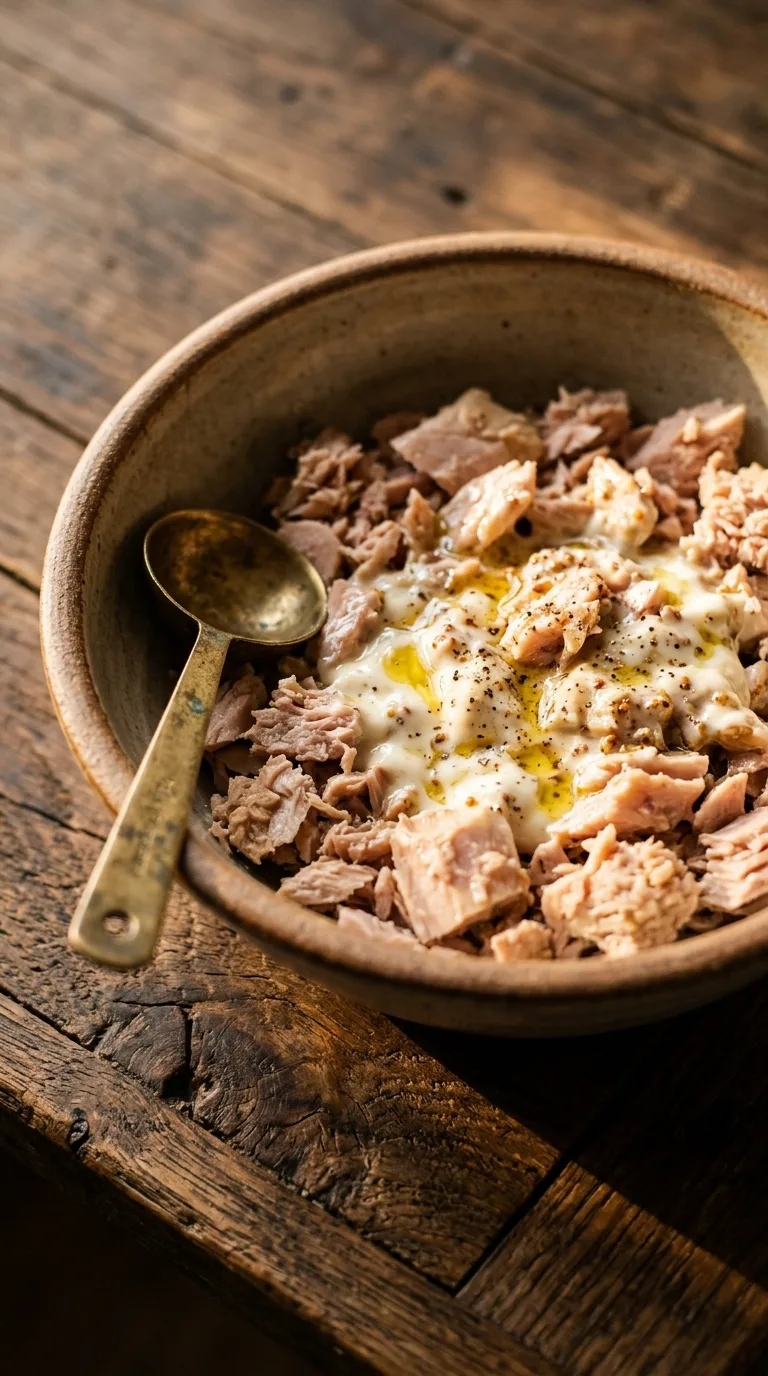
Add the mayonnaise, olive oil, lemon juice and optional Dijon mustard to the tuna. Toss the mixture until the tuna is evenly coated. This ensures every bite is moist and zesty.
-
Fold in vegetables
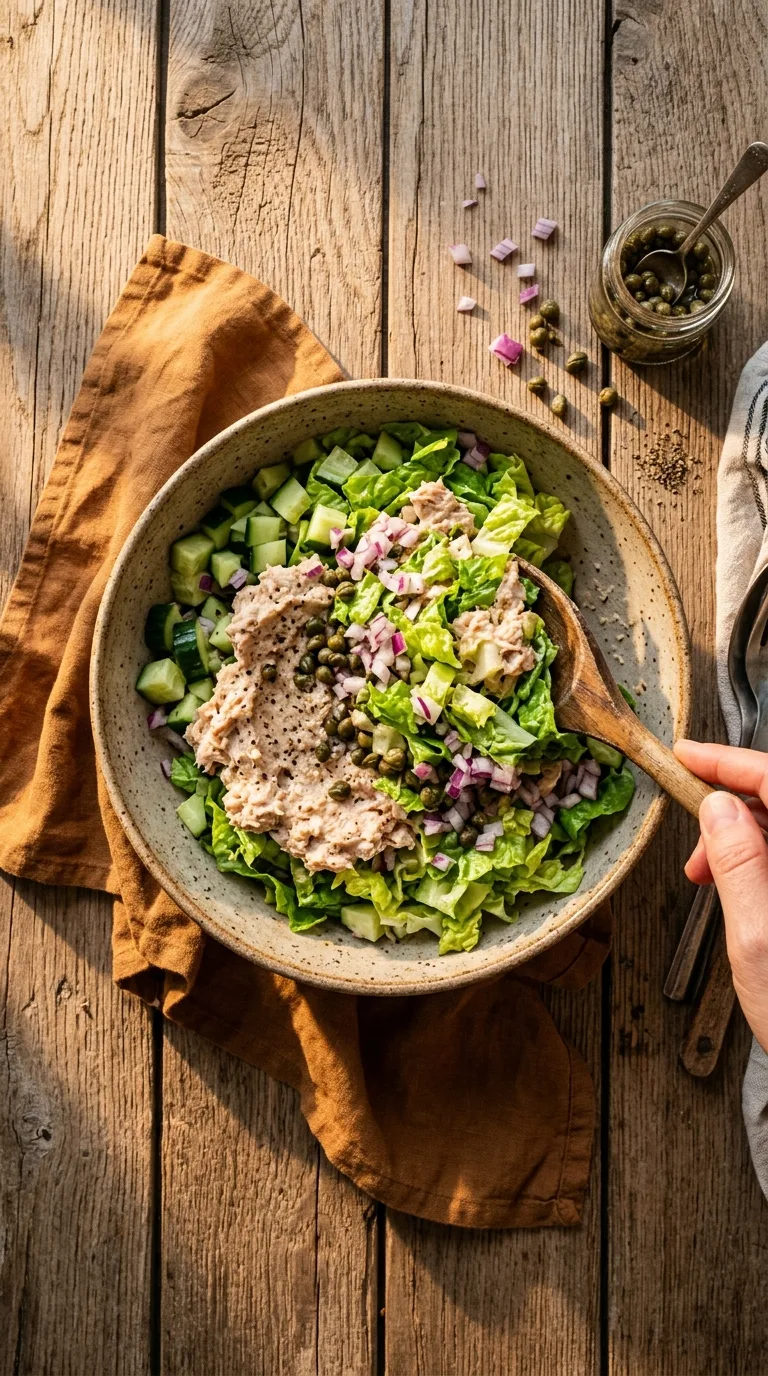
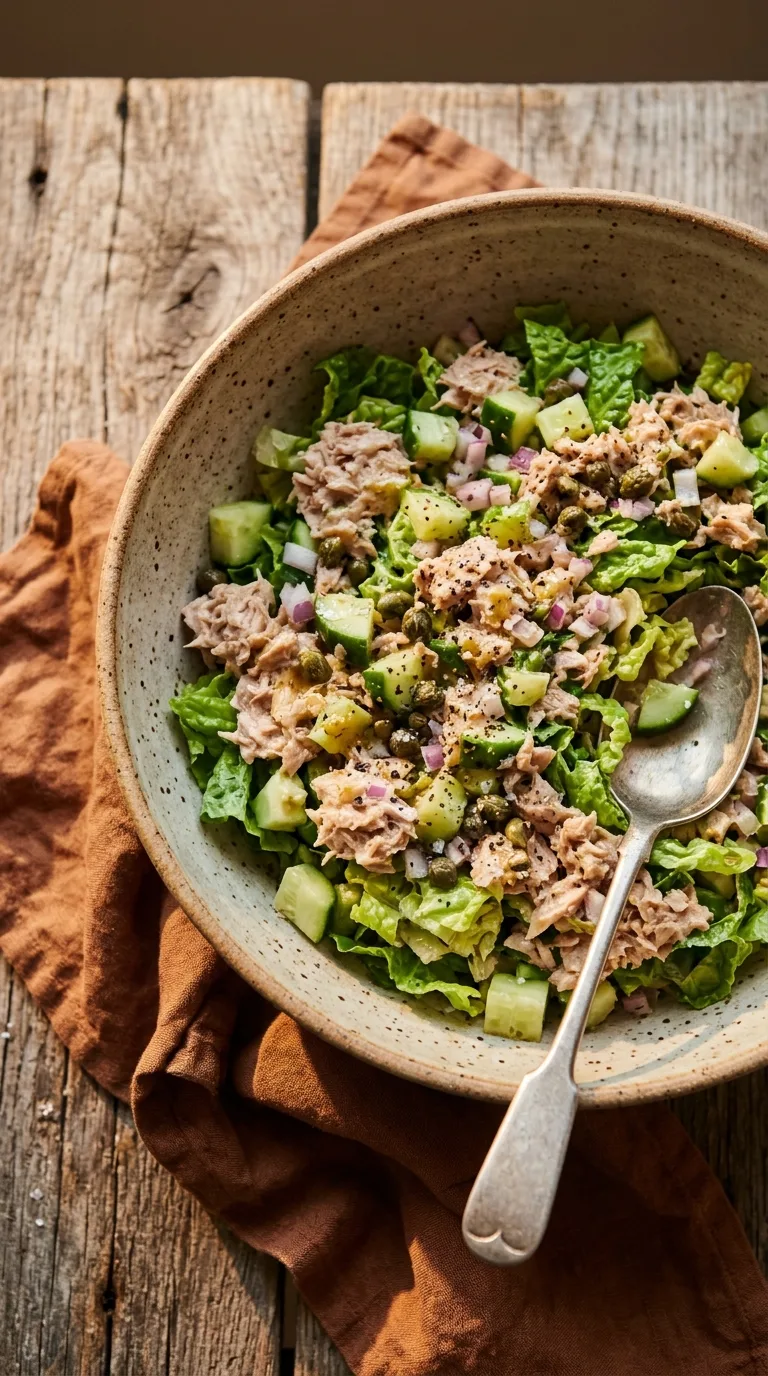
Add the chopped romaine lettuce, diced cucumber, thinly sliced red onion, capers, oregano and parsley. Mix gently with a spoon. You must avoid mashing the greens to keep them crisp.
-
Season the salad
Taste the salad. Add salt and pepper to your preference. You put the salt in last to prevent the vegetables from releasing water too early.
-
Portion the bowls
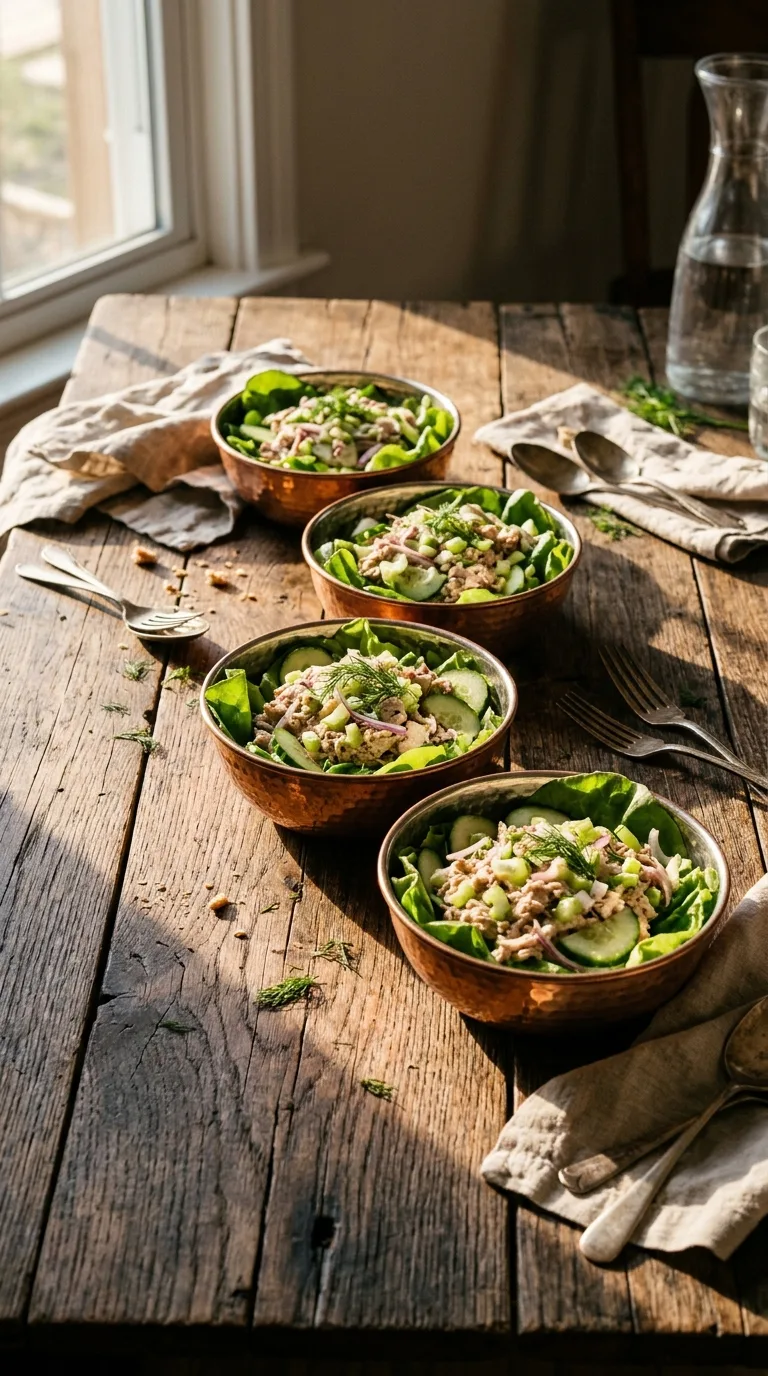
Divide the mixture evenly into four serving bowls. Ensure the distribution of vegetables is balanced across the portions.
-
Add final crunch
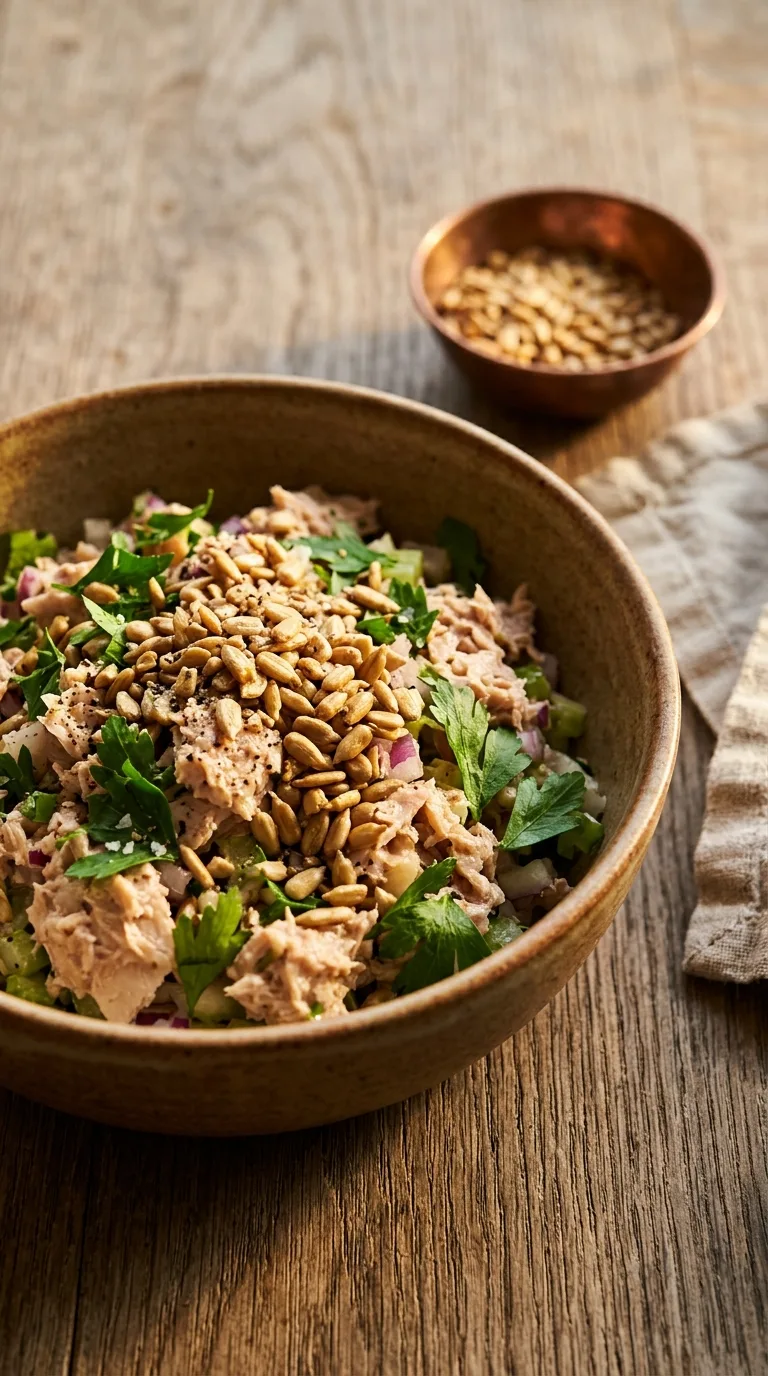
Sprinkle a tablespoon of sunflower seeds over each bowl. This provides a nutty contrast to the soft tuna and crisp lettuce.
-
Serve the dish
Serve the bowls immediately. You may accompany them with crusty bread, warm pita, or a mixed grape salad for extra substance.
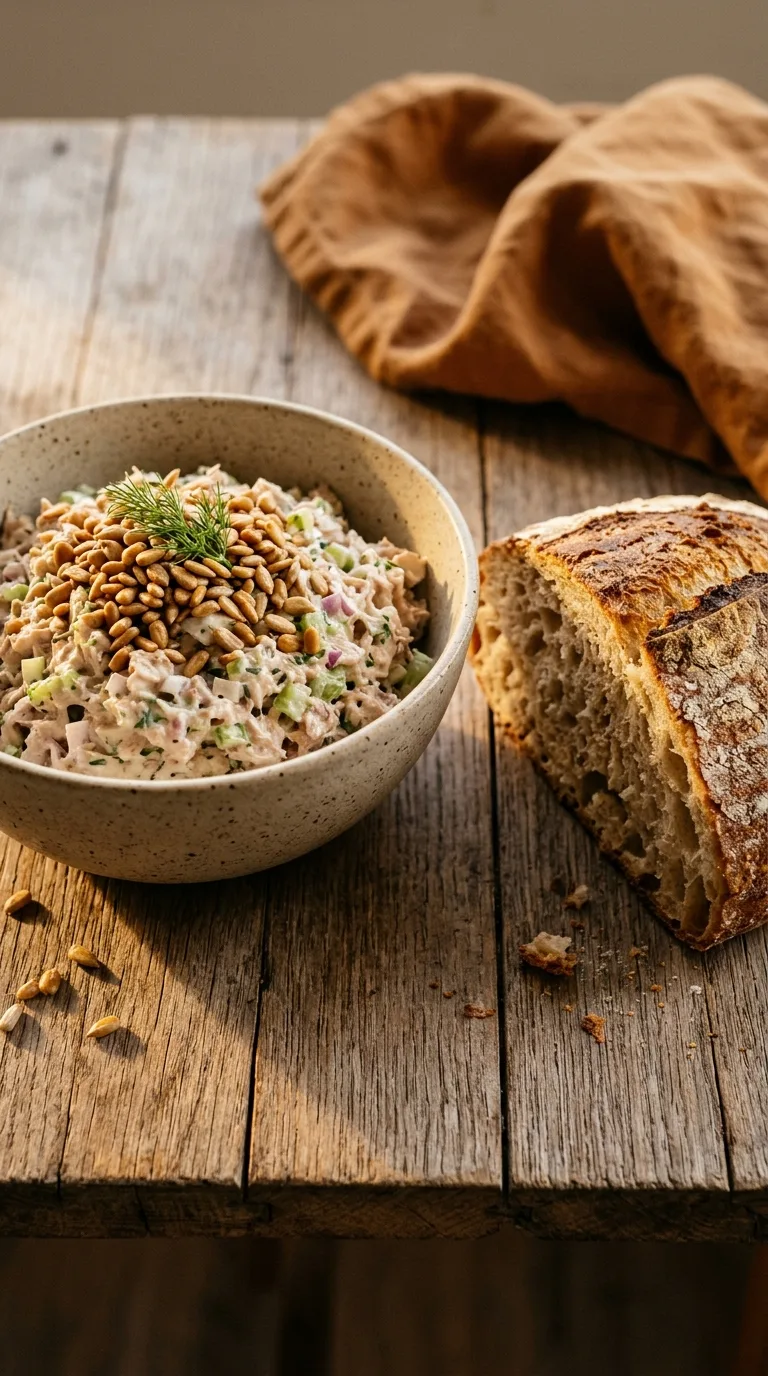
Add the dressing just before serving. If you mix the dressing too early, the salt and acid will break down the cell walls of the romaine lettuce. You will notice the leaves becoming limp and soggy rather than crisp.
How it differs from the traditional method
This version replaces heavy cream or excess mayonnaise with olive oil and lemon juice. You get a brighter, lighter result that highlights the tuna. Stick to the traditional heavy mayonnaise method if you prefer a rich, creamy spread for sandwiches rather than a fresh bowl.
Storing and reheating
Keep the salad refrigerated and consume it within 3 days. Do not freeze this dish as the greens and tuna will lose their texture. Store the dressing and vegetables separately if you need to keep them longer to prevent the lettuce from becoming soggy.
Nutrition per serving
- Calories
- 245
- Protein
- 21.5 g
- Carbs
- 6.2 g
- Fat
- 15.8 g
- Fiber
- 2.1 g
- Sugar
- 3.4 g
Estimated, and offered as a guide rather than a medical figure.
Made it? Rate it.
Questions people ask
What should I put in my tuna bowl?
Combine drained tuna with mayonnaise, olive oil, and lemon juice. Add chopped romaine, cucumber, red onion, and capers for texture. Finish with oregano, parsley, and sunflower seeds to provide a nutty crunch and herbal depth.
What not to put in tuna salad?
Avoid adding the dressing too early. You must wait until just before serving to mix the liquids with the greens. Adding them too soon breaks down the cell walls of the lettuce and makes the bowl soggy.
What is the secret to great tuna salad?
Use high-quality, fresh-brine tuna. This ensures a more subtle flavour and a superior texture. Adding a touch of Dijon mustard and fresh lemon juice cuts through the richness of the mayonnaise for a balanced taste.

About the author
Makeva
Makeva is a home‑cook who loves crafting approachable meals that balance flavor and nutrition. She specializes in quick weeknight dinners, hearty soups, and wholesome baked goods, sharing step‑by‑step guidance and practical tips. Readers can expect clear instructions, adaptable recipes, and a friendly tone that encourages confidence in the kitchen.