Pancakes From Scratch: Soft American Breakfast Stack
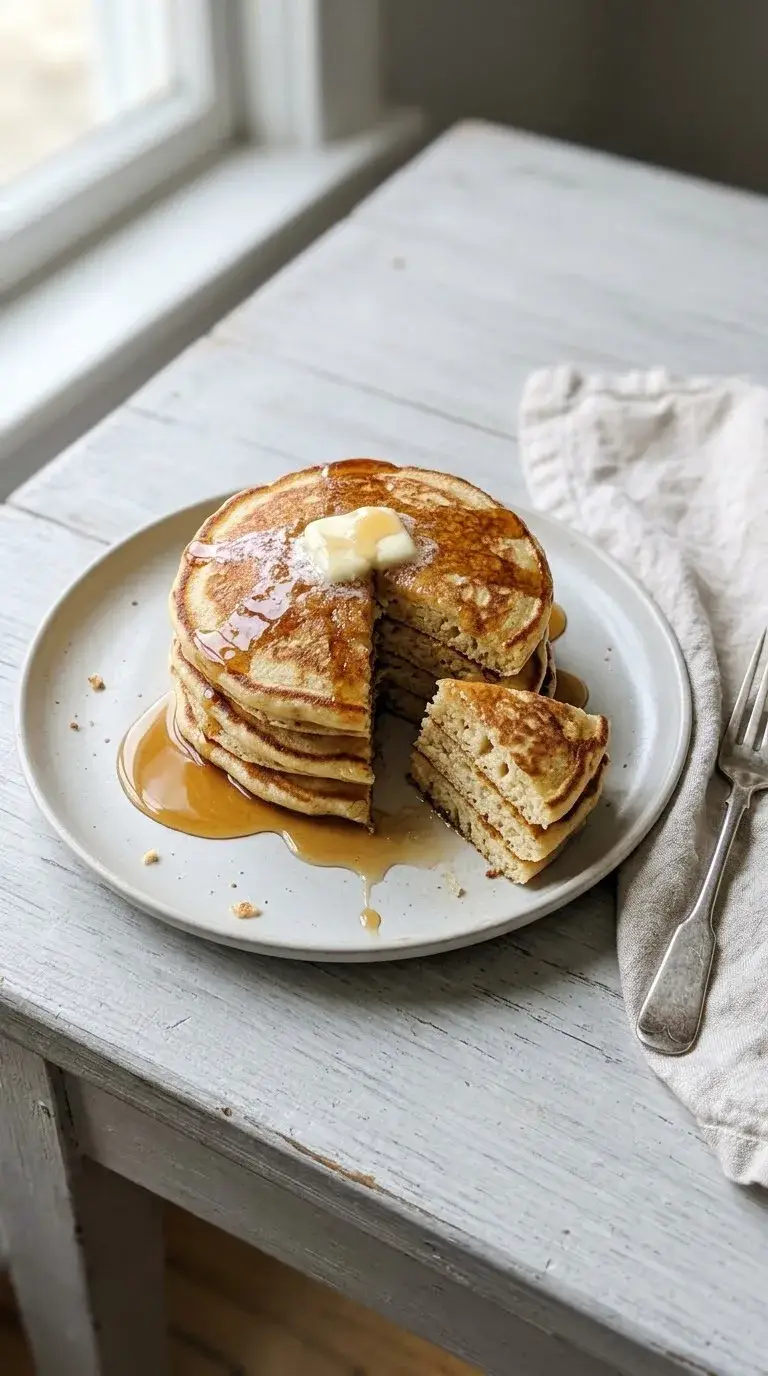
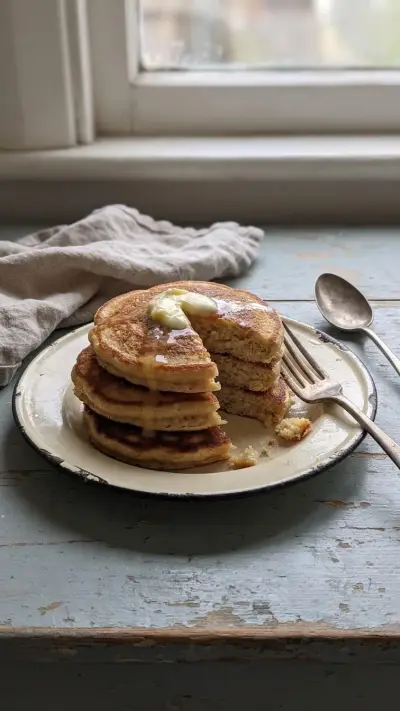
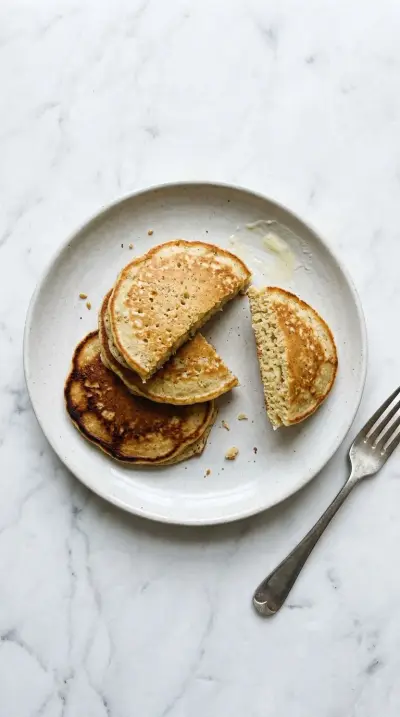
Real pancakes from scratch rely on basic pantry ingredients—plain flour, caster sugar, baking powder, bicarbonate of soda, fine sea salt, whole milk, egg, melted unsalted butter, and alcohol-free vanilla bean paste—to build a classic American breakfast stack. Each round bakes up tall with crisp, butter-kissed edges, a golden-brown crust, and a soft, open crumb that holds warm syrup without turning soggy. You get eight pancakes in 30 minutes from start to plate.
Two habits decide whether your stack turns out tender or heavy: restraint when mixing and patience at the stove. Fold the wet mixture into the dry ingredients only until the flour streaks vanish, leaving small lumps intact, because overmixing develops gluten and makes the crumb dense and chewy. Let the batter rest for 5 minutes so the starch hydrates and the raising agents activate, then cook over medium-low heat at roughly 175°C (350°F) until open bubbles ring the edges before you flip.
Pancakes From Scratch: Soft American Breakfast Stack
Recipe cardIngredients
Watch how it's made
Instructions
-
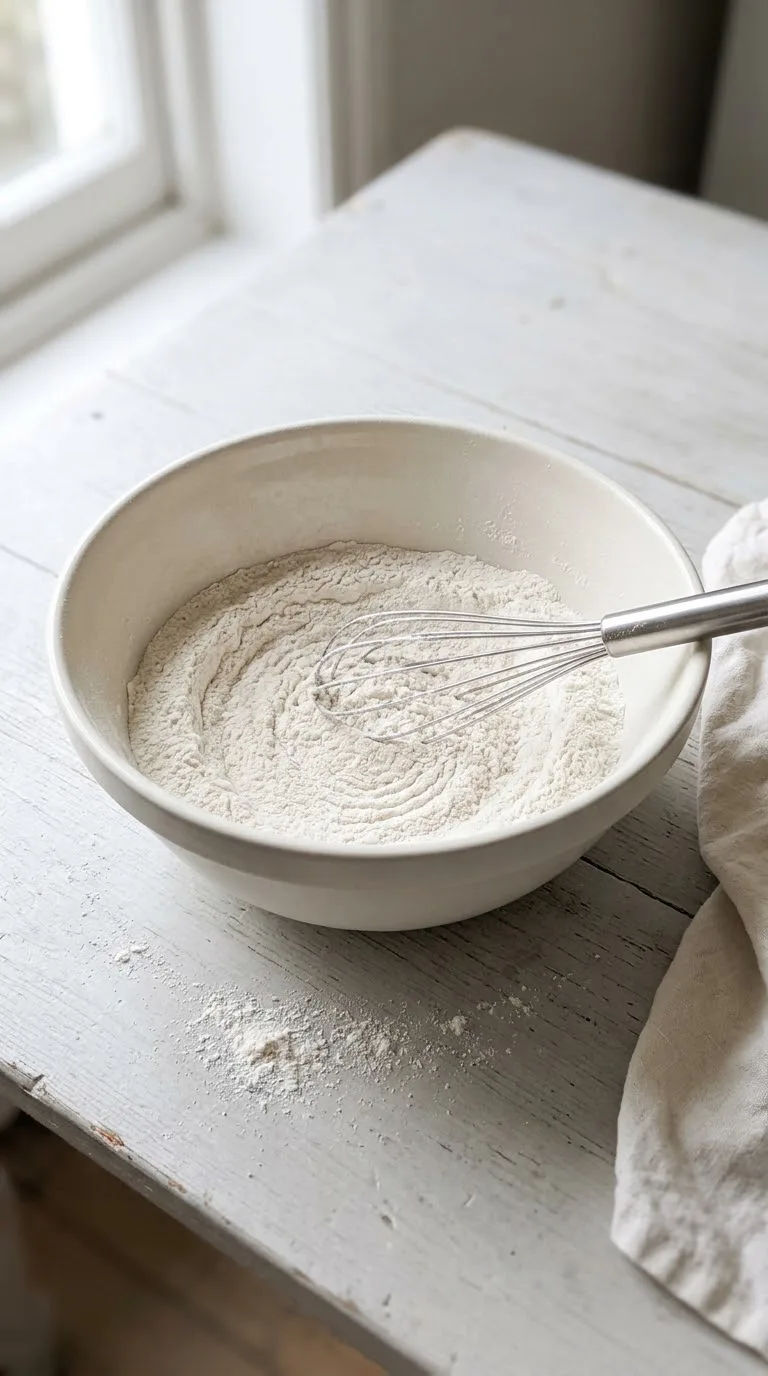
Whisk the dry ingredients
Add 200 g plain flour, 2 tablespoons caster sugar, 2 teaspoons baking powder, 0.5 teaspoon bicarbonate of soda, and 0.5 teaspoon fine sea salt to a large mixing bowl. Whisk thoroughly until the powders look completely uniform. Even distribution stops pockets of raising agent from leaving bitter spots or uneven lift in the finished rounds.
-
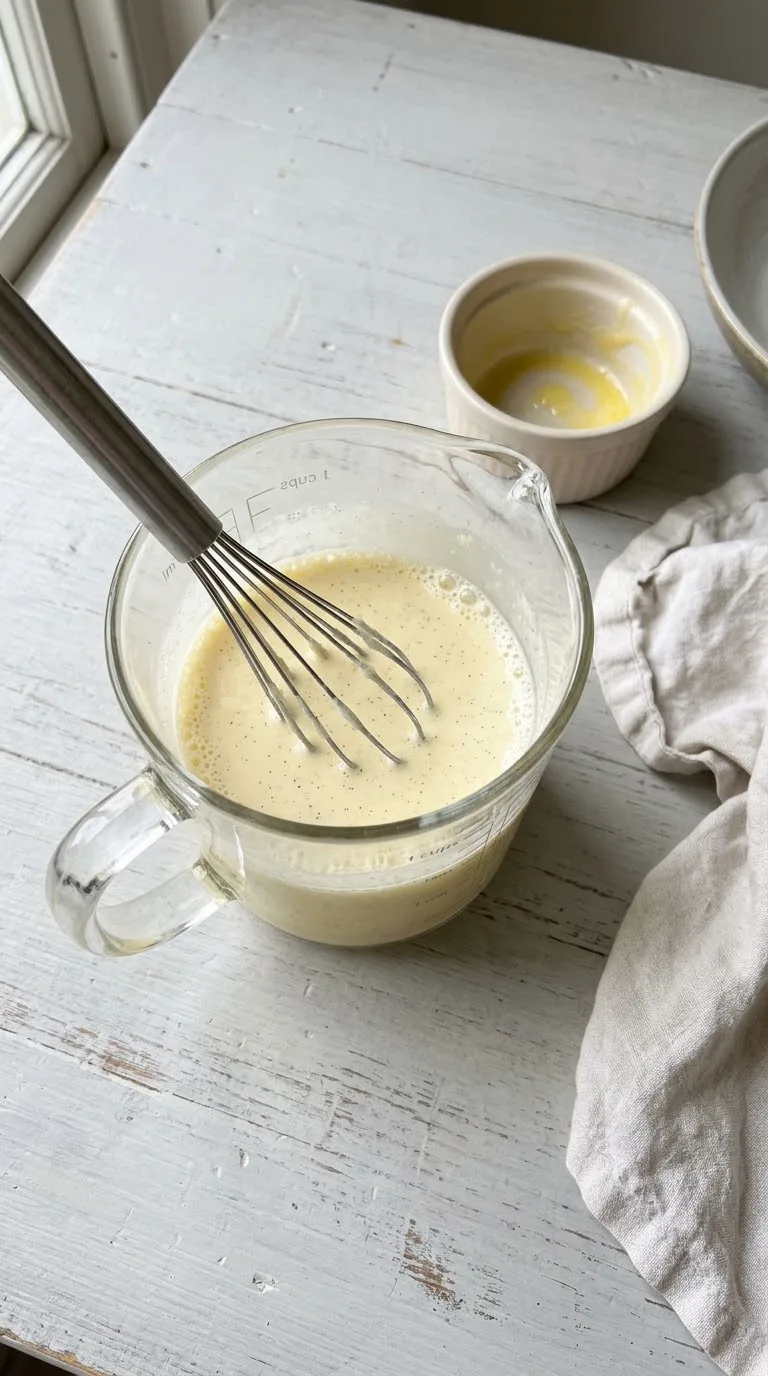
Emulsify the wet mixture
Pour 240 ml whole milk, 1 large egg, 45 g melted and slightly cooled unsalted butter, and 1 teaspoon alcohol-free vanilla bean paste or vanilla powder into a medium bowl or measuring jug. Whisk until the liquid turns smooth and unified. Using room-temperature dairy prevents the melted butter from seizing into tiny solid flecks on contact.
-
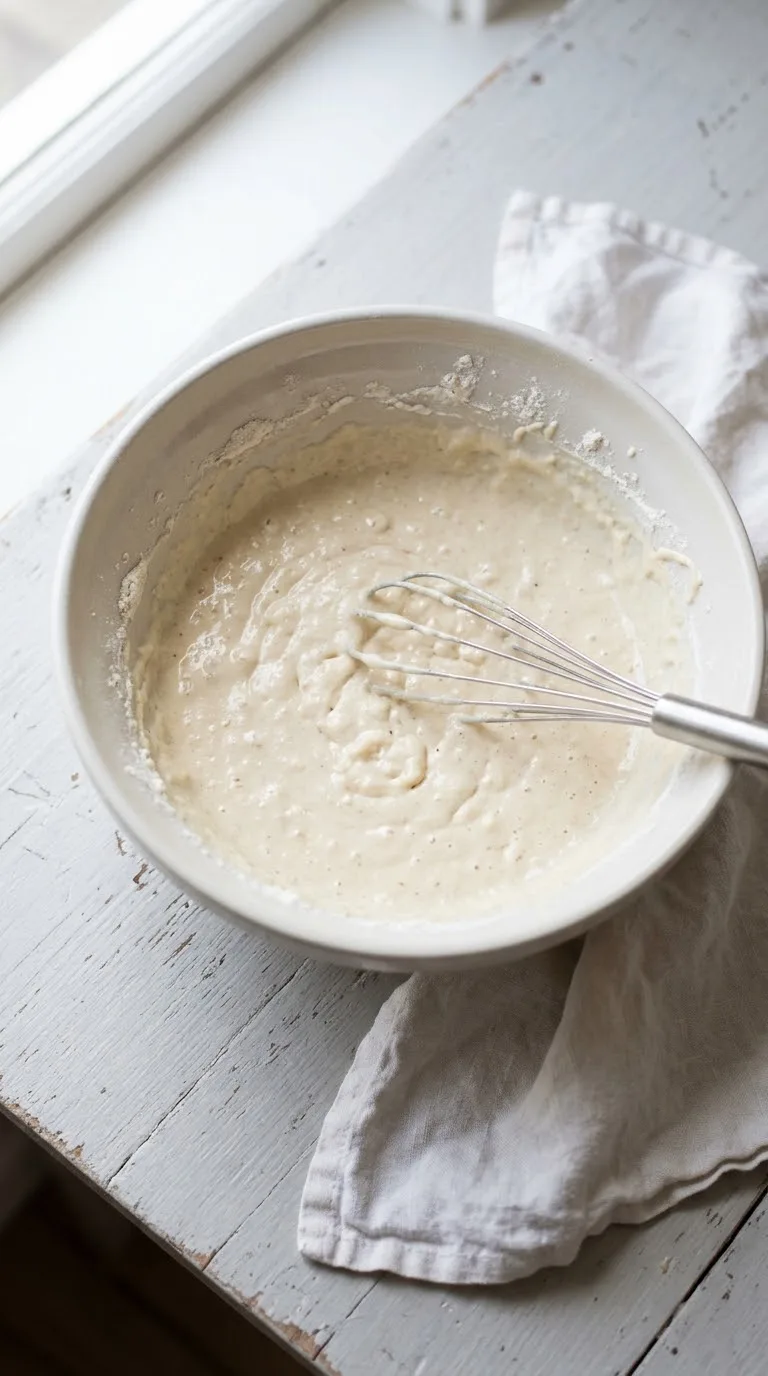
Fold the batter gently
Pour the wet mixture into the dry ingredients and fold together lightly with a whisk or spatula. Stop the moment the dry streaks of flour vanish, leaving small lumps visible across the surface. Overmixing develops gluten in the plain flour and turns tender pancakes dense and chewy.
-
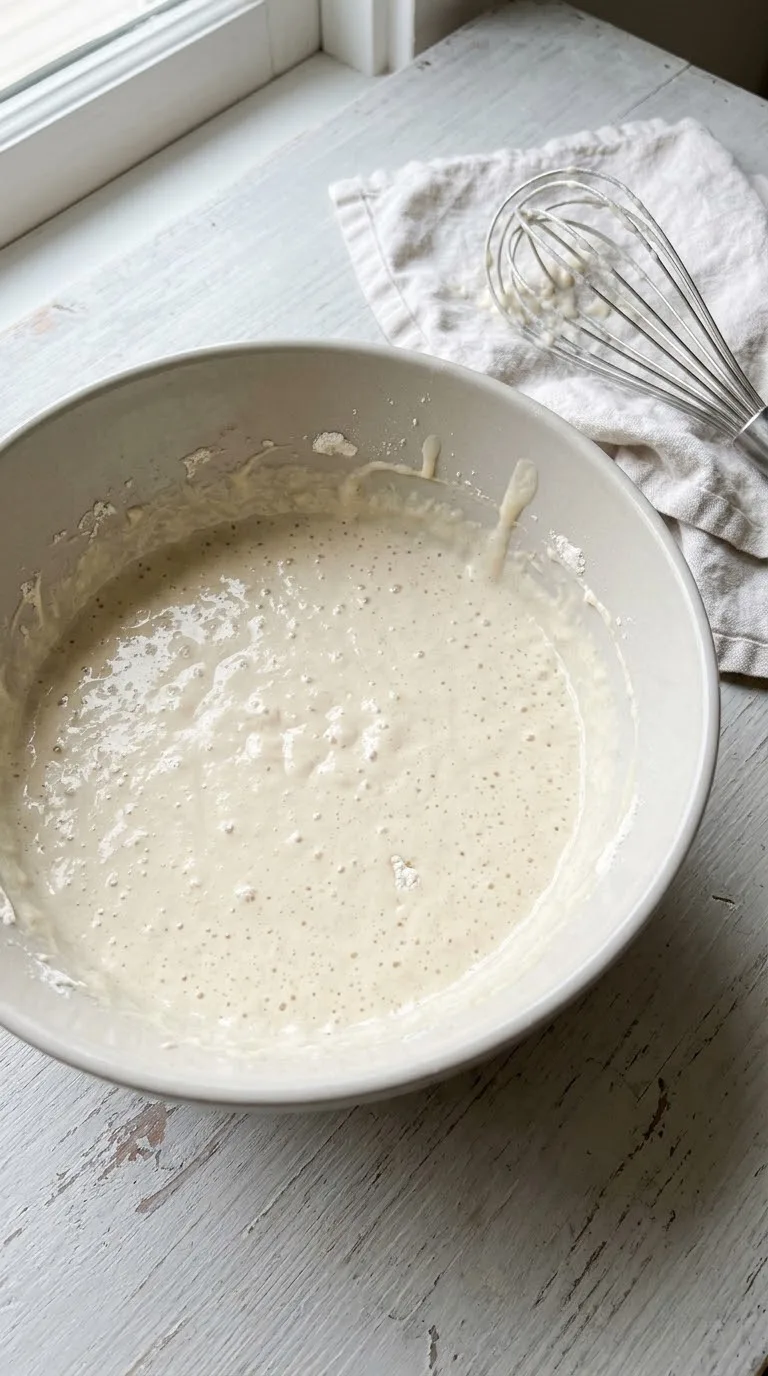
Rest the batter
Leave the batter undisturbed on the counter for 5 minutes while you prepare the pan. Resting lets the starch absorb liquid and gives the baking powder and bicarbonate of soda time to start producing tiny bubbles. You will see the surface thicken slightly and look aerated.
-
Heat and grease the pan
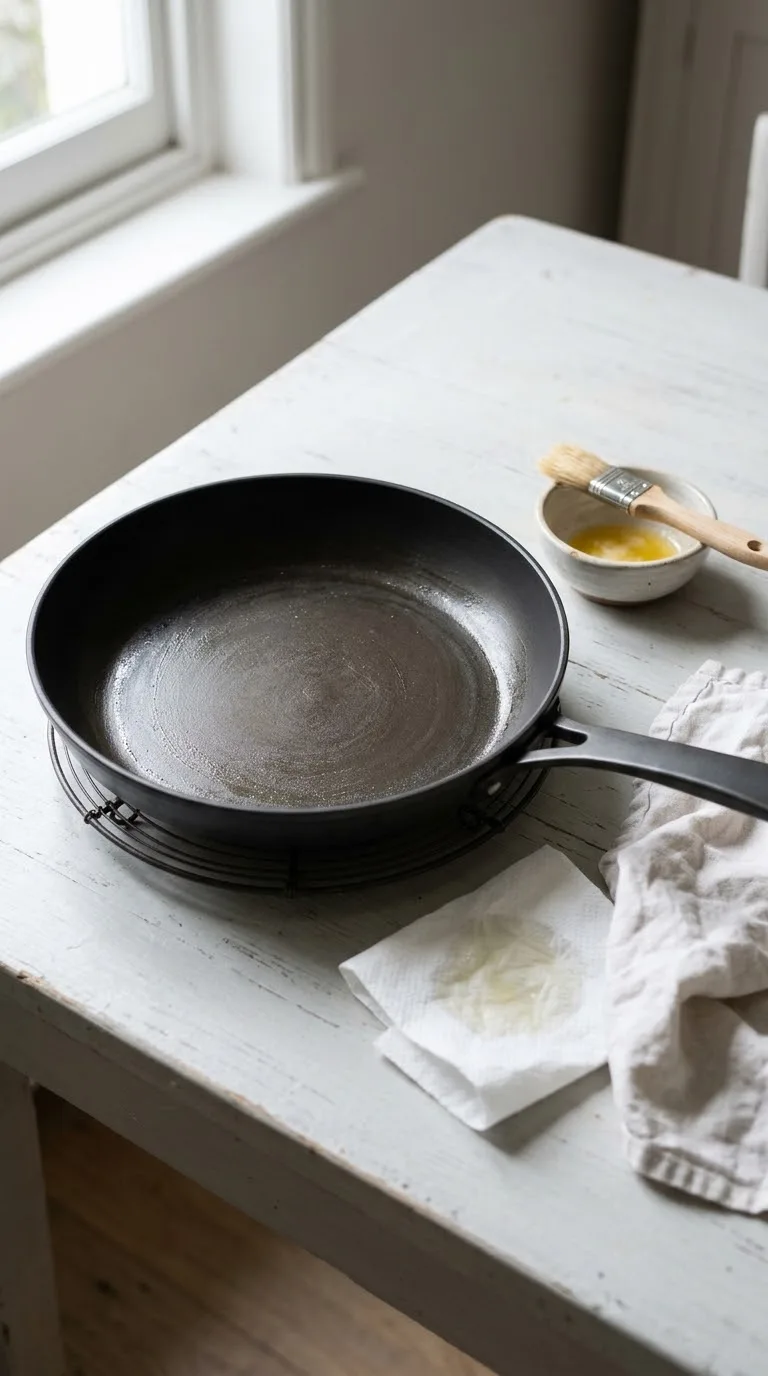
Set a large non-stick frying pan or flat griddle over medium-low heat at roughly 175°C (350°F) for 2 to 3 minutes. Brush the cooking surface lightly with a thin film of melted butter, then wipe away any excess with kitchen paper. Too much fat fries the crust unevenly and leaves pale patches.
-
Ladle and cook first side
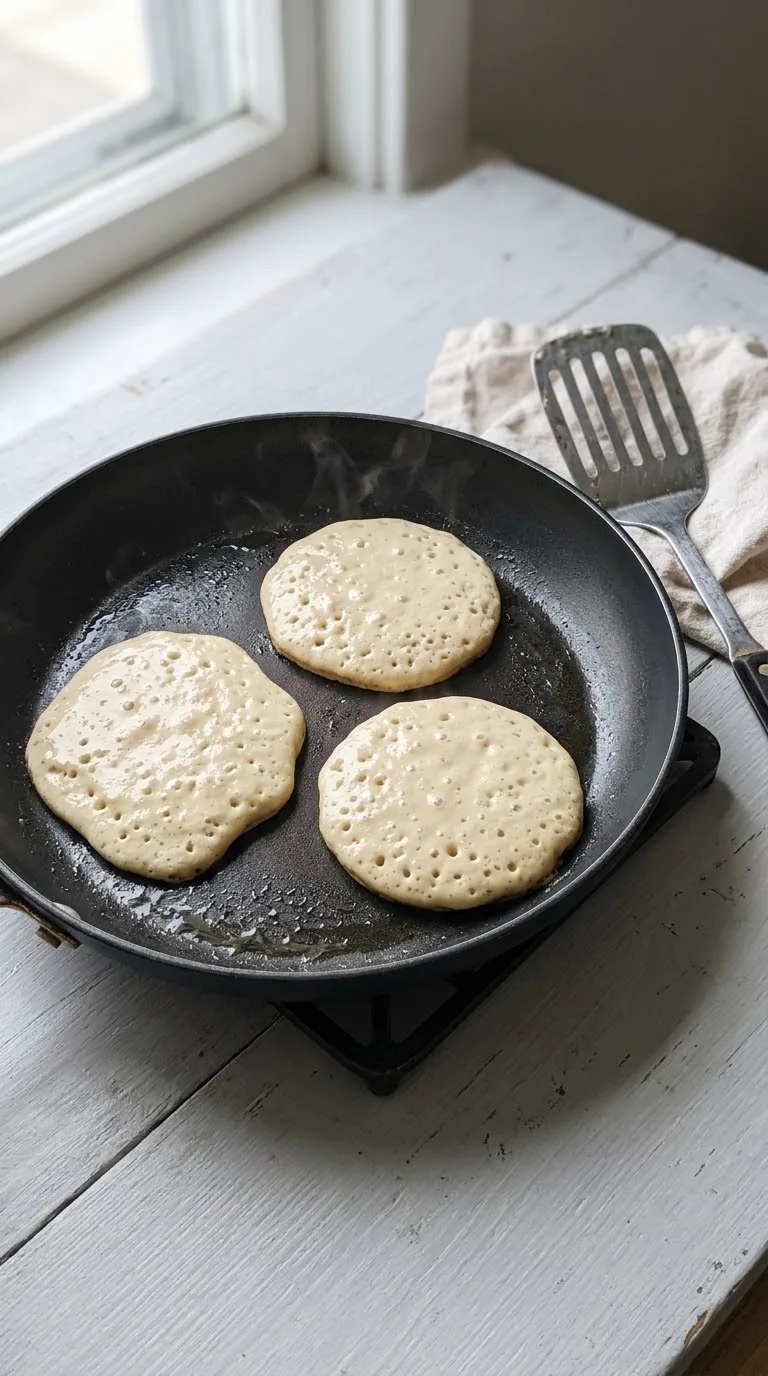
Pour 60 ml of batter per pancake onto the warm surface, leaving at least 4 cm between rounds so they spread without touching. Cook for 2 to 3 minutes until small bubbles rise across the top, pop, and stay open around the edges. The underside should turn a rich golden brown before you move them.
-
Flip and finish cooking
Slide a wide slotted spatula cleanly underneath each pancake and turn it over gently. Cook for a further 1 to 2 minutes until the second side is golden brown and the centre springs back lightly when pressed. Transfer cooked rounds to a wire cooling rack set over a baking tray in a 90°C (195°F) oven to stay warm without steaming, lightly greasing the pan between batches, then stack onto plates and serve.
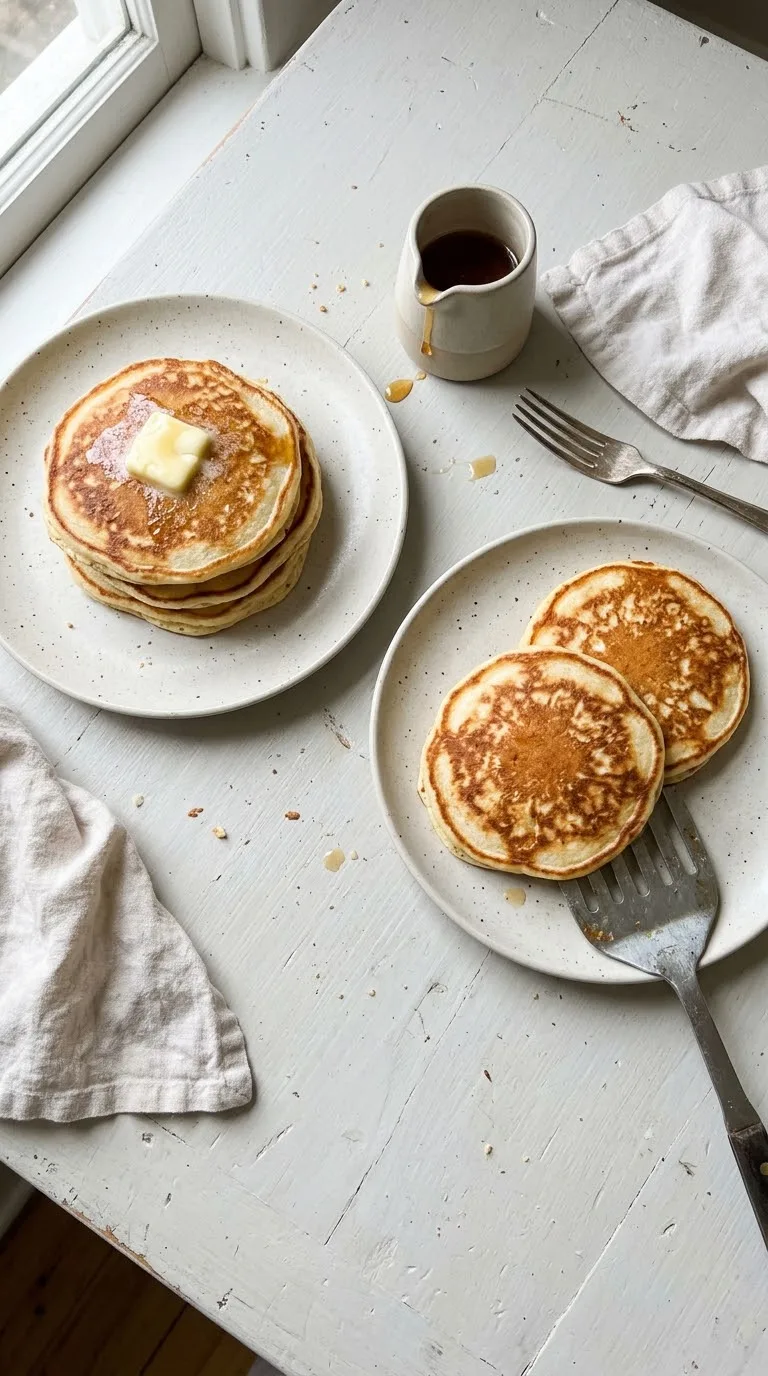
Watch the rate of browning against the bubbles on top. If the underside darkens before open bubbles appear around the edges, lower the heat immediately so the centre cooks through without scorching. Keep a few small lumps in your batter; whisking it completely smooth builds gluten and makes the crumb heavy.
What to serve with it
Stack the warm pancakes with a pat of salted butter, warm pure maple syrup, and sliced strawberries or blueberries. For a sweet-and-savoury plate, add crispy grilled halal turkey bacon or beef rashers with a drizzle of honey, or top each stack with thick Greek yoghurt, toasted flaked almonds, and ground cinnamon.
Storing and reheating
Cool leftover pancakes completely on a wire rack so trapped steam does not make them soggy. Keep them in an airtight container in the refrigerator for up to 3 days, or layer between sheets of baking parchment in a freezer-safe bag for up to 2 months. Reheat from frozen in a toaster or at 180°C (350°F) for 5 minutes.
Nutrition per serving
- Calories
- 345
- Protein
- 8.5 g
- Carbs
- 46.5 g
- Fat
- 13.8 g
- Fiber
- 1.6 g
- Sugar
- 9.8 g
Estimated, and offered as a guide rather than a medical figure.
Made it? Rate it.
Questions people ask
Why does my pancake batter still look lumpy after folding?
Leave those small lumps alone because they keep the crumb tender. Whisking until completely smooth overworks the gluten in plain flour, which turns light, airy pancakes into dense, chewy discs.
Can I add fresh blueberries or chocolate chips to this batter?
Yes, you can add either once the batter is mixed. Dot 8 to 10 fresh blueberries onto each round right after ladling so the fruit does not stain the batter grey, or fold 75 g halal-certified dark chocolate chips into the bowl at the end.
Why did my melted butter turn into tiny solid flecks in the milk?
Cold dairy chills warm melted butter on contact and causes it to clump. Bring your 240 ml whole milk and 1 large egg to room temperature first so the fat emulsifies smoothly into the liquid.

About the author
Makeva
Makeva is a home‑cook who loves crafting approachable meals that balance flavor and nutrition. She specializes in quick weeknight dinners, hearty soups, and wholesome baked goods, sharing step‑by‑step guidance and practical tips. Readers can expect clear instructions, adaptable recipes, and a friendly tone that encourages confidence in the kitchen.