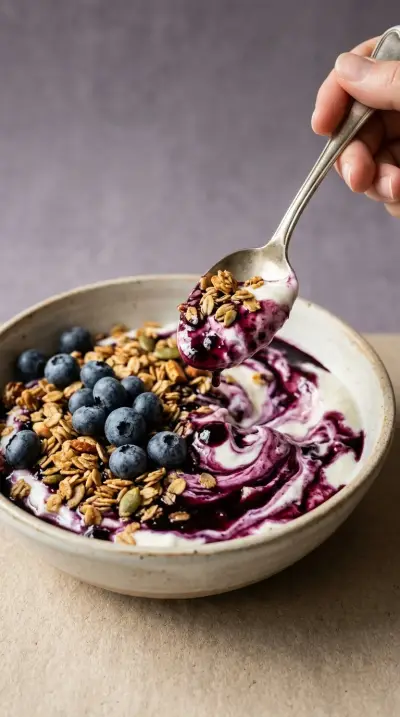
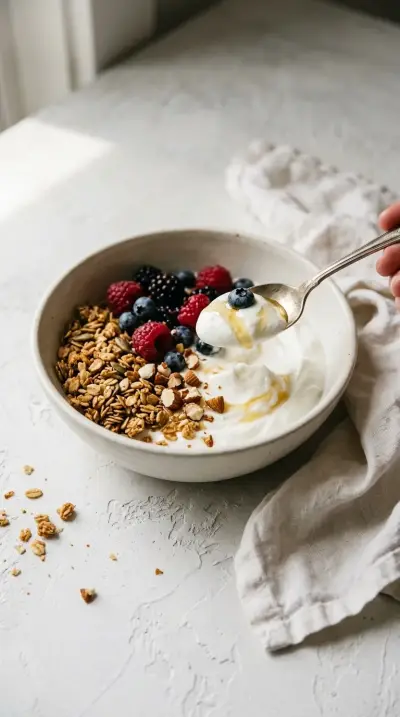
Greek Yogurt Granola Bites: Protein-Packed Frozen Snacks

Choose a silicone muffin mould to ensure your Greek yogurt granola bites maintain a round, uniform shape. Use a standard loaf tin if you prefer square slices, but the silicone mould allows for easier removal. Prepare these in advance as they require a total time of 3 hours 35 minutes to set properly in the freezer.
These no-bake treats combine plain Greek yogurt and honey for a smooth base. You fold in loose-leaf granola to create a firm, protein-packed structure. Add chopped berries or mini chocolate chips to introduce a burst of flavour and texture. The result is a chilled, savoury-sweet snack that stays fresh in the refrigerator at 2–4°C for up to 3 days or in the freezer at –18°C for 4 weeks.
Greek Yogurt Granola Bites: Protein-Packed Frozen Snacks
Recipe cardIngredients
Watch how it's made
Instructions
-
Mix the base
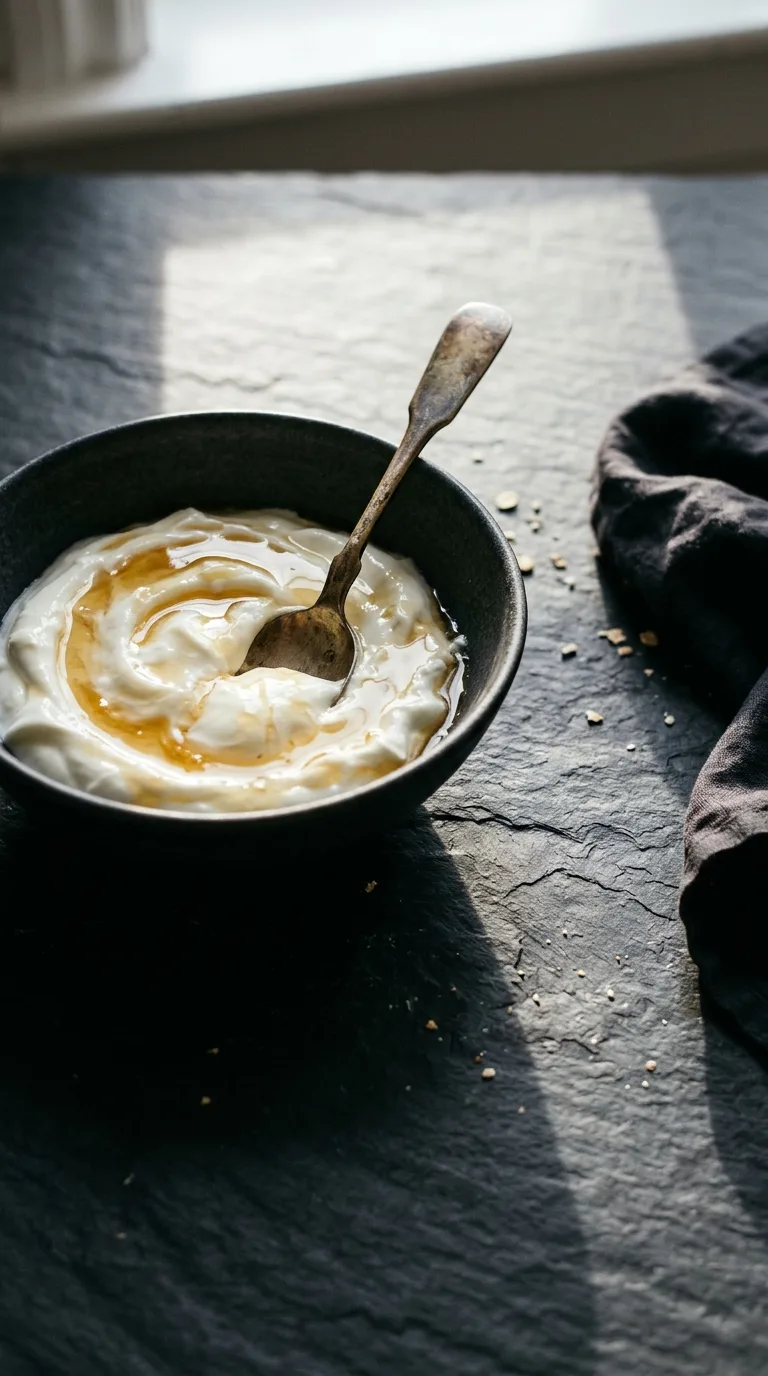
Place the Greek yogurt in the bowl and whisk in the honey. Stir until the mixture is smooth and slightly thickened. This ensures the sweetener is evenly distributed for a consistent flavour.
-
Fold in granola
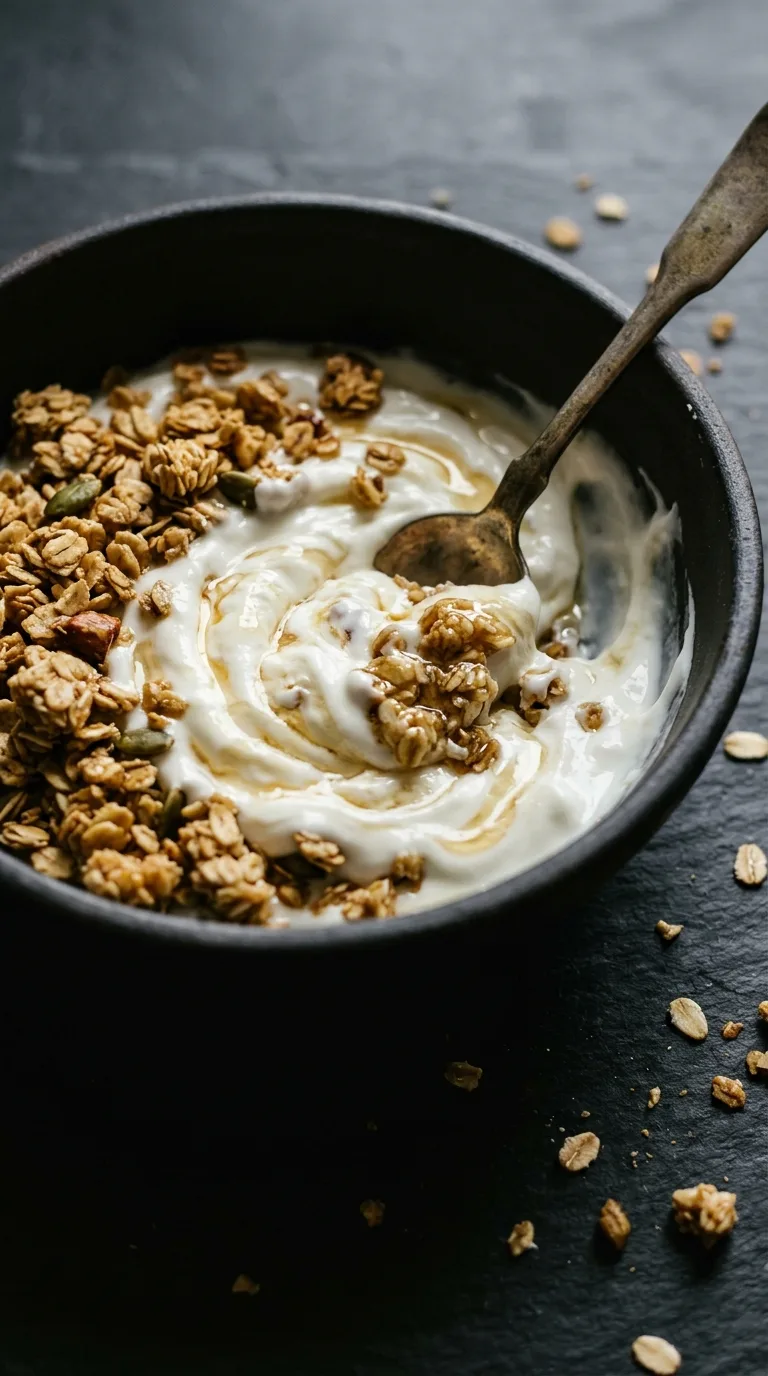
Gently fold 75g of loose-leaf granola into the yogurt. Ensure every piece has an even coating. This provides the necessary structure and crunch to each bite.
-
Prepare the tray
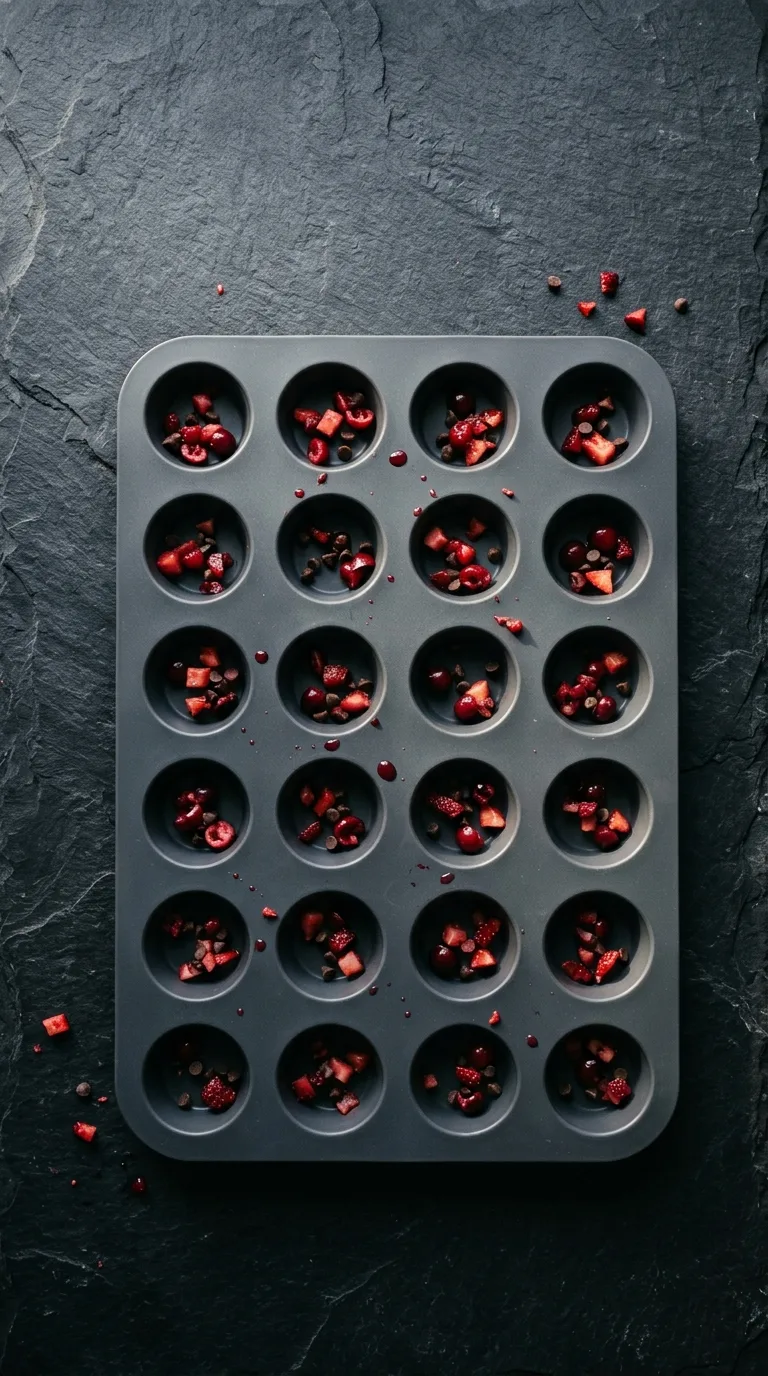
Scatter a small handful of berries or chocolate chips into each cavity of a silicone muffin tray. Placing these at the bottom prevents the toppings from sinking during the freezing process.
-
Layer the mixture
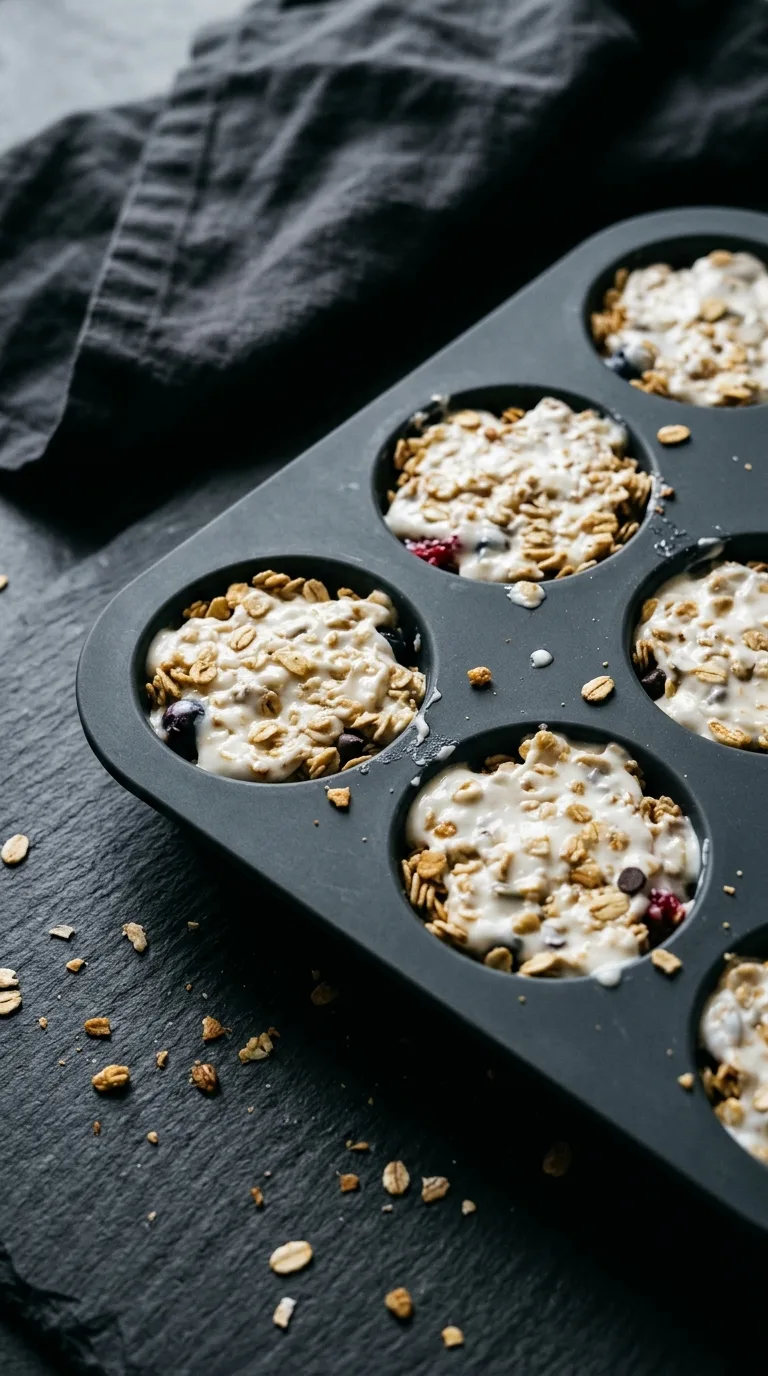
Spoon a thin layer of the granola-yogurt mixture into each cavity. Press lightly with a spoon to keep the shape. This removes air pockets that could weaken the final structure.
-
Add final toppings
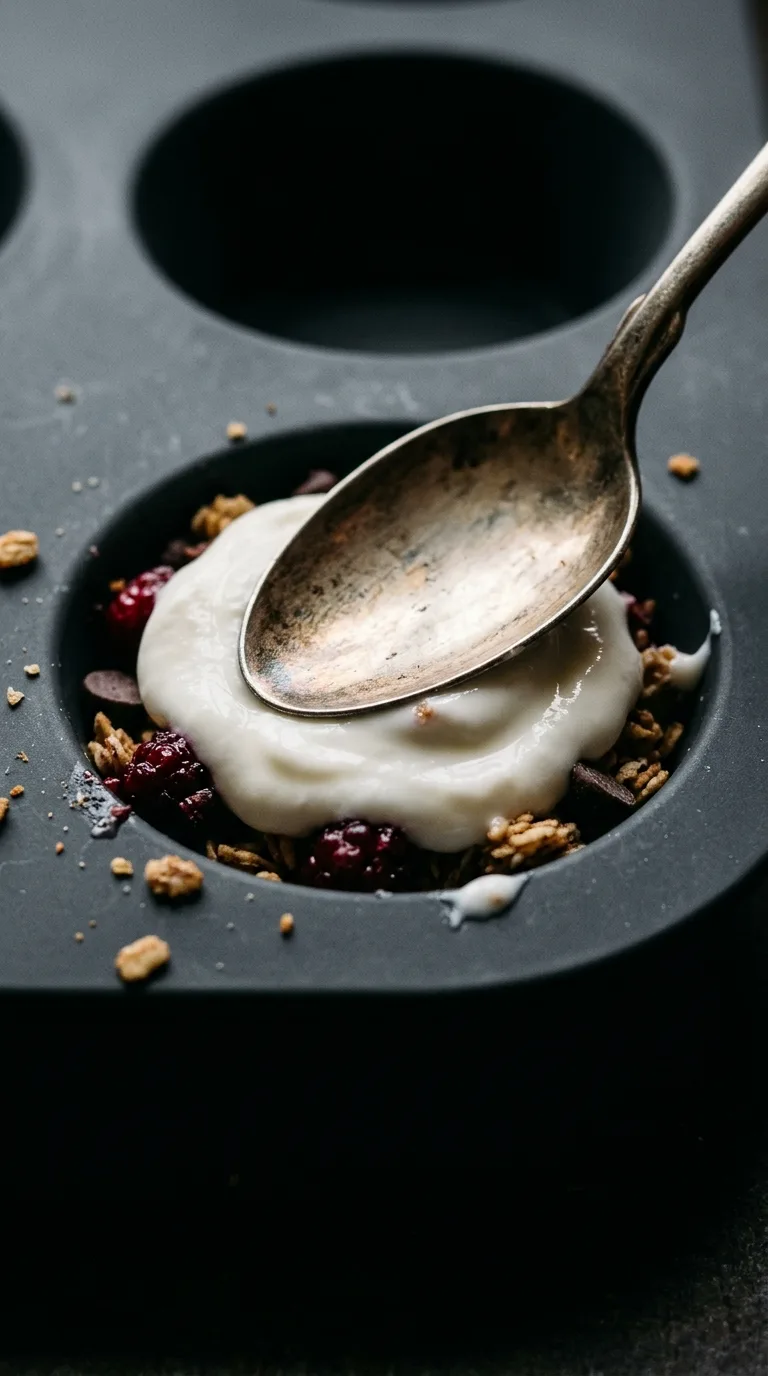
Top each bite with more berries or chocolate chips. Add another thin swirl of the mixture on top and press down firmly. This compacts the layers to create a firm, bite-sized treat.
-
Freeze until set
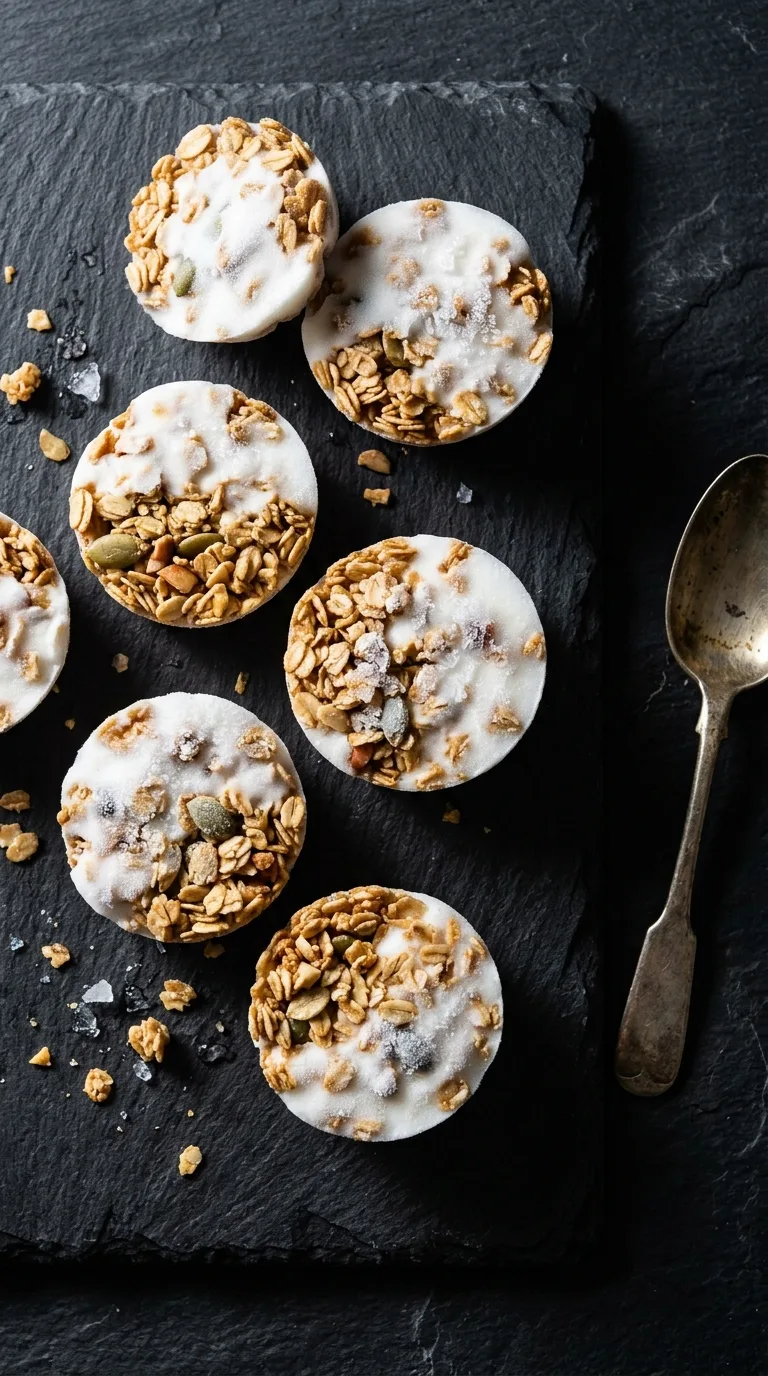
Cover the tray with cling film or a lid. Transfer the mould to the freezer. Leave them for 3–4 hours until the bites are completely firm and set.
-
Soften and serve
Remove the bites from the freezer. Let them sit at room temperature for 5 minutes. This slight softening makes the texture more palatable while remaining chilled.
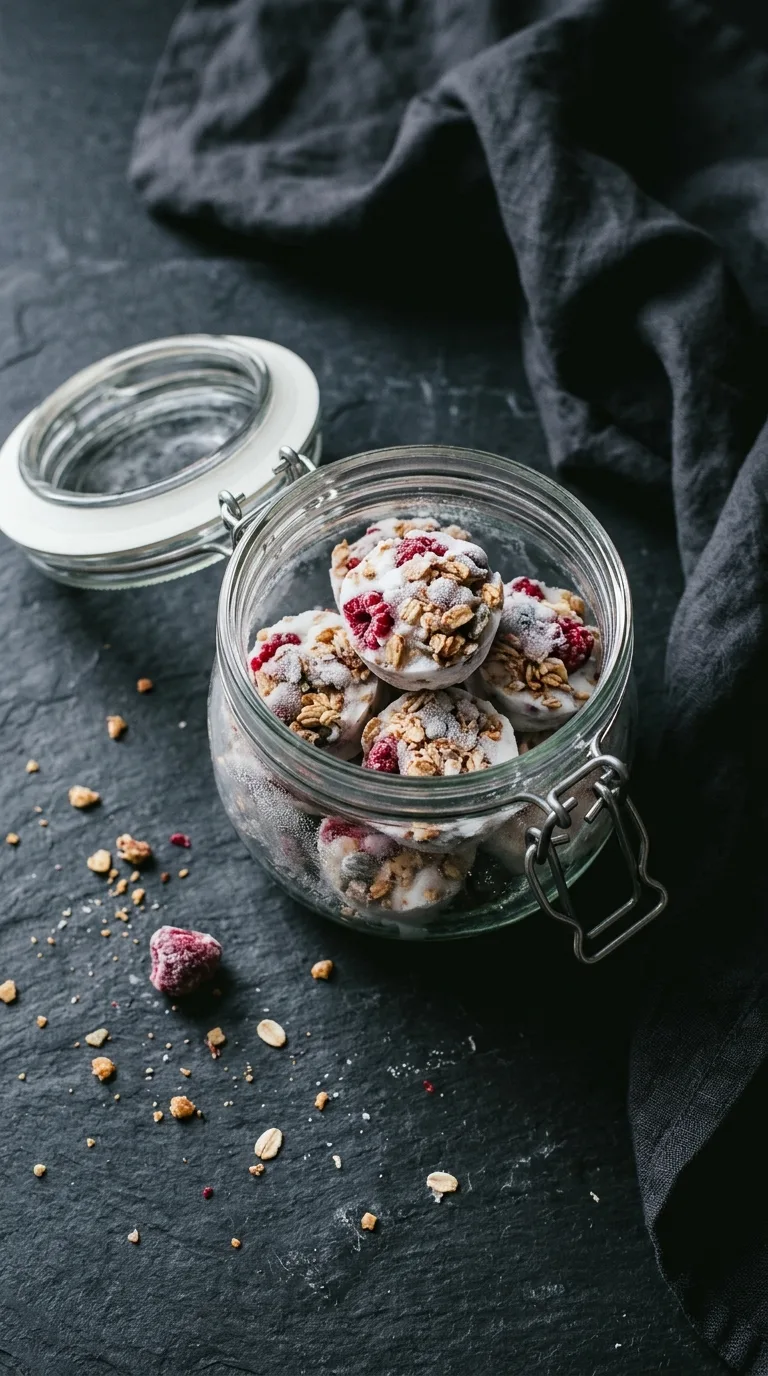
Use a silicone muffin mould to ensure you get round, uniform bites. If you use a standard loaf tin, the mixture will set as a block and your slices will be rectangular. Check that the mixture is thickened before spooning to prevent the granola from settling at the bottom.
What to serve with it
Spoon these bites onto a bowl of oatmeal or Greek yogurt for a protein boost. Pack them into a lunchbox for a healthy, grab-and-go snack. Drizzle the bites with a little honey or maple syrup before eating to add a touch of sweetness to the creamy, crunchy texture.
Storing and reheating
Keep these bites in an airtight container in the refrigerator at 2–4°C (35–39°F) for up to 3 days. For longer storage, keep them frozen at –18°C (0°F) for up to 4 weeks. Thaw them for 30 minutes at room temperature before serving to ensure a soft consistency.
Nutrition per serving
- Calories
- 70
- Protein
- 4.0 g
- Carbs
- 6.2 g
- Fat
- 3.1 g
- Fiber
- 2.0 g
- Sugar
- 4.5 g
Estimated, and offered as a guide rather than a medical figure.
Made it? Rate it.
Questions people ask
What happens if I eat Greek yogurt and granola every day?
You provide your body with a consistent source of protein, probiotics, and fibre. These nutrients support digestive health and keep you feeling full for longer, provided the granola does not contain excessive added sugars.
What not to pair with Greek yogurt?
Avoid pairing Greek yogurt with highly acidic ingredients or enzymes found in fresh pineapple and papaya. These can cause the dairy proteins to break down too quickly, which alters the flavour and makes the yogurt taste bitter.
Is eating granola and Greek yogurt good for weight loss?
Yes, this combination is effective because the high protein content in Greek yogurt suppresses hunger. However, you must monitor the portion size of the granola, as nuts and seeds are calorie-dense.
What has more protein, 2 eggs or a cup of Greek yogurt?
A cup of Greek yogurt typically contains more protein than two eggs. Greek yogurt is concentrated through straining, which results in a higher protein density per 100g compared to whole eggs.

About the author
Makeva
Makeva is a home‑cook who loves crafting approachable meals that balance flavor and nutrition. She specializes in quick weeknight dinners, hearty soups, and wholesome baked goods, sharing step‑by‑step guidance and practical tips. Readers can expect clear instructions, adaptable recipes, and a friendly tone that encourages confidence in the kitchen.