Fluffy Cottage Cheese Pancakes: Soft Breakfast Griddle Cakes
Choose full-fat cottage cheese with at least 4% milkfat before you start, because low-fat tubs carry extra water that weighs down the batter. Blend 250 g full-fat cottage cheese with the eggs, milk, and melted butter until completely smooth so your pancakes made with cottage cheese cook without a single lumpy curd. Let the mixed batter rest for 5 minutes so the plain flour absorbs the liquid and the baking powder activates.
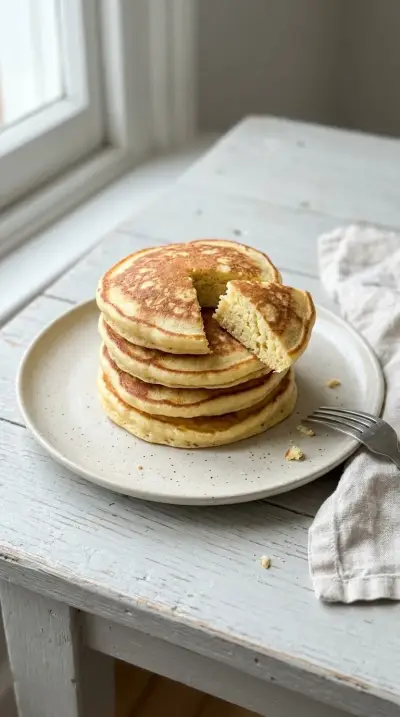
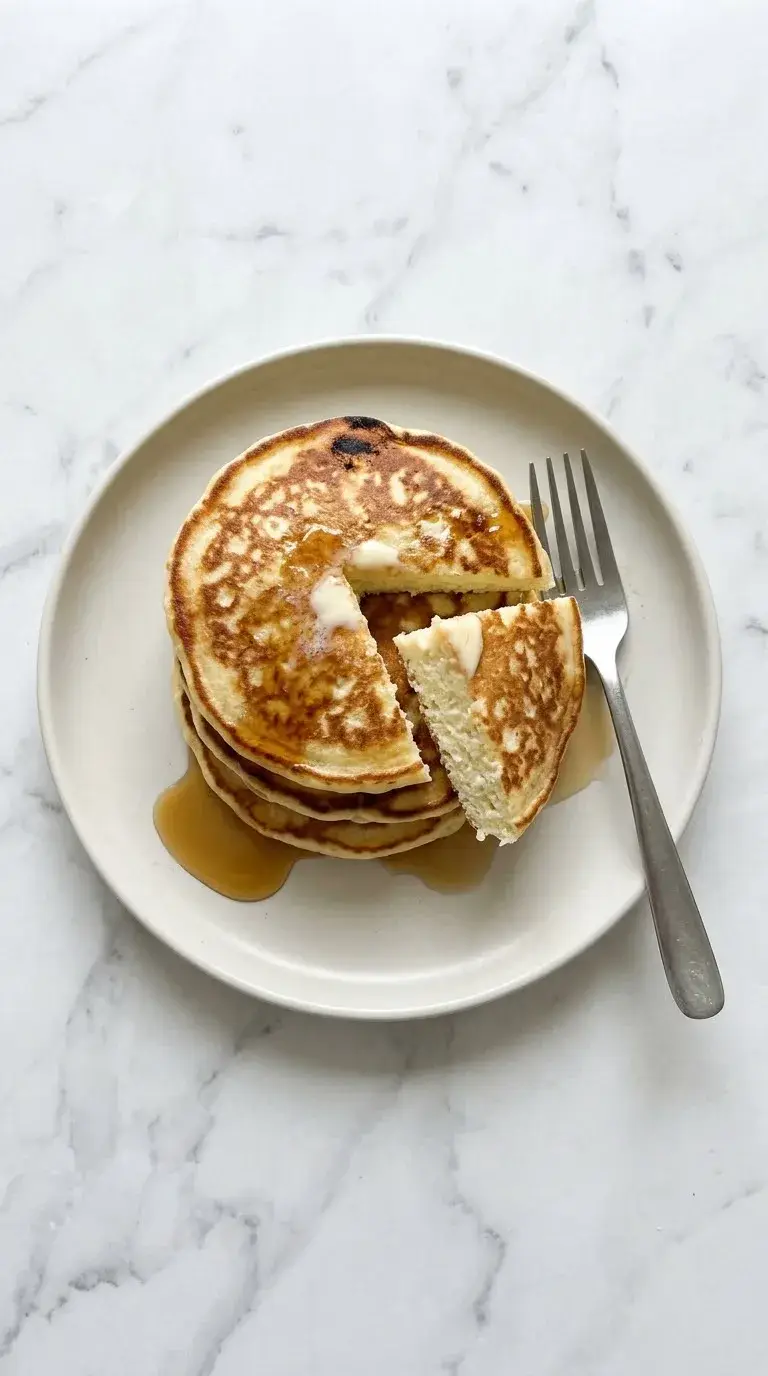
These American breakfast pancakes cook on a gently heated pan at 175°C (350°F) in 15 minutes, giving you 12 thick rounds in 30 minutes total. Gentle heat prevents the extra dairy proteins from scorching while the inside sets into a soft, custardy crumb beneath crisp golden brown edges. Each three-pancake portion delivers roughly 18 grams of protein.
Fluffy Cottage Cheese Pancakes: Soft Breakfast Griddle Cakes
Recipe cardIngredients
Instructions
-
Blend the wet ingredients
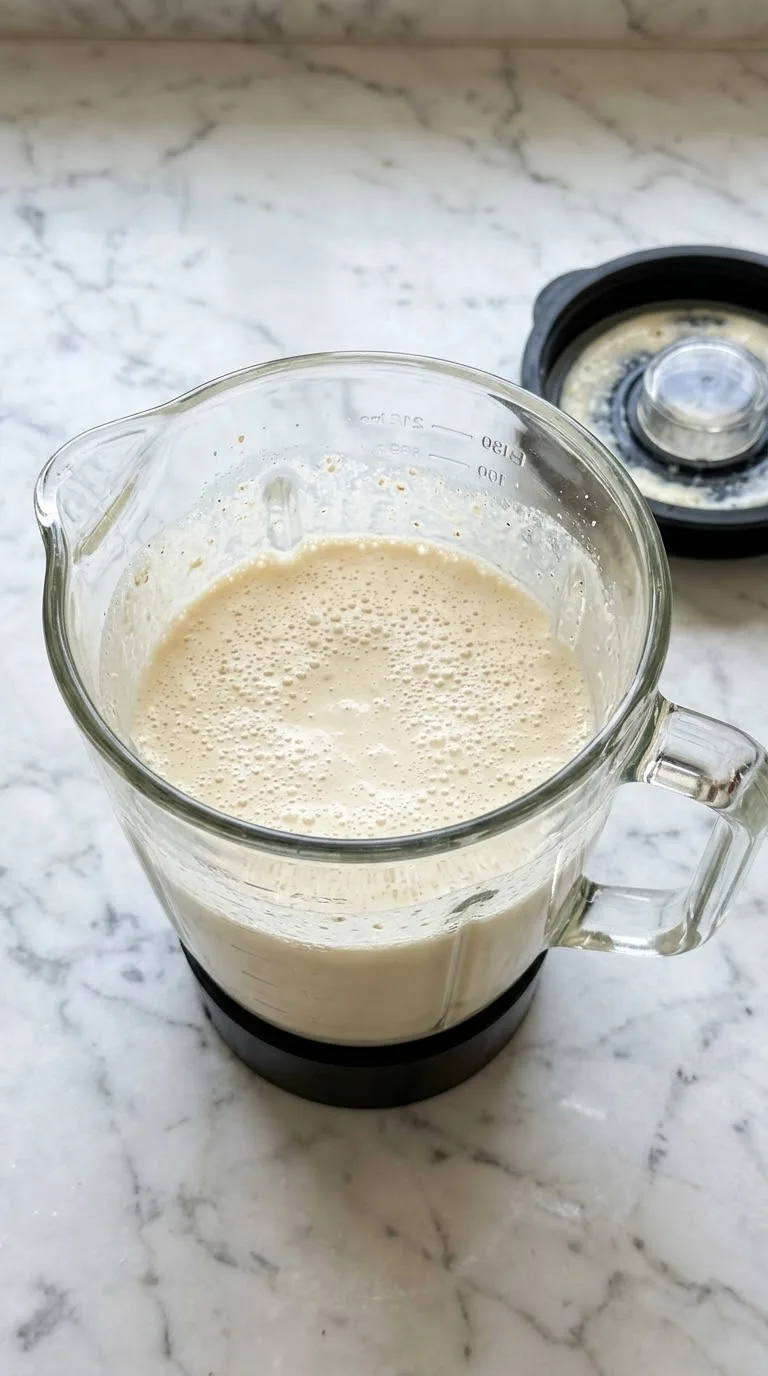
Put the 250 g full-fat cottage cheese, 120 ml whole milk, 3 large eggs, 30 g melted unsalted butter, 1 tbsp pure maple syrup or honey, and 1 tsp pure vanilla extract into a blender. Blend on high speed for 30 to 45 seconds until the liquid turns pale, smooth, and frothy with no visible curds. Pureeing the curds completely prevents dense pockets in the finished crumb.
-
Whisk the dry ingredients
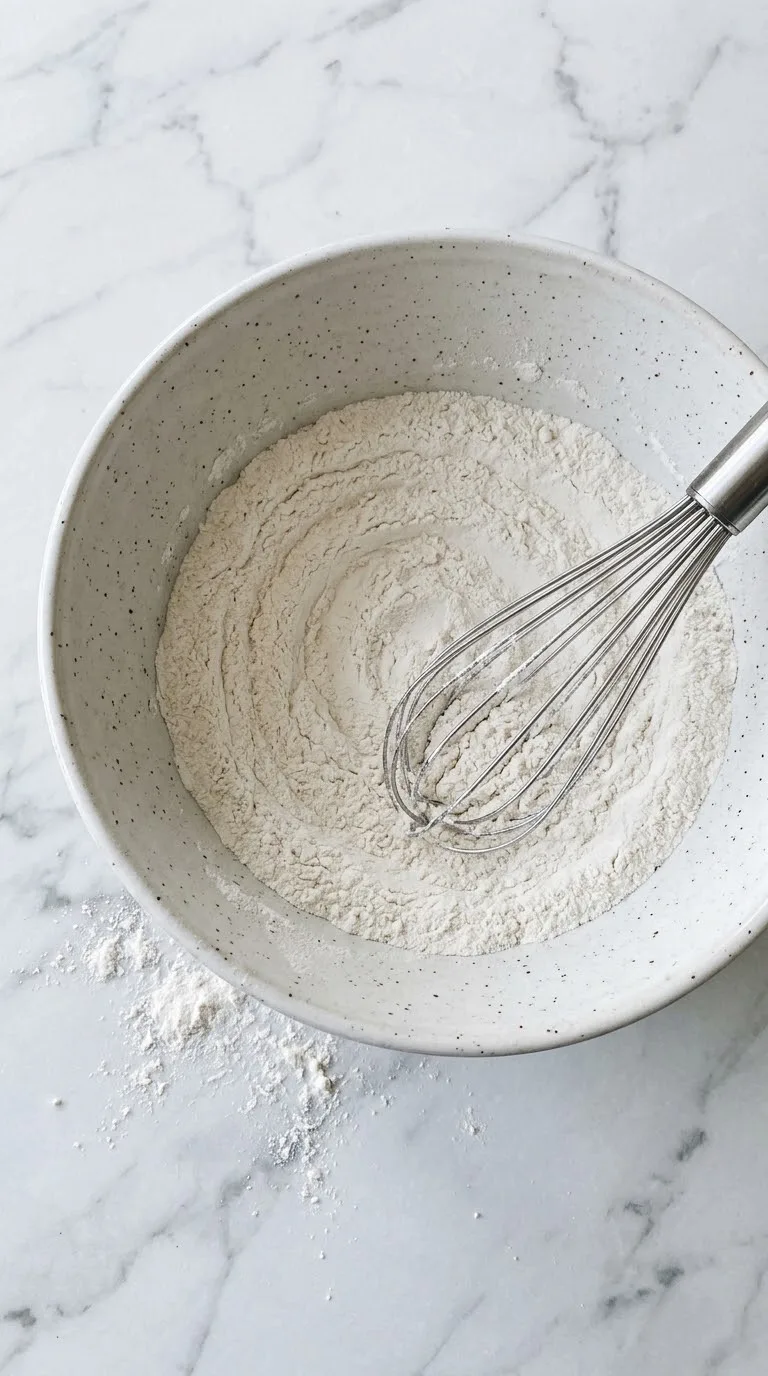
Tip the 150 g plain flour, 2 tsp baking powder, 1/2 tsp bicarbonate of soda, and 1/4 tsp fine sea salt into a medium mixing bowl. Whisk thoroughly until the raising agents distribute evenly through the flour. Even dispersion ensures every pancake rises to the same height.
-
Fold and rest the batter
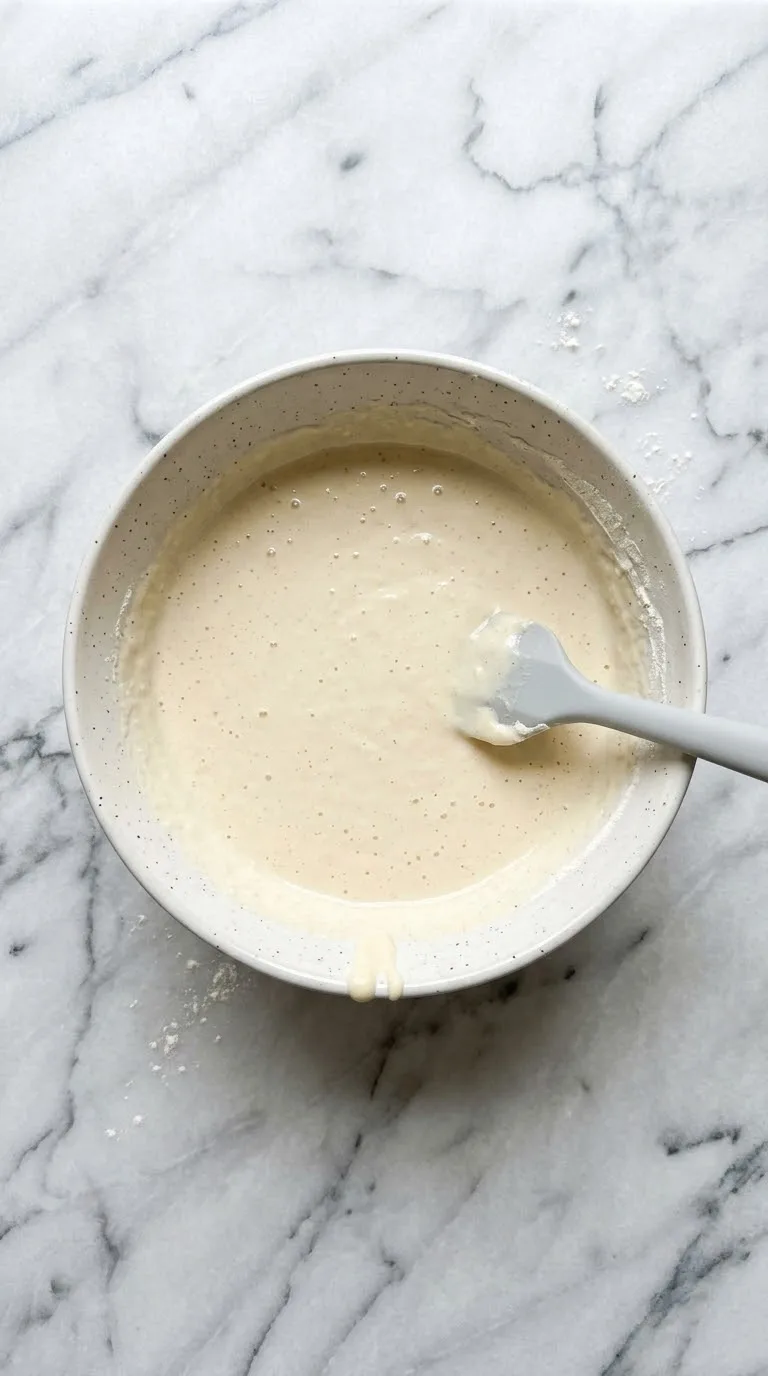
Pour the blended cottage cheese mixture into the dry ingredients and fold gently with a spatula just until the flour streaks vanish. Leave the thick, pourable batter to rest at room temperature for 5 minutes so the flour hydrates and the baking powder activates. Resting turns a loose mixture into a loftier pancake.
-
Preheat and butter the pan
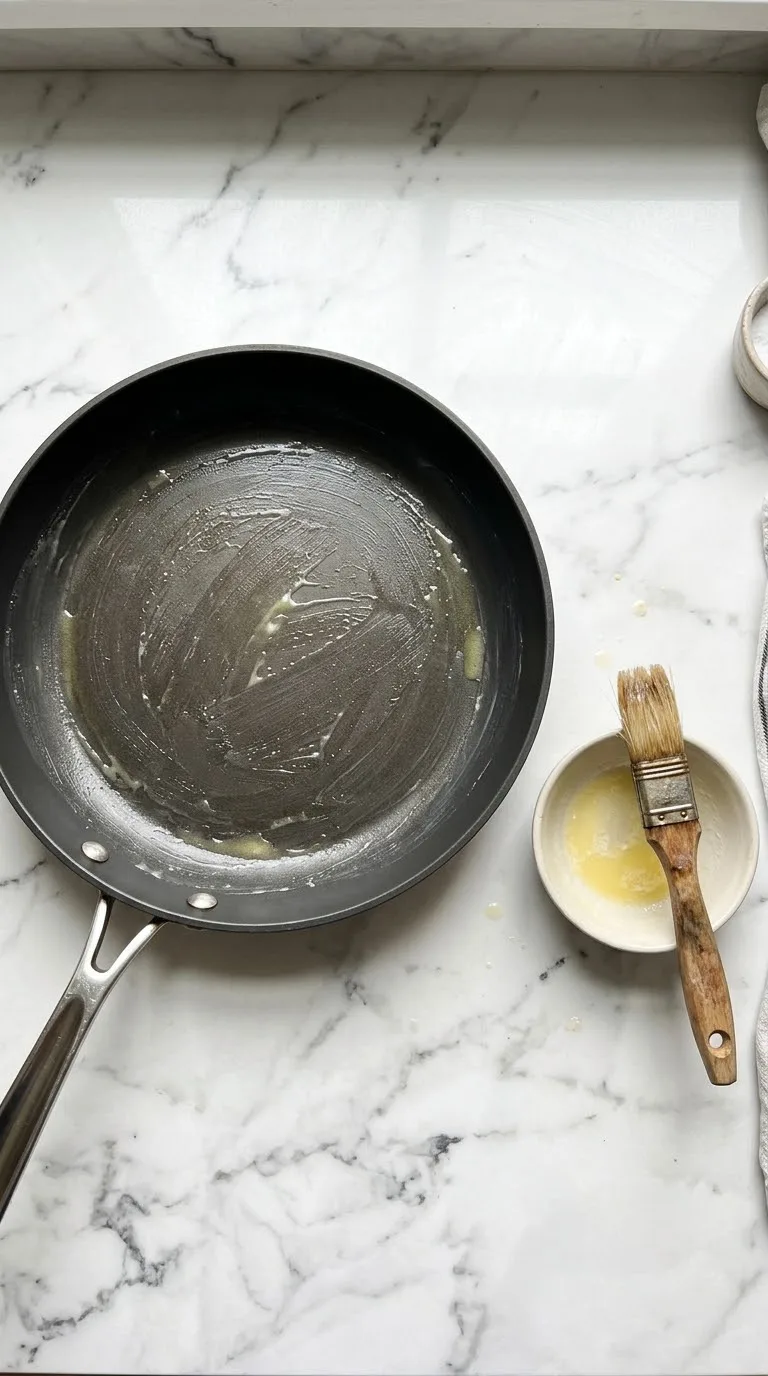
Set a large non-stick frying pan or flat griddle over medium-low heat and preheat for 3 minutes until the surface reaches roughly 175°C (350°F). Brush the pan lightly with a thin film of melted butter. Gentle heat keeps the dairy proteins from scorching before the middle sets.
-
Ladle the batter in batches
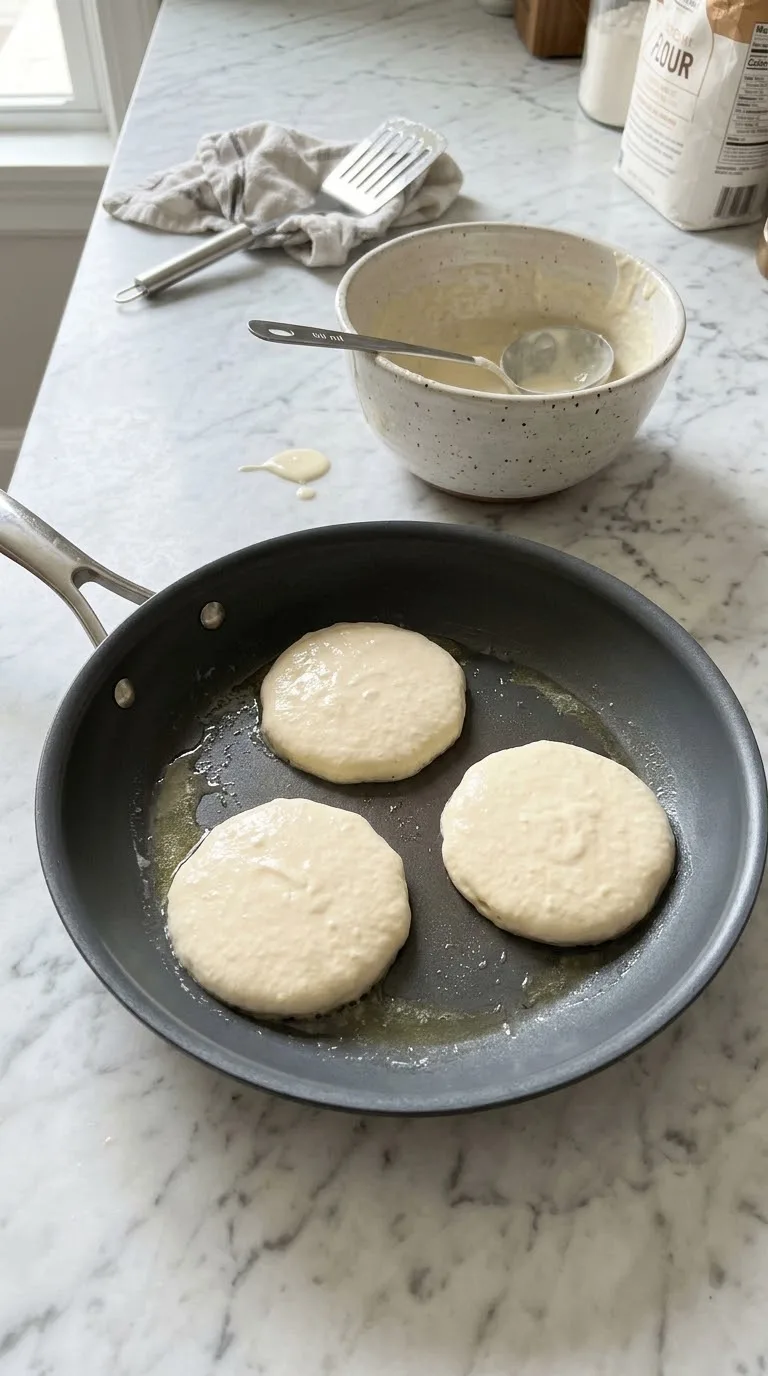
Work in batches of 3 or 4 pancakes at a time and ladle roughly 60 ml of batter onto the hot pan for each round. Leave at least 4 centimetres of space between the mounds so they can spread slightly without merging. Crowding the pan drops the surface temperature and makes flipping awkward.
-
Cook until bubbles surface
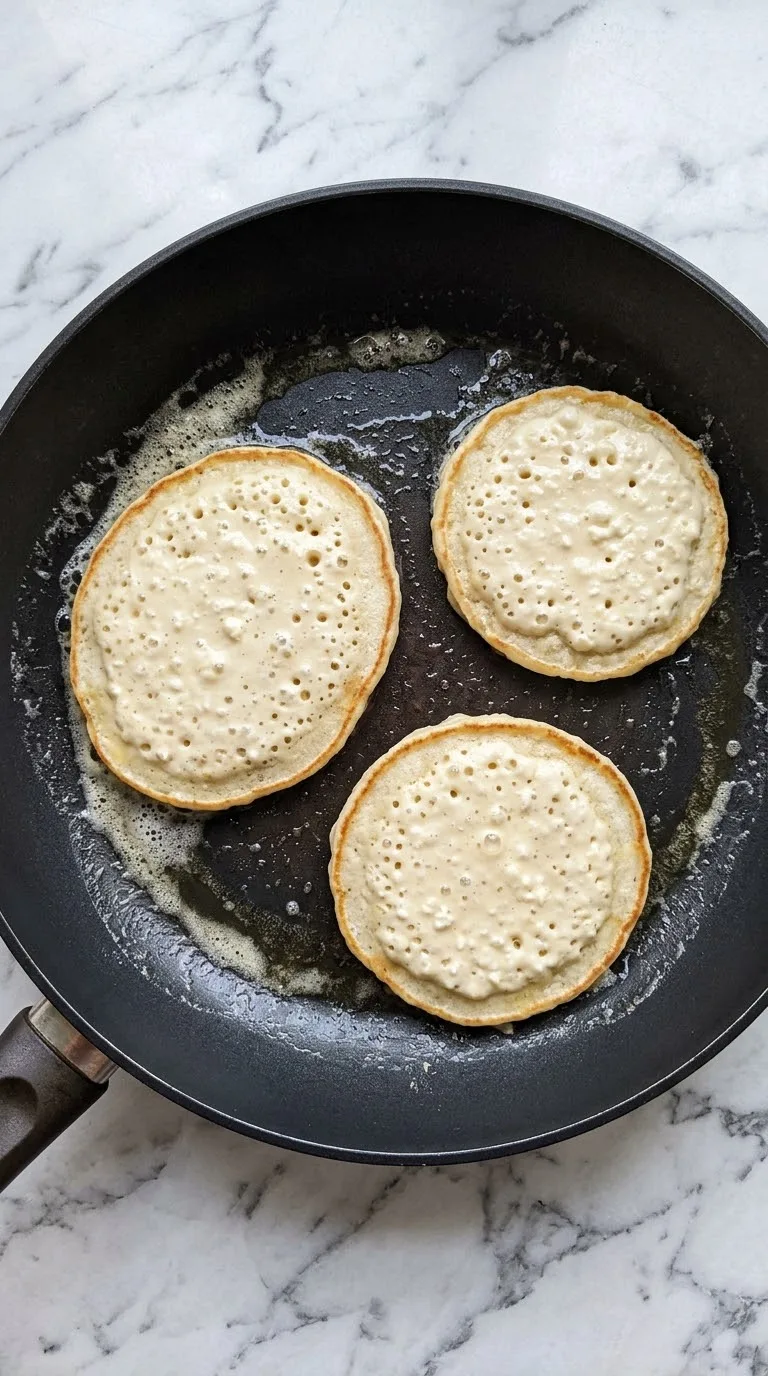
Cook undisturbed for 2 to 3 minutes until small bubbles rise and pop across the top, the outer edges look set and dry, and the underside turns a rich golden brown. Resisting the urge to peek early lets the bottom crust form cleanly.
-
Flip and finish cooking
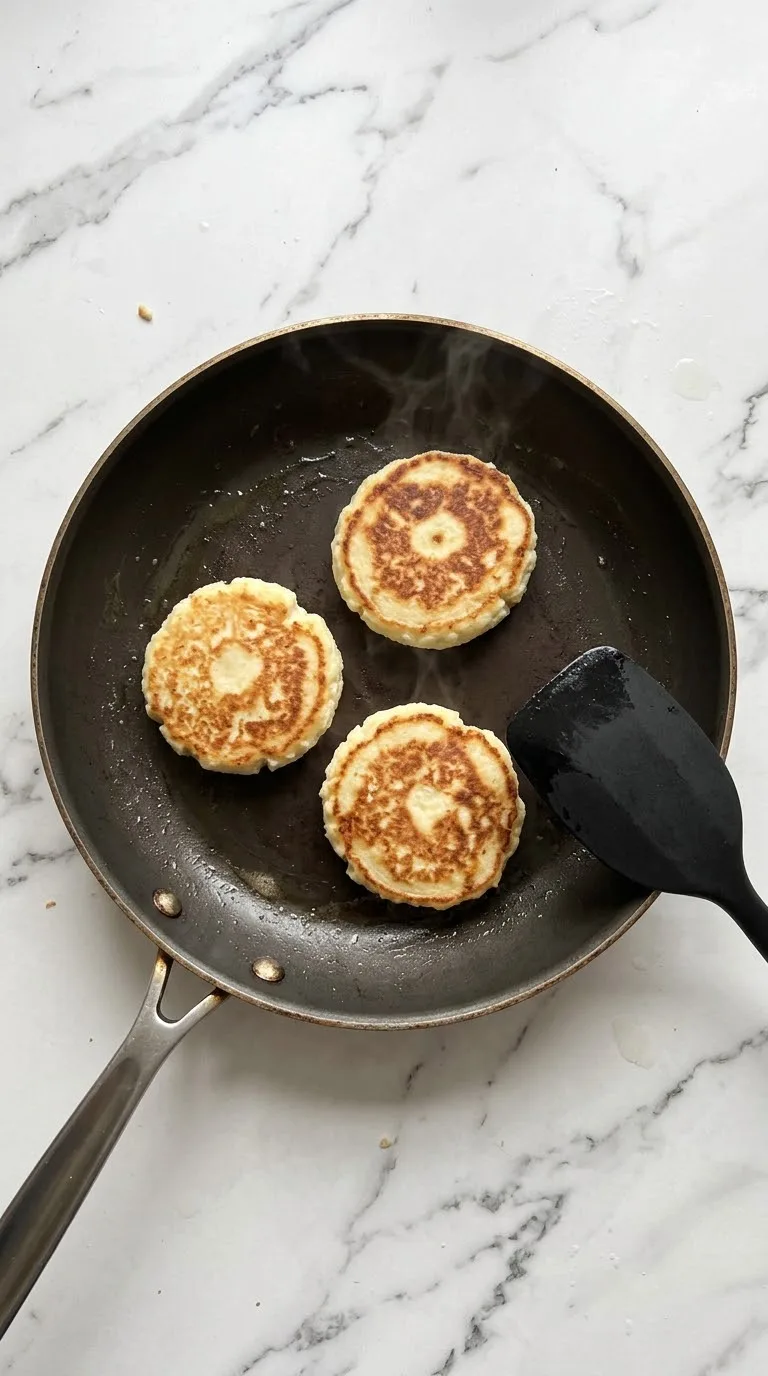
Slide a wide flexible spatula beneath each pancake, turn it over smoothly, and cook for 1 to 2 minutes more. Stop when the second side turns golden brown and the centre springs back lightly under a fingertip. A springy middle confirms the custardy interior has cooked through.
-
Keep warm and serve hot
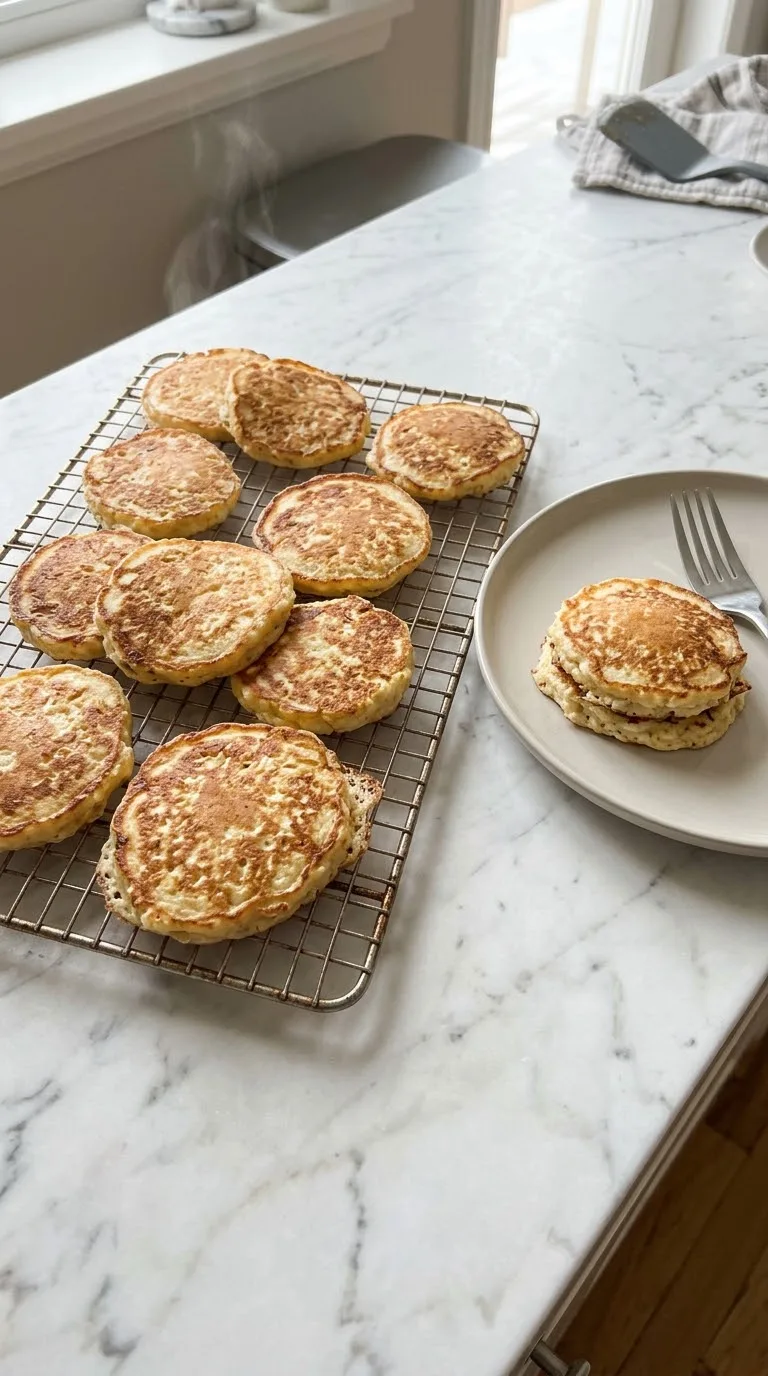
Move the finished pancakes onto a wire cooling rack inside a 90°C (195°F) oven so air circulates and keeps the edges crisp. Wipe the pan clean, brush with fresh butter, and fry the remaining batter before serving the stacks hot.
High pan heat burns the extra dairy proteins and natural sugars in cottage cheese before the middle cooks. If the first batch darkens within 60 seconds while the top stays wet, lower the burner immediately and wipe the pan clean before ladling more batter.
What to serve with it
Stack three warm pancakes per plate and top them with salted butter, warm pure maple syrup, fresh blueberries, and sliced strawberries. For a different finish, spoon thick Greek yoghurt and runny honey over the stack with toasted flaked almonds and ground cinnamon, or serve alongside crispy halal beef bacon and scrambled eggs.
Storing and reheating
Never leave cooked pancakes at room temperature for more than 2 hours because of the dairy content. Store cooled leftovers in an airtight container in the refrigerator for up to 3 days with baking parchment between layers, or freeze them on a tray for 1 hour before bagging for up to 2 months.
Nutrition per serving
- Calories
- 325
- Protein
- 18.0 g
- Carbs
- 34.5 g
- Fat
- 12.2 g
- Fiber
- 1.1 g
- Sugar
- 6.4 g
Estimated, and offered as a guide rather than a medical figure.
Made it? Rate it.
Questions people ask
Can I use low-fat cottage cheese instead of full-fat?
No, stick to full-fat cottage cheese with at least 4% milkfat. Low-fat versions hold excess water that thins the batter too much and produces dense, flat pancakes rather than a tender, lofty crumb.
Can I make these cottage cheese pancakes gluten-free?
Yes, replace the 150 g plain flour with 140 g certified gluten-free rolled oats blended into a fine flour. Let the mixed batter rest for 10 minutes instead of 5 minutes so the oat starch absorbs the liquid fully.
Why are my pancakes browning too fast on the outside while staying raw inside?
Your pan heat is too high. Cottage cheese adds extra dairy proteins and natural sugars that colour rapidly, so keep the burner on medium-low around 175°C (350°F) to cook the custardy centre through without scorching.
How do I reheat frozen cottage cheese pancakes without making them soggy?
Reheat them directly from frozen in a toaster or a 180°C (350°F) oven for 5 minutes. Dry heat thaws the custardy interior while restoring crispness to the golden edges without steaming the stack.

About the author
Makeva
Makeva is a home‑cook who loves crafting approachable meals that balance flavor and nutrition. She specializes in quick weeknight dinners, hearty soups, and wholesome baked goods, sharing step‑by‑step guidance and practical tips. Readers can expect clear instructions, adaptable recipes, and a friendly tone that encourages confidence in the kitchen.