Coconut Flour German Pancakes: Puffed Oven Dutch Baby
Wheat flour gives a classic oven pancake its stretchy web, so swapping in coconut flour can leave you wondering whether the batter will sink into a dense omelette. Coconut flour German pancakes rise dramatically when you rely on 6 room-temperature eggs and a 25 cm ovenproof cast-iron skillet heated at 220°C (425°F). Sift the 45 g coconut flour to clear stubborn lumps, blend the batter until smooth, and pour it straight into foaming butter before the flour drinks up the liquid.
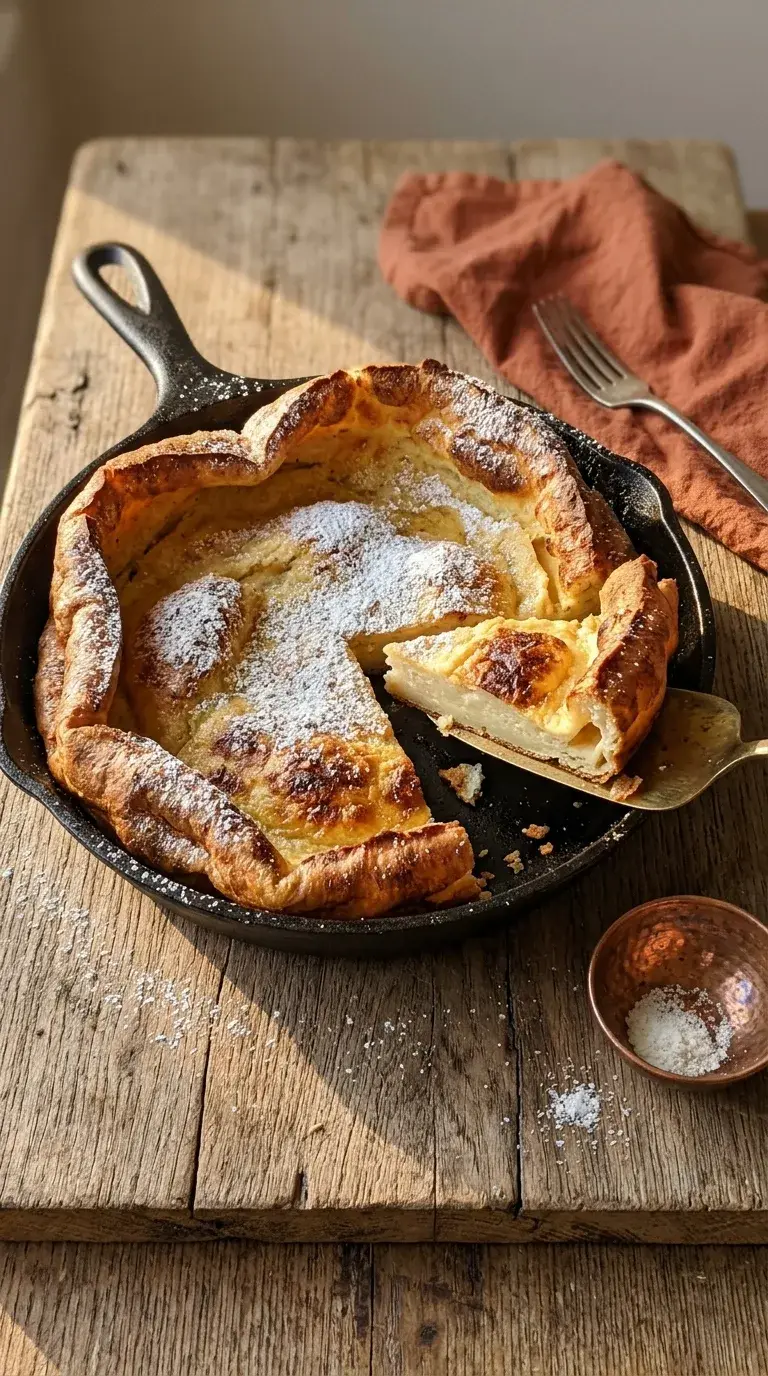
This baked Dutch baby puffs high around the rim in 18 to 20 minutes, taking 30 minutes from start to finish. You pull a crisp, deep golden crust from the oven with a tender, custard-like centre scented with ground cinnamon and alcohol-free vanilla bean paste, ready to dust with 15 g icing sugar and slice into wedges.
Coconut Flour German Pancakes: Puffed Oven Dutch Baby
Recipe cardIngredients
Instructions
-
Preheat the cast-iron skillet
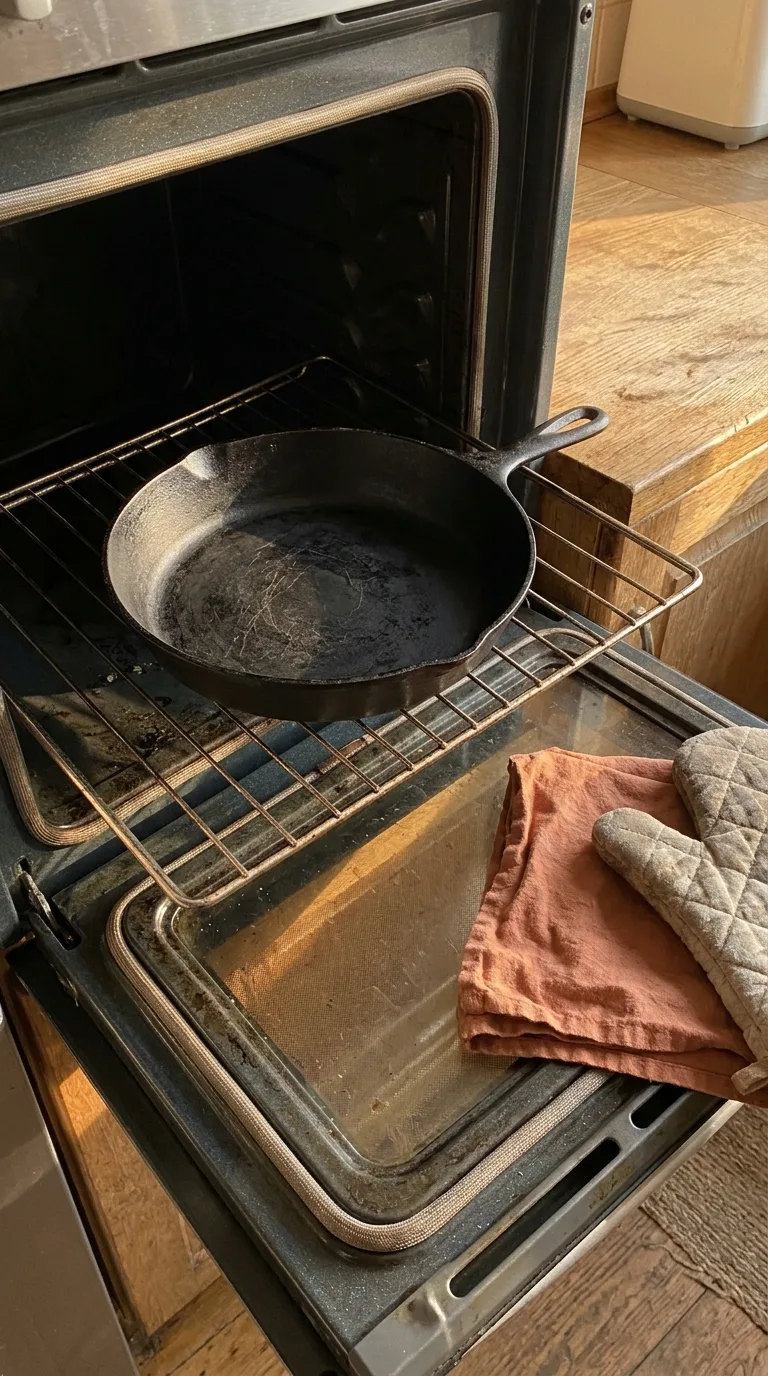
Place a 25 cm ovenproof cast-iron skillet on the middle rack of your oven and preheat to 220°C (425°F) for at least 10 minutes. Heating the heavy iron alongside the oven ensures the pan is thoroughly hot so the batter begins expanding on contact.
-
Sift the coconut flour
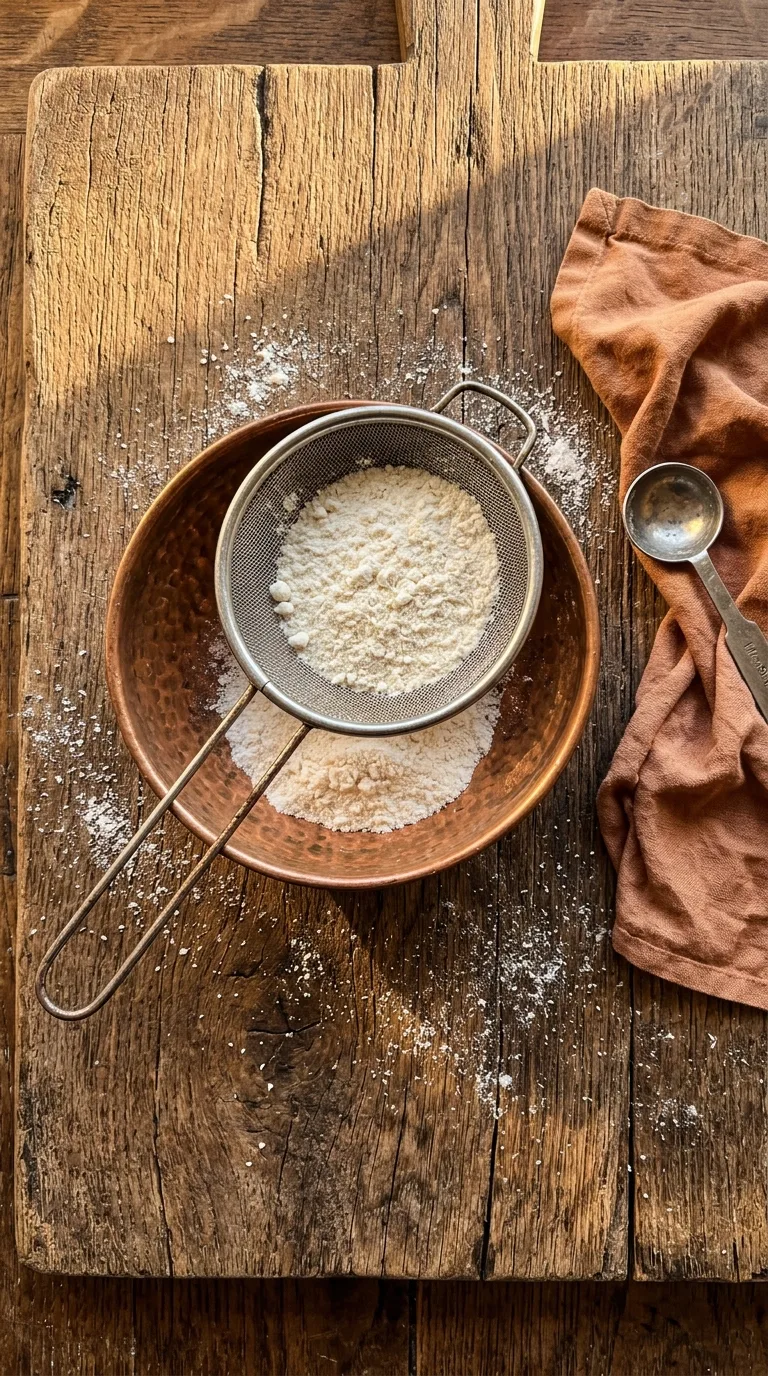
While the oven heats, pass the 45 g coconut flour through a fine-mesh sieve into a small bowl. Breaking up stubborn lumps now prevents dry pockets from forming in your finished batter.
-
Blend the wet ingredients
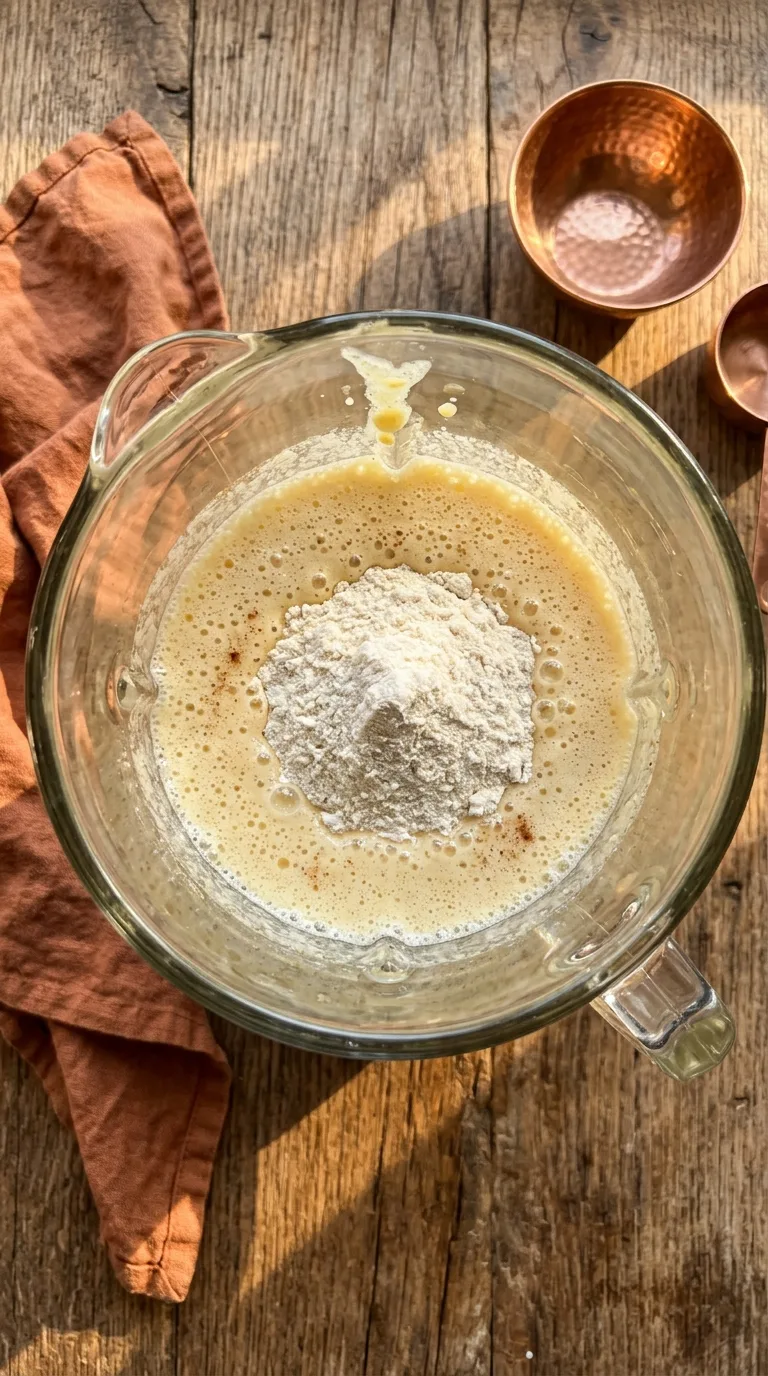
Add the 6 room-temperature eggs, 180 ml whole milk, 30 ml pure maple syrup, 1 tsp alcohol-free vanilla bean paste, 0.5 tsp ground cinnamon, and 0.25 tsp fine sea salt to a blender. Blend on medium speed for 20 seconds until the mixture looks frothy and evenly combined.
-
Incorporate the coconut flour
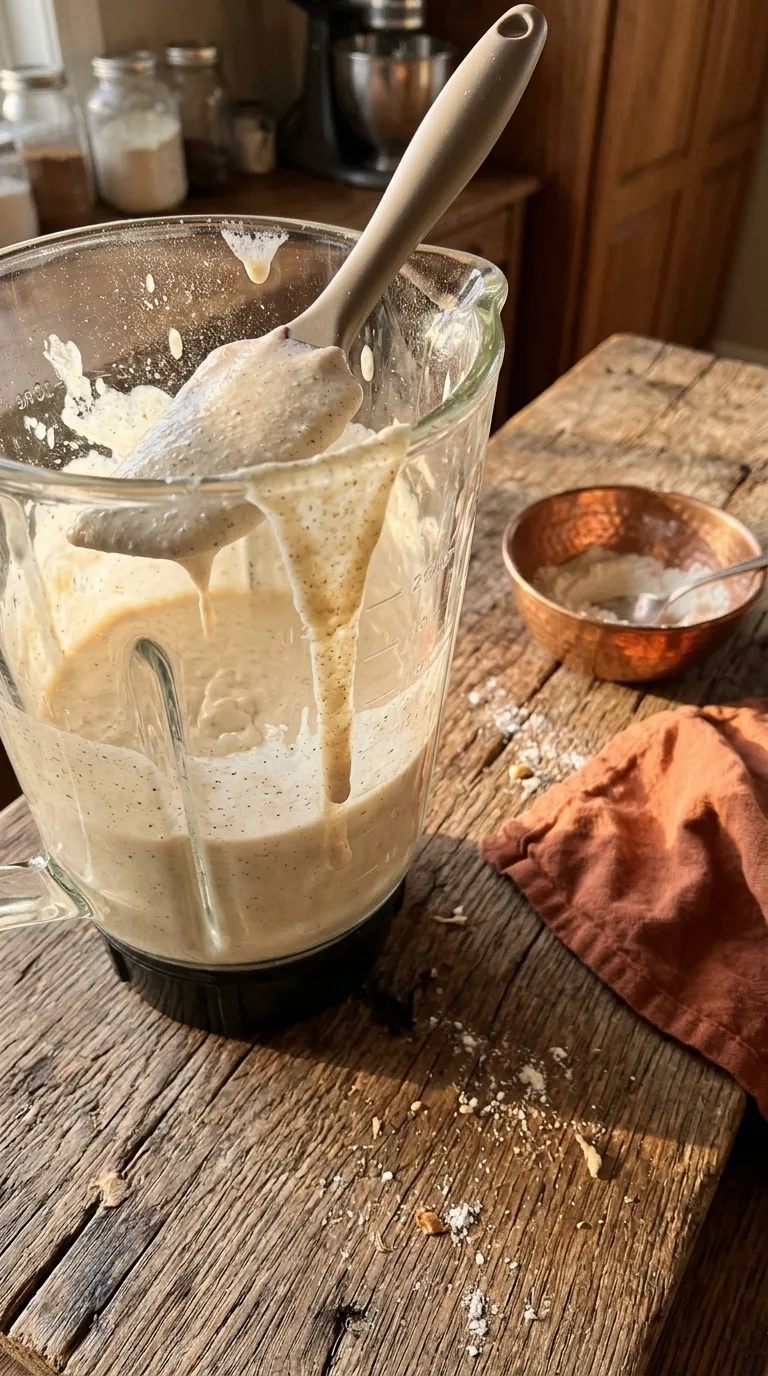
Tip the sifted coconut flour into the blender and blend on high speed for 30 seconds, stopping halfway to scrape down the sides with a silicone spatula. Stop as soon as the batter is completely smooth and slightly thickened, because coconut flour absorbs liquid rapidly if left to sit.
-
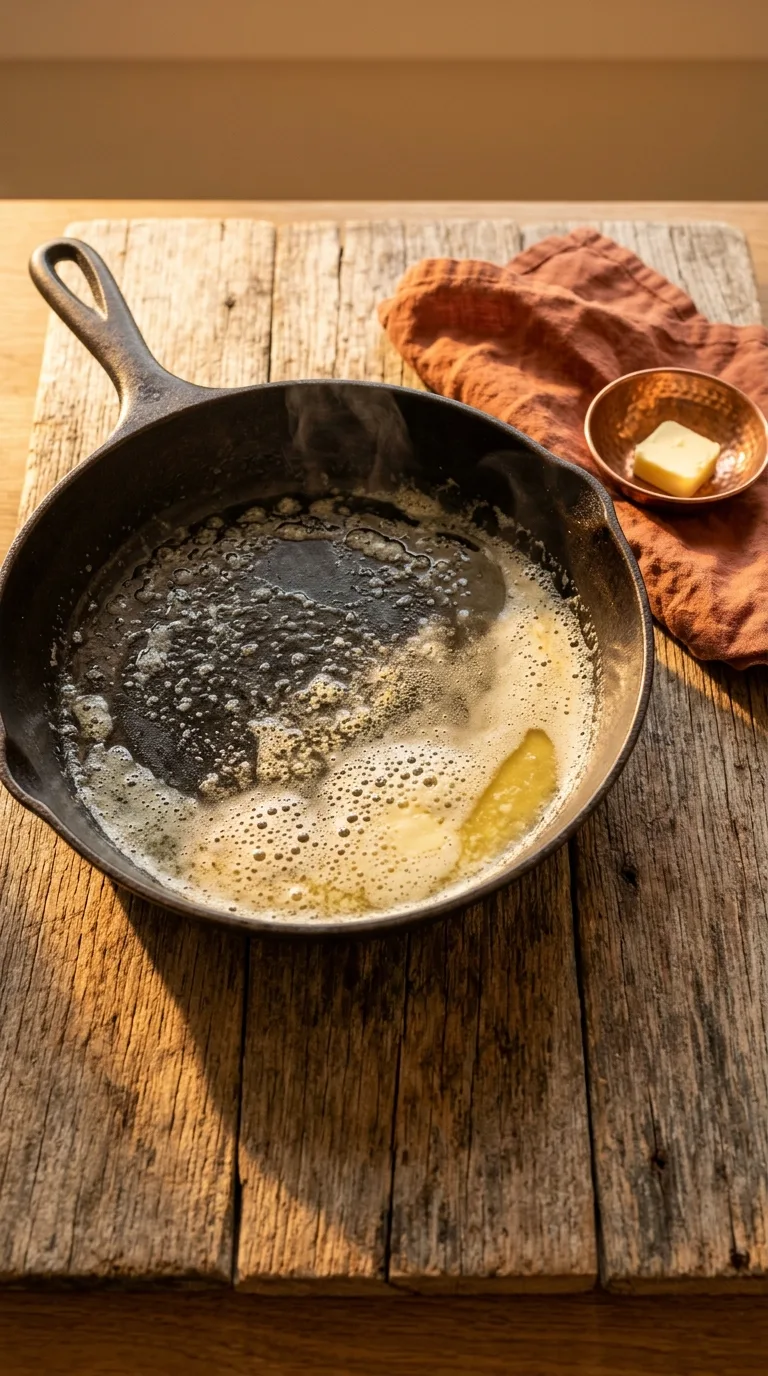
Melt butter in the skillet
Put on sturdy oven mitts, lift the hot skillet from the oven, and immediately drop in the 45 g unsalted butter. Swirl the pan so the butter coats the base and sides, melting into a pale, foaming layer without turning brown.
-
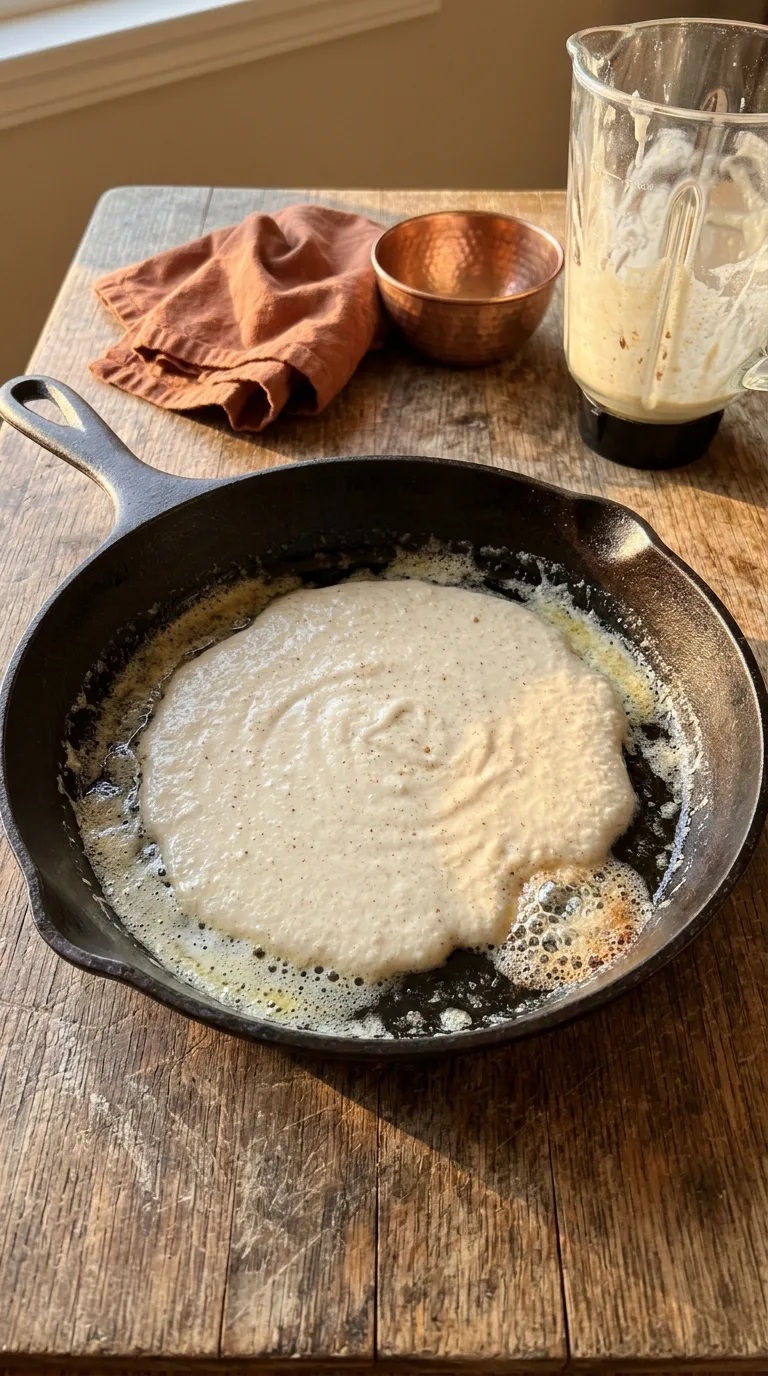
Pour the batter immediately
Pour the smooth coconut flour batter straight into the centre of the hot, foaming butter. Work quickly and return the skillet to the middle oven rack before the cast iron loses its stored heat.
-
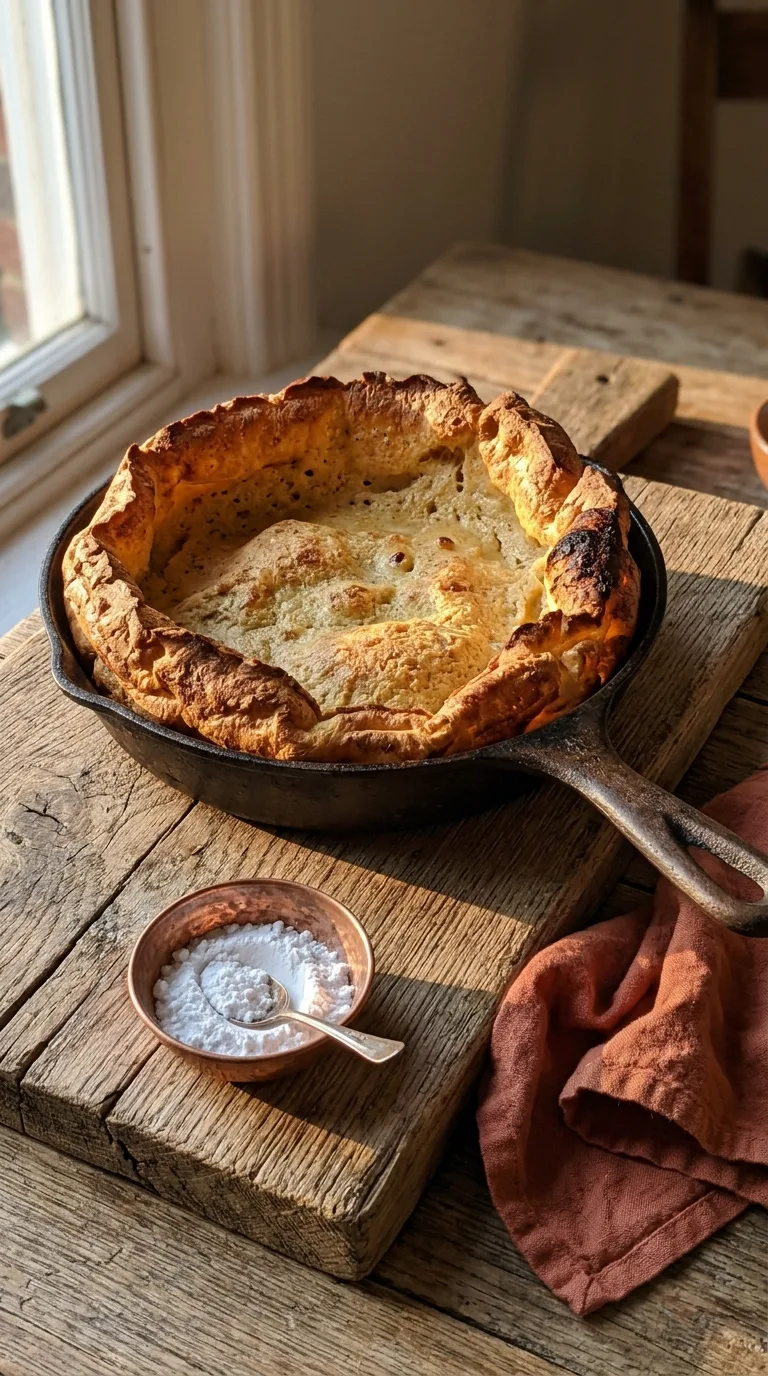
Bake until puffed and golden
Bake at 220°C (425°F) for 18 to 20 minutes and keep the oven door closed throughout. The pancake is ready when the edges climb high above the skillet rim in a deep golden-brown ruffle while the centre feels set and lightly golden.
-
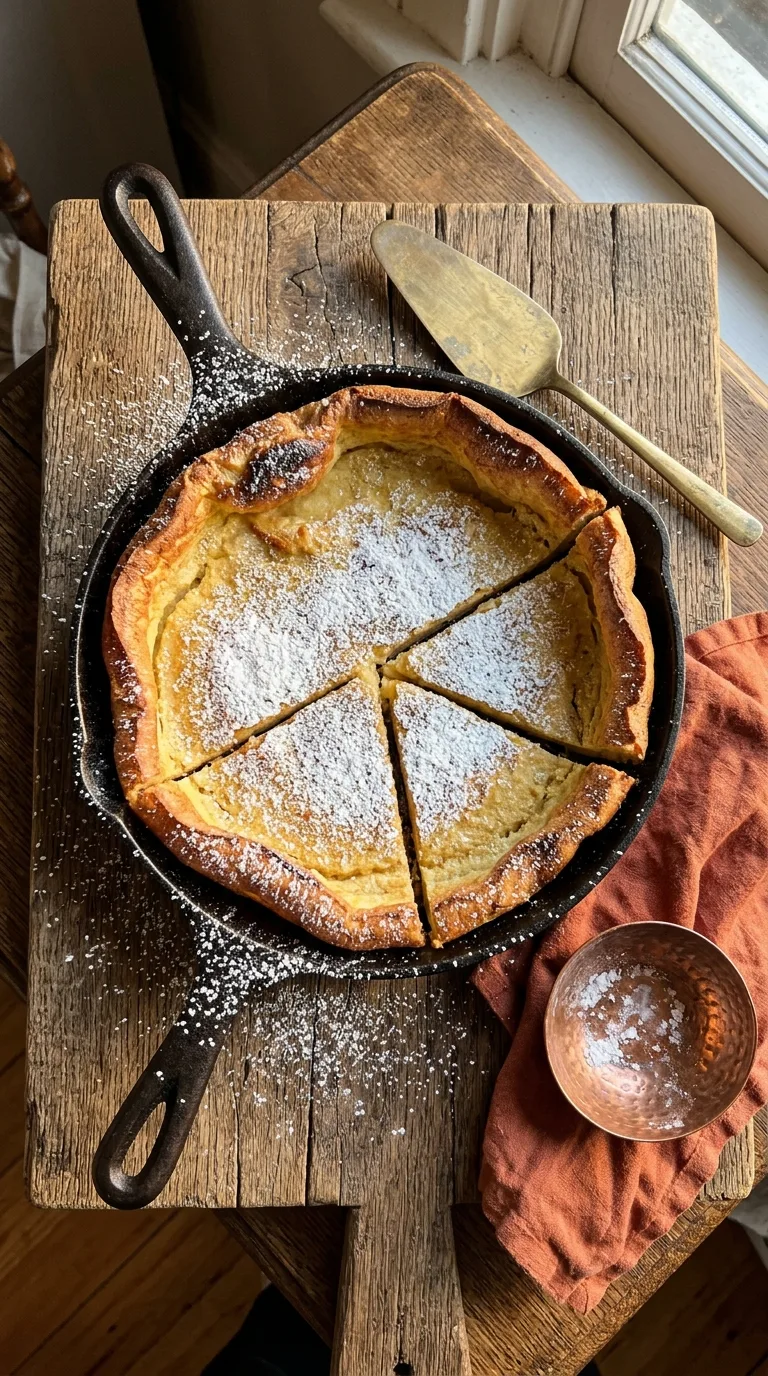
Dust and slice to serve
Lift the skillet out of the oven, dust the top generously with 15 g icing sugar, and slice the pancake into wedges. Serve straight from the hot pan while the edges remain crisp and puffed.
If the batter fails to climb the sides of the pan, cold dairy or an underheated skillet is usually to blame. Bring the 6 large eggs and 180 ml whole milk to room temperature before blending, heat the skillet for the full 10 minutes, and keep the oven door shut for the first 15 minutes of baking so trapped steam lifts the batter.
What to serve with it
Serve warm wedges with fresh mixed berries, thick Greek yoghurt, and a drizzle of pure maple syrup. For a traditional finish, squeeze fresh lemon juice over the crisp edges and add extra sifted icing sugar. Warm spiced apple compote and toasted flaked almonds also suit the cinnamon-scented custard centre.
Storing and reheating
Cool leftovers completely within 2 hours, then seal slices in an airtight container and refrigerate for up to 3 days. For longer storage, wrap individual wedges tightly in baking parchment inside a freezer-safe bag for up to 1 month, thawing overnight in the fridge before reheating at 180°C (350°F) for 5 minutes.
Nutrition per serving
- Calories
- 325
- Protein
- 12.5 g
- Carbs
- 19.2 g
- Fat
- 21.8 g
- Fiber
- 4.3 g
- Sugar
- 13.8 g
Estimated, and offered as a guide rather than a medical figure.
Made it? Rate it.
Questions people ask
Can I make coconut flour German pancake batter ahead of time?
No, pour the batter into the hot skillet immediately after blending. Coconut flour absorbs liquid rapidly, so resting the batter on the worktop thickens it too much and stops the edges from puffing properly in the oven.
Why did my coconut flour Dutch baby deflate in the oven?
Opening the oven door during the first 15 minutes lets cool air rush in, collapsing the delicate egg structure before it sets. Cold eggs or cold milk also cool the preheated cast iron and prevent a full rise.
Can I make this coconut flour German pancake savoury instead of sweet?
Yes, omit the maple syrup, alcohol-free vanilla bean paste, and ground cinnamon. Blend in 15 g finely chopped fresh chives with the wet ingredients, then scatter 50 g grated mature cheddar over the batter right before baking.
What pan works best if I do not have a 25 cm cast-iron skillet?
Use any heavy, 25 cm ovenproof skillet or baking dish that safely handles 220°C (425°F). Heavy metal holds heat well when you add the butter and batter, which creates the steam needed for high, crisp edges.

About the author
Makeva
Makeva is a home‑cook who loves crafting approachable meals that balance flavor and nutrition. She specializes in quick weeknight dinners, hearty soups, and wholesome baked goods, sharing step‑by‑step guidance and practical tips. Readers can expect clear instructions, adaptable recipes, and a friendly tone that encourages confidence in the kitchen.